












Triarylamine-based hydrido-carboxylate rhenium(i) complexes as photosensitizers for dye-sensitized solar cells
Literature Information
Publication Date
2019-03-13
DOI
10.1039/C9CP00856J
Impact Factor
3.676
Authors
Elsa Quartapelle Procopio, Thomas Moehl, Kazuteru Nonomura, Anders Hagfeldt
View Original
Abstract
Two new dyes based on a dinuclear rhenium complex and (E)-3-(5-(4-(bis(2′,4′-dibutoxy-[1,1′-biphenyl]-4-yl)amino)phenyl)thiophen-2-yl)-2-cyanoacrylic acid (namely D35) have been investigated as sensitizers for dye sensitized solar cells (DSSCs). Two different pyridazine ligands have been used, namely 4-pyridazine-carboxylic acid for dye 2 ([Re2(μ-H)(-D35)(CO)6(μ-pyridazine-4-COOH)]) and 4-pyridazinyl-butanoic acid for dye 3 ([Re2(μ-H)(-D35)(CO)6(μ-pyridazine-4-C3H6-COOH)]). The performances of these new dyes have been compared with those of the dye containing the bare 4-diphenylaminobenzoic acid, namely TPA, as the ancillary ligand (dye 1). Compared to dye 1, dyes 2 and 3 show an impressive tenfold increase in the absorption intensity in the range of 487–493 nm on TiO2 films, with great improvement of the light harvesting. Cyclic voltammetry experiments, performed on derivatives containing the methyl ester of the pyridazine ligands, show narrow electrochemical band gaps in the range of 1.36–1.84 eV. Solar cells with each dye have been prepared, using both iodide/triiodide and cobalt redox couples as the electrolytes, platinum or carbon as the counter electrodes, and TiO2 or SnO2 as the metal oxide photoelectrodes, respectively. The best DSSC results have been obtained using dye 3, with an overall solar-to-electric conversion efficiency of 3.5%, which greatly overcomes the previous result of 1.0% obtained for dye 1 in a not-optimized setup of the device. The performances of dye 3 are due to the presence of D35 ligand, which further suppresses the recombination of the injected electron with the electrolyte and with the oxidized state of the dye.
Related Literature
2-D Self-assembly of the bis(phthalocyaninato)terbium(iii) single-molecule magnet studied by scanning tunnelling microscopy
Jordi Gómez-Segura, Ismael Díez-Pérez, Naoto Ishikawa, Motohiro Nakano, Jaume Veciana, Daniel Ruiz-Molina
2006-06-15
Communication
DOI: 10.1039/B606276H
Synergistic effect of binary component ligands in chiral catalyst library engineering for enantioselective reactions
2008-01-21
Feature Article
DOI: 10.1039/B710668H
“Click”-functionalization of conducting poly(3,4-ethylenedioxythiophene) (PEDOT)
Hang-Beom Bu, Günther Götz, Egon Reinold, Astrid Vogt, Sylvia Schmid, Raúl Blanco, Jose L. Segura, Peter Bäuerle
2008-01-16
Communication
DOI: 10.1039/B718077B
Fabrication of zeolite-4A membranes on a catalyst particle level
Yijun Zhong, Mengfei Luo, Yunlong Xie, Weidong Zhu
2006-06-05
Communication
DOI: 10.1039/B603128E
Synthesis of a coumarin compound from phenanthrene by a TiO2-photocatalyzed reaction
Suguru Higashida, Aiko Harada, Rikako Kawakatsu, Noriko Fujiwara, Michio Matsumura
2006-05-31
Communication
DOI: 10.1039/B604332A
Regulation of α-chymotrypsin activity on the surface of substrate-functionalized gold nanoparticles
Chang-Cheng You, Rochelle R. Arvizo, Vincent M. Rotello
2006-06-02
Communication
DOI: 10.1039/B605508G
Molecular folding screen: folding and unfolding of 1,8-anthrylene–ethynylene oligomers by photochemical cycloaddition and thermal cycloreversion1
Shinji Toyota, Makoto Kuga, Akiko Takatsu, Michio Goichi, Tetsuo Iwanaga
2008-01-15
Communication
DOI: 10.1039/B717496A
Biomimetic trifunctional organocatalyst showing a great acceleration for the transesterification between vinyl ester and alcohol
Tadashi Ema, Daisuke Tanida, Tatsuya Matsukawa, Takashi Sakai
2008-01-22
Communication
DOI: 10.1039/B718763G
Organic field-effect transistors of poly(2,5-bis(3-dodecylthiophen-2-yl)thieno[2,3-b]thiophene) deposited on five different silane self-assembled monolayers
Ruth Rawcliffe, Martin Heeney, Steven Tierney, Iain McCulloch, Alasdair Campbell
2007-12-21
Communication
DOI: 10.1039/B715536K
Smart oligopeptide gels: in situ formation and stabilization of gold and silver nanoparticles within supramolecular organogel networks
Sudipta Ray, Apurba Kumar Das, Arindam Banerjee
2006-06-01
Communication
DOI: 10.1039/B605498F
You might also like
Compound Q&A
Are there alternatives to 1-(4-Chlorophenyl)-N-hydroxymethanimine (CAS: 3848-36-0) in synthesis?
When considering alternatives to 1-(4-Chlorophenyl)-N-hydroxymethanimine (CAS: 3...
3848-36-01-(4-Chlorophenyl)-N...
Compound Q&A
How should (1R,9S,10S,12S,14E,16S,19R,20R,21S,22R)-3,9,21-Trihydroxy-5,10,12,14,16,20,22-heptamethyl-23,24-dioxatetracyclo[17.3.1.1~6,9~.0~2,7~]tetracosa-2,5,7,14-tetraen-4-one (CAS: 183202-73-5) be stored?
This compound should be stored in a cool, dry place away from direct sunlight. I...
183202-73-5(1R,9S,10S,12S,14E,1...
Compound Q&A
How is 3-(4-Bromophenyl)-5-(2-fluorophenyl)-1,2,4-oxadiazole (CAS: 419553-16-5) typically synthesized?
3-(4-Bromophenyl)-5-(2-fluorophenyl)-1,2,4-oxadiazole is synthesized through a m...
419553-16-53-(4-Bromophenyl)-5-...
Compound Q&A
How is 5-Chloro-2-(4-chlorophenyl)-4-methyl-6-[3-(1-piperidinyl)propoxy]pyrimidine (CAS: 1639220-19-1) typically synthesized?
5-Chloro-2-(4-chlorophenyl)-4-methyl-6-[3-(1-piperidinyl)propoxy]pyrimidine (CAS...
1639220-19-15-Chloro-2-(4-chloro...
Compound Q&A
What industries use 2-Chloro-4-(difluoromethoxy)pyridine (CAS: 1206978-15-5)?
2-Chloro-4-(difluoromethoxy)pyridine is used in the pharmaceutical industry for ...
1206978-15-52-Chloro-4-(difluoro...
Compound Q&A
What regulatory guidelines apply to 3-Chloro-6-methylpyridazine (CAS: 1121-79-5)?
3-Chloro-6-methylpyridazine (CAS: 1121-79-5) is classified under the Globally Ha...
1121-79-53-Chloro-6-methylpyr...
Compound Q&A
Are there alternatives to Methyl 4,5-dimethyl-2-nitrobenzoate in synthesis?
Several alternatives can be used in the synthesis of Methyl 4,5-dimethyl-2-nitro...
90922-74-0Methyl 4,5-dimethyl-...
Compound Q&A
Are there alternatives to (2E,2'E)-3,3'-(1,4-Phenylene)bisacrylaldehyde in synthesis?
Alternatives to (2E,2'E)-3,3'-(1,4-Phenylene)bisacrylaldehyde include other acry...
63405-68-5(2E,2'E)-3,3'-(1,4-P...
Compound Q&A
What is 3-Amino-5-chloropyridin-2-ol hydrochloride (CAS: 1261906-29-9)?
3-Amino-5-chloropyridin-2-ol hydrochloride is an organic compound with the CAS n...
1261906-29-93-Amino-5-chloropyri...
Compound Q&A
What precautions should be taken when handling 6,7-Difluoro-2,3-dihydro-4H-chromen-4-one (CAS: 1092349-93-3)?
When handling 6,7-Difluoro-2,3-dihydro-4H-chromen-4-one, it is essential to wear...
1092349-93-36,7-Difluoro-2,3-dih...
Source Journal
Physical Chemistry Chemical Physics

CiteScore:
5.5
Self-citation Rate:
10.3%
Articles per Year:
3036
Physical Chemistry Chemical Physics (PCCP) is an international journal co-owned by 19 physical chemistry and physics societies from around the world. This journal publishes original, cutting-edge research in physical chemistry, chemical physics and biophysical chemistry. To be suitable for publication in PCCP, articles must include significant innovation and/or insight into physical chemistry; this is the most important criterion that reviewers and Editors will judge against when evaluating submissions. The journal has a broad scope and welcomes contributions spanning experiment, theory, computation and data science. Topical coverage includes spectroscopy, dynamics, kinetics, statistical mechanics, thermodynamics, electrochemistry, catalysis, surface science, quantum mechanics, quantum computing and machine learning. Interdisciplinary research areas such as polymers and soft matter, materials, nanoscience, energy, surfaces/interfaces, and biophysical chemistry are welcomed if they demonstrate significant innovation and/or insight into physical chemistry. Joined experimental/theoretical studies are particularly appreciated when complementary and based on up-to-date approaches.
Recommended Compounds
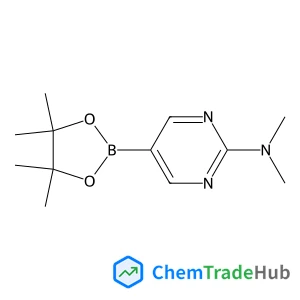
N,N-Dimethyl-5-(4,4,5,5-tetramethyl-1,3,2-dioxaborolan-2-yl)-2-pyrimidinamine
CAS Number:
1032759-30-0
Molecular Formula:
C12H20BN3O2
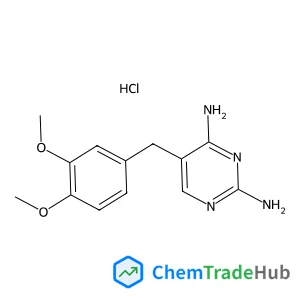
5-(3,4-Dimethoxybenzyl)-2,4-pyrimidinediamine hydrochloride (1:1)
CAS Number:
2507-23-5
Molecular Formula:
C13H17ClN4O2
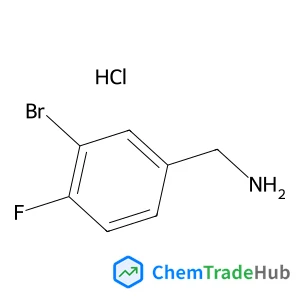
1-(3-Bromo-4-fluorophenyl)methanamine hydrochloride (1:1)
CAS Number:
202865-68-7
Molecular Formula:
C7H8BrClFN
Recommended Suppliers





Disclaimer
This page provides academic journal information for reference and research purposes only. We are not affiliated with any journal publishers and do not handle publication submissions. For publication-related inquiries, please contact the respective journal publishers directly.
If you notice any inaccuracies in the information displayed, please contact us at support@chemtradehub.com. We will promptly review and address your concerns.