












“Click”-functionalization of conducting poly(3,4-ethylenedioxythiophene) (PEDOT)
Literature Information
Publication Date
2008-01-16
DOI
10.1039/B718077B
Impact Factor
6.222
Authors
Hang-Beom Bu, Günther Götz, Egon Reinold, Astrid Vogt, Sylvia Schmid, Raúl Blanco, Jose L. Segura, Peter Bäuerle
View Original
Abstract
Efficient post-functionalization of conductive polymer films was achieved by Cu+-catalyzed "click"-cycloaddition of novel poly(azidomethyl-EDOT) P2 and various functionalized terminal alkynes under mild heterogeneous conditions with high conversion efficiencies.
Recommended Journals
Related Literature
Pyrophosphate selective fluorescent chemosensors based on coumarin–DPA–Cu(ii) complexes
Min Jung Kim, Kyung Mi Lee, Arun R. Jagdale, Youngmee Kim, Sung-Jin Kim, Kyung Ho Yoo
2009-10-22
Communication
DOI: 10.1039/B913809A
Template-free synthesis of monodisperse Cu2WO4(OH)2 round and elliptical hollow spheres with a ligand-assisted dissolution process
Wei Cheng, Kaibin Tang, Zhongping Liu, Jie Sheng, Yunxia Qi
2009-10-14
Communication
DOI: 10.1039/B914086G
A nanophase segregated mesophase morphology in self-organized novel disc–rod oligomesogens
Hari Krishna Bisoyi, V. A. Raghunathan, Sandeep Kumar
2009-10-14
Communication
DOI: 10.1039/B911383E
Facile synthesis of 1,3,4-benzotriazepines and 1-arylamide-1H-indazoles viapalladium-catalyzed cyclization of aryl isocyanates and aryl hydrazones under microwave irradiation
Chune Dong, Lingli Xie, Xiaohong Mou, Yashan Zhong, Wei Su
2010-09-08
Communication
DOI: 10.1039/C0OB00021C
Asymmetric epoxidation of 2-arylidene-1,3-diketones: facile access to synthetically useful epoxides
Alessio Russo, Alessandra Lattanzi
2010-04-01
Paper
DOI: 10.1039/C002587A
Sulfonic acid functionalized crystal-like mesoporous benzene–silica as a remarkable water-tolerant catalyst
Ayman Karam, João Carlos Alonso, Tsvetelina Ivanova Gerganova, Paula Ferreira, Nicolas Bion, Joël Barrault, François Jérôme
2009-10-06
Communication
DOI: 10.1039/B914689J
Two-dimensional self-organization of rectangular OPE amphiphiles into microcrystalline lamellae
Gustavo Fernández, Fátima García, Fátima Aparicio, Emilio Matesanz, Luis Sánchez
2009-10-14
Communication
DOI: 10.1039/B916418A
Highly efficient macrolactonization of ω-hydroxy acids using benzotriazole esters: synthesis of Sansalvamide A
José Antonio Morales-Serna, Ericka Sánchez, Ricardo Velázquez, Jorge Bernal, Eréndira García-Ríos, Rubén Gaviño, Guillermo Negrón-Silva, Jorge Cárdenas
2010-08-31
Paper
DOI: 10.1039/C0OB00161A
Splendid symmetry: crystallization of an unbridged isomer of Co2(CO)8 in Co2(CO)8·C60
Thelma Y. Garcia, James C. Fettinger, Marilyn M. Olmstead, Alan L. Balch
2009-10-29
Communication
DOI: 10.1039/B915083H
Elaboration and properties of hierarchically structured optical thin films of MIL-101(Cr)
Patricia Horcajada, Christian Serre, Cédric Boissière, David Grosso, Clément Sanchez, Gérard Férey
2009-10-29
Communication
DOI: 10.1039/B915011K
You might also like
Compound Q&A
What industries use (1R,3S)-1,3-Cyclopentanediol (CAS: 16326-97-9)?
(1R,3S)-1,3-Cyclopentanediol finds applications in various industries. In the ph...
16326-97-9(1R,3S)-1,3-Cyclopen...
Compound Q&A
What precautions should be taken when handling N'-[4-(Dimethylamino)phenyl]-N,N-dimethyl-1,4-benzenediamine (CAS: 637-31-0)?
When handling N'-[4-(Dimethylamino)phenyl]-N,N-dimethyl-1,4-benzenediamine, it i...
637-31-0N'-[4-(Dimethylamino...
Compound Q&A
Are there alternatives to 5-(2,4-Difluorophenyl)-2-methoxypyrimidine (CAS: 1352318-16-1) in synthesis?
There are several alternatives to 5-(2,4-Difluorophenyl)-2-methoxypyrimidine in ...
1352318-16-15-(2,4-Difluoropheny...
Compound Q&A
What regulatory guidelines apply to 1-(3-Methoxyphenoxy)propan-2-ol (CAS: 382141-68-6)?
1-(3-Methoxyphenoxy)propan-2-ol (CAS: 382141-68-6) must comply with the Globally...
382141-68-61-(3-Methoxyphenoxy)...
Compound Q&A
Is Tetrodotoxin Citrate (CAS: 18660-81-6) safe?
Tetrodotoxin Citrate is extremely dangerous and should be handled with extreme c...
18660-81-6Tetrodotoxin Citrate
Compound Q&A
What are the main uses of 2-Methyl-2-propanyl [(1R,3S)-3-hydroxycyclopentyl]carbamate (CAS: 225641-84-9)?
2-Methyl-2-propanyl [(1R,3S)-3-hydroxycyclopentyl]carbamate (CAS: 225641-84-9) i...
225641-84-92-Methyl-2-propanyl ...
Compound Q&A
How should waste containing 4-(2-Hydroxyhexafluoroisopropyl)Benzoic Acid (CAS: 16261-80-6) be handled?
Waste containing 4-(2-Hydroxyhexafluoroisopropyl)Benzoic Acid (CAS: 16261-80-6) ...
16261-80-64-(2-Hydroxyhexafluo...
Compound Q&A
How is 2-Methyl-2-proanyl {(2S)-1-[(benzyloxy)amino]-3-hydroxy-3-methyl-1-oxo-2-butanyl}carbamate (CAS: 102507-19-7) typically synthesized?
2-Methyl-2-proanyl {(2S)-1-[(benzyloxy)amino]-3-hydroxy-3-methyl-1-oxo-2-butanyl...
102507-19-72-Methyl-2-propanyl ...
Compound Q&A
What is Benzeneethanamine, α-ethyl-, hydrochloride (1:1) (CAS: 20735-15-3)?
Benzeneethanamine, α-ethyl-, hydrochloride (1:1) is an organic compound with the...
20735-15-3Benzeneethanamine, α...
Compound Q&A
Are there alternatives to 3-{(E)-[4-(Dimethylamino)phenyl]diazenyl}benzoic acid (CAS: 20691-84-3) in synthesis?
In the synthesis of compounds similar to 3-{(E)-[4-(Dimethylamino)phenyl]diazeny...
20691-84-33-{(E)-[4-(Dimethyla...
Source Journal
Chemical Communications

CiteScore:
8.6
Self-citation Rate:
4.7%
Articles per Year:
2458
ChemComm publishes urgent research which is of outstanding significance and interest to experts in the field, while also appealing to the journal’s broad chemistry readership. Our communication format is ideally suited to short, urgent studies that are of such importance that they require accelerated publication. Our scope covers all topics in chemistry, and research at the interface of chemistry and other disciplines (such as materials science, nanoscience, physics, engineering and biology) where there is a significant novelty in the chemistry aspects. Major topic areas covered include: Analytical Chemistry Catalysis Chemical Biology and medicinal chemistry Computational Chemistry and Machine Learning Energy and sustainable chemistry Environmental Chemistry Green Chemistry Inorganic Chemistry Materials Chemistry Nanoscience Organic Chemistry Physical Chemistry Polymer Chemistry Supramolecular Chemistry
Recommended Compounds
![(2S)-2-{[(9H-Fluoren-9-ylmethoxy)carbonyl]amino}-4-(methylselanyl)butanoic acid structure](https://static.chemtradehub.com/structs/121/1217852-49-7-f252.webp "(2S)-2-{[(9H-Fluoren-9-ylmethoxy)carbonyl]amino}-4-(methylselanyl)butanoic acid structure")
(2S)-2-{[(9H-Fluoren-9-ylmethoxy)carbonyl]amino}-4-(methylselanyl)butanoic acid
CAS Number:
1217852-49-7
Molecular Formula:
C20H21NO4Se
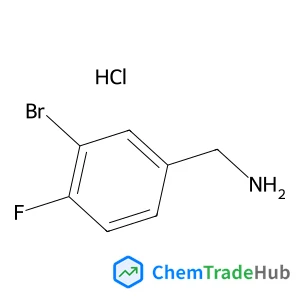
1-(3-Bromo-4-fluorophenyl)methanamine hydrochloride (1:1)
CAS Number:
202865-68-7
Molecular Formula:
C7H8BrClFN
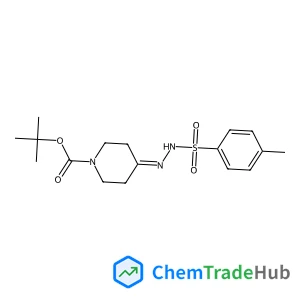
tert-Butyl 4-(2-(p-Tolylsulfonyl)hydrazono)piperidine-1-carboxylate
CAS Number:
1046478-89-0
Molecular Formula:
C17H25N3O4S
Recommended Suppliers





Disclaimer
This page provides academic journal information for reference and research purposes only. We are not affiliated with any journal publishers and do not handle publication submissions. For publication-related inquiries, please contact the respective journal publishers directly.
If you notice any inaccuracies in the information displayed, please contact us at support@chemtradehub.com. We will promptly review and address your concerns.