












Molecular folding screen: folding and unfolding of 1,8-anthrylene–ethynylene oligomers by photochemical cycloaddition and thermal cycloreversion1
Literature Information
Publication Date
2008-01-15
DOI
10.1039/B717496A
Impact Factor
6.222
Authors
Shinji Toyota, Makoto Kuga, Akiko Takatsu, Michio Goichi, Tetsuo Iwanaga
View Original
Abstract
Molecular folding screens consisting of anthracene plates and acetylene linkers stereoselectively fold into a zigzag form by [4 + 4]photocycloaddition, and unfold by thermal cycloreversion.
Related Literature
Theoretical investigations on the formation of nitrobenzanthrone-DNA Adducts
Volker M. Arlt, David H. Phillips, Jóhannes Reynisson
2011-05-26
Paper
DOI: 10.1039/C1OB05570D
Reusable polystyrene-supported Pdcatalyst for Mizoroki–Heck reactions with extremely low amounts of supported Pd
Carine Diebold, Stéphane Schweizer, Jean-Michel Becht, Claude Le Drian
2010-09-09
Communication
DOI: 10.1039/C0OB00523A
Photosensitized cleavage of plasmidic DNA by norharmane, a naturally occurring β-carboline
M. Micaela Gonzalez, Magali Pellon-Maison, Matias A. Ales-Gandolfo, Maria R. Gonzalez-Baró, Rosa Erra-Balsells, Franco M. Cabrerizo
2010-04-09
Paper
DOI: 10.1039/C002235G
Salt, pH and thermoresponsive supramolecular hydrogel of N-(4-n-tetradecyloxybenzoyl)-l-carnosine
Amrita Pal, Saurabh Shrivastava, Joykrishna Dey
2009-10-06
Communication
DOI: 10.1039/B914665B
Facile synthesis of 1,3,4-benzotriazepines and 1-arylamide-1H-indazoles viapalladium-catalyzed cyclization of aryl isocyanates and aryl hydrazones under microwave irradiation
Chune Dong, Lingli Xie, Xiaohong Mou, Yashan Zhong, Wei Su
2010-09-08
Communication
DOI: 10.1039/C0OB00021C
Synthesis of 1,2-annulated and 1,2-unsubstituted pyrrolo[2,1,5-de]quinolizin-5-ones (cycl[3.3.2]azin-5-ones) via [3+2] cycloadditions of 1-oxoquinolizinium ylides with cyclic alkenes
Hua-You Hu, Hong-Wen Hu, Jian-Hua Xu
2010-08-26
Paper
DOI: 10.1039/C0OB00299B
Biomimetically relevant self-condensations of C5 units derived from lysine
Rim Salame, Edmond Gravel, Pascal Retailleau, Erwan Poupon
2010-04-01
Paper
DOI: 10.1039/B926786G
Deazaflavins as mediators in light-driven cytochrome P450 catalyzed hydroxylations
Felipe E. Zilly, Andreas Taglieber, Frank Schulz, Frank Hollmann, Manfred T. Reetz
2009-10-14
Communication
DOI: 10.1039/B913863C
Splendid symmetry: crystallization of an unbridged isomer of Co2(CO)8 in Co2(CO)8·C60
Thelma Y. Garcia, James C. Fettinger, Marilyn M. Olmstead, Alan L. Balch
2009-10-29
Communication
DOI: 10.1039/B915083H
The influence of a 1,1-diarylvinyl moiety on the photochromism of naphthopyrans
Christopher D. Gabbutt, B. Mark Heron, Colin Kilner, Suresh B. Kolla
2010-08-16
Paper
DOI: 10.1039/C0OB00141D
You might also like
Compound Q&A
What industries use (1R,3S)-1,3-Cyclopentanediol (CAS: 16326-97-9)?
(1R,3S)-1,3-Cyclopentanediol finds applications in various industries. In the ph...
16326-97-9(1R,3S)-1,3-Cyclopen...
Compound Q&A
What precautions should be taken when handling N'-[4-(Dimethylamino)phenyl]-N,N-dimethyl-1,4-benzenediamine (CAS: 637-31-0)?
When handling N'-[4-(Dimethylamino)phenyl]-N,N-dimethyl-1,4-benzenediamine, it i...
637-31-0N'-[4-(Dimethylamino...
Compound Q&A
Are there alternatives to 5-(2,4-Difluorophenyl)-2-methoxypyrimidine (CAS: 1352318-16-1) in synthesis?
There are several alternatives to 5-(2,4-Difluorophenyl)-2-methoxypyrimidine in ...
1352318-16-15-(2,4-Difluoropheny...
Compound Q&A
What regulatory guidelines apply to 1-(3-Methoxyphenoxy)propan-2-ol (CAS: 382141-68-6)?
1-(3-Methoxyphenoxy)propan-2-ol (CAS: 382141-68-6) must comply with the Globally...
382141-68-61-(3-Methoxyphenoxy)...
Compound Q&A
Is Tetrodotoxin Citrate (CAS: 18660-81-6) safe?
Tetrodotoxin Citrate is extremely dangerous and should be handled with extreme c...
18660-81-6Tetrodotoxin Citrate
Compound Q&A
What are the main uses of 2-Methyl-2-propanyl [(1R,3S)-3-hydroxycyclopentyl]carbamate (CAS: 225641-84-9)?
2-Methyl-2-propanyl [(1R,3S)-3-hydroxycyclopentyl]carbamate (CAS: 225641-84-9) i...
225641-84-92-Methyl-2-propanyl ...
Compound Q&A
How should waste containing 4-(2-Hydroxyhexafluoroisopropyl)Benzoic Acid (CAS: 16261-80-6) be handled?
Waste containing 4-(2-Hydroxyhexafluoroisopropyl)Benzoic Acid (CAS: 16261-80-6) ...
16261-80-64-(2-Hydroxyhexafluo...
Compound Q&A
How is 2-Methyl-2-proanyl {(2S)-1-[(benzyloxy)amino]-3-hydroxy-3-methyl-1-oxo-2-butanyl}carbamate (CAS: 102507-19-7) typically synthesized?
2-Methyl-2-proanyl {(2S)-1-[(benzyloxy)amino]-3-hydroxy-3-methyl-1-oxo-2-butanyl...
102507-19-72-Methyl-2-propanyl ...
Compound Q&A
What is Benzeneethanamine, α-ethyl-, hydrochloride (1:1) (CAS: 20735-15-3)?
Benzeneethanamine, α-ethyl-, hydrochloride (1:1) is an organic compound with the...
20735-15-3Benzeneethanamine, α...
Compound Q&A
Are there alternatives to 3-{(E)-[4-(Dimethylamino)phenyl]diazenyl}benzoic acid (CAS: 20691-84-3) in synthesis?
In the synthesis of compounds similar to 3-{(E)-[4-(Dimethylamino)phenyl]diazeny...
20691-84-33-{(E)-[4-(Dimethyla...
Source Journal
Chemical Communications

CiteScore:
8.6
Self-citation Rate:
4.7%
Articles per Year:
2458
ChemComm publishes urgent research which is of outstanding significance and interest to experts in the field, while also appealing to the journal’s broad chemistry readership. Our communication format is ideally suited to short, urgent studies that are of such importance that they require accelerated publication. Our scope covers all topics in chemistry, and research at the interface of chemistry and other disciplines (such as materials science, nanoscience, physics, engineering and biology) where there is a significant novelty in the chemistry aspects. Major topic areas covered include: Analytical Chemistry Catalysis Chemical Biology and medicinal chemistry Computational Chemistry and Machine Learning Energy and sustainable chemistry Environmental Chemistry Green Chemistry Inorganic Chemistry Materials Chemistry Nanoscience Organic Chemistry Physical Chemistry Polymer Chemistry Supramolecular Chemistry
Recommended Compounds
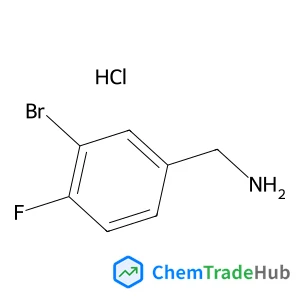
1-(3-Bromo-4-fluorophenyl)methanamine hydrochloride (1:1)
CAS Number:
202865-68-7
Molecular Formula:
C7H8BrClFN
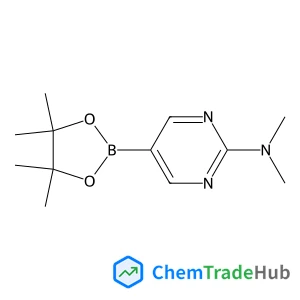
N,N-Dimethyl-5-(4,4,5,5-tetramethyl-1,3,2-dioxaborolan-2-yl)-2-pyrimidinamine
CAS Number:
1032759-30-0
Molecular Formula:
C12H20BN3O2
Recommended Suppliers




Disclaimer
This page provides academic journal information for reference and research purposes only. We are not affiliated with any journal publishers and do not handle publication submissions. For publication-related inquiries, please contact the respective journal publishers directly.
If you notice any inaccuracies in the information displayed, please contact us at support@chemtradehub.com. We will promptly review and address your concerns.