












Smart oligopeptide gels: in situ formation and stabilization of gold and silver nanoparticles within supramolecular organogel networks
Literature Information
Publication Date
2006-06-01
DOI
10.1039/B605498F
Impact Factor
6.222
Authors
Sudipta Ray, Apurba Kumar Das, Arindam Banerjee
View Original
Abstract
Tripeptide with redox active chemical entities based smart organogels have been used for in situ formation and stabilization of gold and silver nanoparticles within the supramolecular gel networks and the gold nanoparticles are aligned in arrays along the gel nanofibers of peptide 1–toluene gels.
Related Literature
A sensitive and specific electrochemiluminescentl sensor for lead based on DNAzyme
Xi Zhu, Zhenyu Lin, Lifeng Chen, Bin Qiu, Guonan Chen
2009-08-21
Communication
DOI: 10.1039/B911191C
Mapping the resources and approaches facilitating computer-aided synthesis planning
Zheng Wang, Wei Zhao, Gefei Hao, Baoan Song
2020-08-28
Review Article
DOI: 10.1039/D0QO00946F
Face selective translation of a cyclodextrin ring along an axle
Tomoya Oshikiri, Hiroyasu Yamaguchi, Yoshinori Takashima, Akira Harada
2009-06-29
Communication
DOI: 10.1039/B906425G
Controlling phase and morphology of inorganicnanostructures originated from the internal crystal structure
Changzheng Wu, Yi Xie
2009-08-25
Feature Article
DOI: 10.1039/B910965J
An organocatalytic enantioselective ring-reorganization domino sequence of methyleneindolinones with 2-aminomalonates
Zhen-Zhen Xie, Lan Zheng, Zhi-Peng Ye, Zhi-Xiong Deng, Qing-Lan Zhao, Jun-An Xiao, Kai Chen, Hao-Yue Xiang, Xiao-Qing Chen, Hua Yang
2020-12-17
Research Article
DOI: 10.1039/D0QO01364A
Straightforward synthesis of new polyoxometalate-based hybrids exemplified by the covalent bonding of a polypyridyl ligand
Victor Duffort, René Thouvenot, Carlos Afonso, Guillaume Izzet, Anna Proust
2009-08-20
Communication
DOI: 10.1039/B913475A
Cationic guest inclusion in widemouthed Schiff base macrocycles
Jian Jiang, Mark J. MacLachlan
2009-08-27
Communication
DOI: 10.1039/B914564H
Formation of mesoporous oxide fibers in polycarbonate confined spaces
Norihiro Suzuki, Tatsuo Kimura
2009-07-27
Communication
DOI: 10.1039/B909251J
You might also like
Compound Q&A
Are there alternatives to 1-(4-Chlorophenyl)-N-hydroxymethanimine (CAS: 3848-36-0) in synthesis?
When considering alternatives to 1-(4-Chlorophenyl)-N-hydroxymethanimine (CAS: 3...
3848-36-01-(4-Chlorophenyl)-N...
Compound Q&A
How should (1R,9S,10S,12S,14E,16S,19R,20R,21S,22R)-3,9,21-Trihydroxy-5,10,12,14,16,20,22-heptamethyl-23,24-dioxatetracyclo[17.3.1.1~6,9~.0~2,7~]tetracosa-2,5,7,14-tetraen-4-one (CAS: 183202-73-5) be stored?
This compound should be stored in a cool, dry place away from direct sunlight. I...
183202-73-5(1R,9S,10S,12S,14E,1...
Compound Q&A
How is 3-(4-Bromophenyl)-5-(2-fluorophenyl)-1,2,4-oxadiazole (CAS: 419553-16-5) typically synthesized?
3-(4-Bromophenyl)-5-(2-fluorophenyl)-1,2,4-oxadiazole is synthesized through a m...
419553-16-53-(4-Bromophenyl)-5-...
Compound Q&A
How is 5-Chloro-2-(4-chlorophenyl)-4-methyl-6-[3-(1-piperidinyl)propoxy]pyrimidine (CAS: 1639220-19-1) typically synthesized?
5-Chloro-2-(4-chlorophenyl)-4-methyl-6-[3-(1-piperidinyl)propoxy]pyrimidine (CAS...
1639220-19-15-Chloro-2-(4-chloro...
Compound Q&A
What industries use 2-Chloro-4-(difluoromethoxy)pyridine (CAS: 1206978-15-5)?
2-Chloro-4-(difluoromethoxy)pyridine is used in the pharmaceutical industry for ...
1206978-15-52-Chloro-4-(difluoro...
Compound Q&A
What regulatory guidelines apply to 3-Chloro-6-methylpyridazine (CAS: 1121-79-5)?
3-Chloro-6-methylpyridazine (CAS: 1121-79-5) is classified under the Globally Ha...
1121-79-53-Chloro-6-methylpyr...
Compound Q&A
Are there alternatives to Methyl 4,5-dimethyl-2-nitrobenzoate in synthesis?
Several alternatives can be used in the synthesis of Methyl 4,5-dimethyl-2-nitro...
90922-74-0Methyl 4,5-dimethyl-...
Compound Q&A
Are there alternatives to (2E,2'E)-3,3'-(1,4-Phenylene)bisacrylaldehyde in synthesis?
Alternatives to (2E,2'E)-3,3'-(1,4-Phenylene)bisacrylaldehyde include other acry...
63405-68-5(2E,2'E)-3,3'-(1,4-P...
Compound Q&A
What is 3-Amino-5-chloropyridin-2-ol hydrochloride (CAS: 1261906-29-9)?
3-Amino-5-chloropyridin-2-ol hydrochloride is an organic compound with the CAS n...
1261906-29-93-Amino-5-chloropyri...
Compound Q&A
What precautions should be taken when handling 6,7-Difluoro-2,3-dihydro-4H-chromen-4-one (CAS: 1092349-93-3)?
When handling 6,7-Difluoro-2,3-dihydro-4H-chromen-4-one, it is essential to wear...
1092349-93-36,7-Difluoro-2,3-dih...
Source Journal
Chemical Communications

CiteScore:
8.6
Self-citation Rate:
4.7%
Articles per Year:
2458
ChemComm publishes urgent research which is of outstanding significance and interest to experts in the field, while also appealing to the journal’s broad chemistry readership. Our communication format is ideally suited to short, urgent studies that are of such importance that they require accelerated publication. Our scope covers all topics in chemistry, and research at the interface of chemistry and other disciplines (such as materials science, nanoscience, physics, engineering and biology) where there is a significant novelty in the chemistry aspects. Major topic areas covered include: Analytical Chemistry Catalysis Chemical Biology and medicinal chemistry Computational Chemistry and Machine Learning Energy and sustainable chemistry Environmental Chemistry Green Chemistry Inorganic Chemistry Materials Chemistry Nanoscience Organic Chemistry Physical Chemistry Polymer Chemistry Supramolecular Chemistry
Recommended Compounds
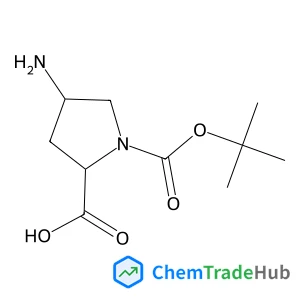
(2R,4R)-1-Boc-4-Aminopyrrolidine-2-carboxylic acid
CAS Number:
132622-98-1
Molecular Formula:
C10H18N2O4
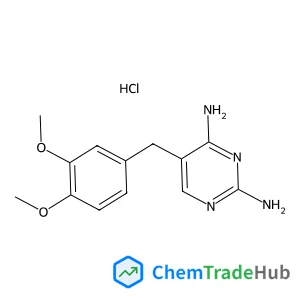
5-(3,4-Dimethoxybenzyl)-2,4-pyrimidinediamine hydrochloride (1:1)
CAS Number:
2507-23-5
Molecular Formula:
C13H17ClN4O2
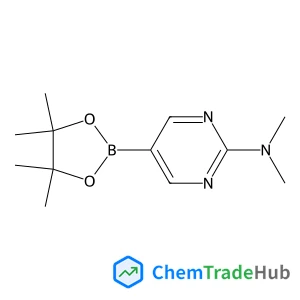
N,N-Dimethyl-5-(4,4,5,5-tetramethyl-1,3,2-dioxaborolan-2-yl)-2-pyrimidinamine
CAS Number:
1032759-30-0
Molecular Formula:
C12H20BN3O2
Recommended Suppliers





Disclaimer
This page provides academic journal information for reference and research purposes only. We are not affiliated with any journal publishers and do not handle publication submissions. For publication-related inquiries, please contact the respective journal publishers directly.
If you notice any inaccuracies in the information displayed, please contact us at support@chemtradehub.com. We will promptly review and address your concerns.