![6-Bromo-2,3-dihydro-1H-pyrido[2,3-b][1,4]oxazine structure](https://static.chemtradehub.com/structs/120/1203499-17-5-b4d1.webp "6-Bromo-2,3-dihydro-1H-pyrido[2,3-b][1,4]oxazine structure")
6-Bromo-2,3-dihydro-1H-pyrido[2,3-b][1,4]oxazine
CAS Number:
1203499-17-5
Molecular Formula:
C7H7BrN2O
This article highlights our recent efforts in the development of highly efficient and cost-effective chiral catalysts for asymmetric reactions through a combinatorial approach by assembling the component ligands (at least one of which is in non-racemic form, while the other might be optically pure, racemic or achiral) with metal ions to generate modular chiral catalyst libraries. The synergistic effect of the binary ligands in terms of both enantioselectivity and activity of the catalysis has been observed in a variety of catalyst systems, including catalysts containing Ti(IV), Zn(II), Rh(I) or Ru(II) ions, for asymmetric hetero-Diels–Alder, carbonyl–ene, alkylation, and hydrogenation reactions, respectively.

Science Progress

Helvetica Chimica Acta

Journal of Catalysis

Proceedings of the National Academy of Sciences of the United States of America

European Journal of Wood and Wood Products

Kinetics and Catalysis

Organic Preparations and Procedures International

Molecular Pharmacology

Israel Journal of Chemistry

Russian Chemical Reviews
Xi Zhu, Zhenyu Lin, Lifeng Chen, Bin Qiu, Guonan Chen
DOI: 10.1039/B911191C
Xin-Ming Xu, Ming Xie, Jiazhu Li, Mei-Xiang Wang
DOI: 10.1039/D0QO01147A
Norihiro Suzuki, Tatsuo Kimura
DOI: 10.1039/B909251J
Joseph A. Wright, Christopher J. Pickett
DOI: 10.1039/B912499C
Yuhui Zhou, Laiqiang Li, Yongmin Ma, Pinhua Li
DOI: 10.1039/D0QO01088J
Chunfang Jiang, Olivier Blacque, Heinz Berke
DOI: 10.1039/B909620E
Er Qian Guo, Pei Hua Ren, Yan Li Zhang, Hai Chang Zhang, Wen Jun Yang
DOI: 10.1039/B911808J
Leo Merz, Tobias Bauert, Manfred Parschau, Georg Koller, Jay S. Siegel
DOI: 10.1039/B911056A
When considering alternatives to 1-(4-Chlorophenyl)-N-hydroxymethanimine (CAS: 3...
This compound should be stored in a cool, dry place away from direct sunlight. I...
3-(4-Bromophenyl)-5-(2-fluorophenyl)-1,2,4-oxadiazole is synthesized through a m...
5-Chloro-2-(4-chlorophenyl)-4-methyl-6-[3-(1-piperidinyl)propoxy]pyrimidine (CAS...
2-Chloro-4-(difluoromethoxy)pyridine is used in the pharmaceutical industry for ...
3-Chloro-6-methylpyridazine (CAS: 1121-79-5) is classified under the Globally Ha...
Several alternatives can be used in the synthesis of Methyl 4,5-dimethyl-2-nitro...
Alternatives to (2E,2'E)-3,3'-(1,4-Phenylene)bisacrylaldehyde include other acry...
3-Amino-5-chloropyridin-2-ol hydrochloride is an organic compound with the CAS n...
When handling 6,7-Difluoro-2,3-dihydro-4H-chromen-4-one, it is essential to wear...

ChemComm publishes urgent research which is of outstanding significance and interest to experts in the field, while also appealing to the journal’s broad chemistry readership. Our communication format is ideally suited to short, urgent studies that are of such importance that they require accelerated publication. Our scope covers all topics in chemistry, and research at the interface of chemistry and other disciplines (such as materials science, nanoscience, physics, engineering and biology) where there is a significant novelty in the chemistry aspects. Major topic areas covered include: Analytical Chemistry Catalysis Chemical Biology and medicinal chemistry Computational Chemistry and Machine Learning Energy and sustainable chemistry Environmental Chemistry Green Chemistry Inorganic Chemistry Materials Chemistry Nanoscience Organic Chemistry Physical Chemistry Polymer Chemistry Supramolecular Chemistry
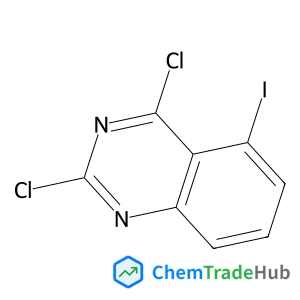
![4-[(3-Chloro-2-fluorophenyl)amino]-7-methoxy-6-quinazolinyl acetate structure](https://static.chemtradehub.com/structs/740/740081-22-5-f58f.webp "4-[(3-Chloro-2-fluorophenyl)amino]-7-methoxy-6-quinazolinyl acetate structure")