


From luminescence quenching to high-efficiency phosphorescence: a theoretical study on the monomeric and dimeric forms of platinum(ii) complexes with both 2-pyridylimidazol-2-ylidene and bipyrazolate chelates
Literature Information
Publication Date
2021-01-19
DOI
10.1039/D0CP06269C
Impact Factor
3.676
Authors
Bo-Hua Zhang, Jun-An Li, Min Wang, Ai-Min Ren, Teng-Fei He, Pan-Pan Lin, Yun-Li Zhang, Xiao-Yue Xi, Lu-Yi Zou
View Original
Abstract
To develop solid-state light-emitting materials with high luminescence efficiency, determining the potential photophysics and luminescence mechanisms of the aggregation state remains a challenge and a priority. Here, we apply density functional theory to study the photophysical properties of a series of square planar Pt(II) complexes in both monomeric and dimeric forms. We reveal that four monomeric Pt(II) complexes are dominated by triplet ligand-to-ligand charge-transfer, and the lack of the triplet metal-to-ligand charge-transfer feature results in weak spin–orbit coupling (SOC), which leads to limited radiative rates; moreover, calculated nonradiative transition rates are one or two orders of magnitude higher than those radiative rates because a large amount of reorganization energy caused by the vibration of the bipyrazolate (bipz) ligand cannot be readily suppressed in the monomeric form. Therefore, four monomers exhibit photoluminescence quenching in CH2Cl2 solution in both theoretical calculations and experiments. However, in the solid state, the intense luminescence phenomenon indicates obviously distinct properties between the monomer and aggregation. We carried out a dimer model to interpret that the interaction of Pt⋯Pt induces a metal–metal-to-ligand charge-transfer excimeric state, which leads more metal components to participate in the charge transfer and enhance the SOC effect. At the same time, the ligand vibration can be significantly reduced by the shortened distance, and there is a strong π–π packing interaction in the dimer; thus, an excellent quantum yield can be achieved in aggregation. In addition, we disclose that introducing bulky substituents bearing electron-donating groups at R′ and R′′ positions have little effect on the properties of the monomers; however, there is a benefit of restricting the internal reorganization energy through the intermolecular interaction when packing in the solid state. Therefore, substitutions can be tuned to improve the properties of monomers (such as emission energy and reorganization energy). We hope that our work will shine some light on Pt(II) emitters in the fabrication of efficient OLEDs.
Recommended Journals

Journal of Organometallic Chemistry

Journal of Catalysis

Proceedings of the National Academy of Sciences of the United States of America

Pure and Applied Chemistry

Planta Medica

Journal of Heterocyclic Chemistry

Russian Chemical Reviews

Kinetics and Catalysis

Journal of Physics and Chemistry of Solids

Science Progress
Related Literature
Efficient boron removal by using mesoporous matrices grafted with saccharides
Gertrudis Rodríguez-López, M. Dolores Marcos, Ramón Martínez-Máñez, Félix Sancenón, Juan Soto, Luis A. Villaescusa, Danile Beltrán, Pedro Amorós
2004-08-19
Communication
DOI: 10.1039/B406611A
Biomimetic thermo-responsive star diblock gelators
Yuting Li, Ravin Narain, Yinghua Ma, Andrew L. Lewis, Steven P. Armes
2004-10-18
Communication
DOI: 10.1039/B410150B
Donor–acceptor nanoensembles of soluble carbon nanotubes
G. N. A. Rahman, Jeff Ramey, Massimo Marcaccio, Demis Paolucci, Francesco Paolucci, Shuhui Qin, Warren T. Ford, Domenico Balbinot, Norbert Jux, Nikos Tagmatarchis, Maurizio Prato
2004-08-10
Communication
DOI: 10.1039/B406933A
A new packing motif for para-sulfonatocalix[4]arene: the solid state structure of the para-sulfonatocalix[4]arene d-arginine complex
Adina Lazar, Eric Da Silva, Alda Navaza, Carole Barbey, Anthony W. Coleman
2004-08-20
Communication
DOI: 10.1039/B408863H
A C3-symmetric molecular scaffold for the construction of large receptors
Gebhard Haberhauer, Thomas Oeser, Frank Rominger
2004-08-06
Communication
DOI: 10.1039/B406335J
BINOL catalyzed enantioselective addition of titanium phenylacetylide to aromatic ketones
Pier Giorgio Cozzi, Silvia Alesi
2004-09-21
Communication
DOI: 10.1039/B408654F
Highly efficient epoxidation method of olefins with hydrogen peroxide as terminal oxidant, bicarbonate as a co-catalyst and oxodiperoxo molybdenum(vi) complex as catalyst
Narottam Gharah, Santu Chakraborty, Alok K. Mukherjee, Ramgopal Bhattacharyya
2004-09-28
Communication
DOI: 10.1039/B408946D
Electrophilicity parameters for σ-complexation by uncharged electron-deficient aromatic and heteroaromatic structures
François Terrier, Régis Goumont, Taoufik Boubaker, Erwin Buncel
2004-09-30
Communication
DOI: 10.1039/B410356D
Synthesis and reactivity of triethylborane adduct of N-heterocyclic carbene: versatile synthons for synthesis of N-heterocyclic carbene complexes
Yoshitaka Yamaguchi, Taigo Kashiwabara, Kenichi Ogata, Yumiko Miura, Yoshiyuki Nakamura, Kimiko Kobayashi, Takashi Ito
2004-08-20
Communication
DOI: 10.1039/B405459H
Synthesis and characterization of electron-rich nickel tris-carbene complexes‡
Xile Hu, Ingrid Castro-Rodriguez, Karsten Meyer
2004-08-23
Communication
DOI: 10.1039/B409241D
You might also like
Compound Q&A
How should waste containing 6-Chloro-5-(2'-hydroxy-3'-methoxy-4-biphenylyl)-3-(3-methoxyphenyl)-1H-pyrrolo[3,2-d]pyrimidine-2,4(3H,5H)-dione (CAS: 1346607-05-3) be handled?
Waste containing 6-Chloro-5-(2'-hydroxy-3'-methoxy-4-biphenylyl)-3-(3-methoxyphe...
1346607-05-36-Chloro-5-(2'-hydro...
Compound Q&A
What are the main uses of (3alpha,5alpha)-3-Hydroxypregnane-11,20-dione (CAS: 23930-19-0)?
(3alpha,5alpha)-3-Hydroxypregnane-11,20-dione is primarily used in the pharmaceu...
23930-19-0(3alpha,5alpha)-3-Hy...
Compound Q&A
What is the market or research trend for 4-Amino-6-chloro-2-pyridinecarboxylic acid (CAS: 546141-56-4)?
The market for 4-Amino-6-chloro-2-pyridinecarboxylic acid (CAS: 546141-56-4) is ...
546141-56-44-Amino-6-chloro-2-p...
Compound Q&A
Are there alternatives to (2-Benzoylethyl)trimethylammonium chloride (CAS: 24472-88-6) in synthesis?
Alternatives to (2-Benzoylethyl)trimethylammonium chloride (CAS: 24472-88-6) in ...
24472-88-6(2-Benzoylethyl)trim...
Compound Q&A
Is N-[4-Nitro-3-(trifluoromethyl)phenyl]acetamide (CAS: 393-12-4) safe?
N-[4-Nitro-3-(trifluoromethyl)phenyl]acetamide (CAS: 393-12-4) is generally safe...
393-12-4N-[4-Nitro-3-(triflu...
Compound Q&A
Are there alternatives to [(4R,5R,6S)-5-hydroxy-10-imino-3,7-dioxa-1,9-diazatricyclo[6.4.0.02,6]dodeca-8,11-dien-4-yl]methyl dihydrogen phosphate (CAS: 39679-56-6) in synthesis?
Alternative reagents such as other phosphates or similar functional groups can b...
39679-56-6[(4R,5R,6S)-5-hydrox...
Compound Q&A
Are there alternatives to N,N'-Bis(3-aminopropyl)-1,3-propanediamine (CAS: 4605-14-5) in synthesis?
There are alternatives to N,N'-Bis(3-aminopropyl)-1,3-propanediamine (CAS: 4605-...
4605-14-5N,N'-Bis(3-aminoprop...
Compound Q&A
What precautions should be taken when handling Aluminium trihexadecanoate (CAS: 555-35-1)?
When handling Aluminium trihexadecanoate, it is important to use appropriate per...
555-35-1Aluminium trihexadec...
Compound Q&A
What is (1,1-Dioxido-3-oxo-1,2-benzothiazol-2(3H)-yl)acetic acid (CAS: 52188-11-1)?
(1,1-Dioxido-3-oxo-1,2-benzothiazol-2(3H)-yl)acetic acid is a chemical compound ...
52188-11-1(1,1-Dioxido-3-oxo-1...
Compound Q&A
Are there alternatives to 5,5-dimethyloxolan-2-one (CAS: 3123-97-5) in synthesis?
Several alternatives to 5,5-dimethyloxolan-2-one (CAS: 3123-97-5) can be used in...
3123-97-55,5-dimethyloxolan-2...
Source Journal
Physical Chemistry Chemical Physics

CiteScore:
5.5
Self-citation Rate:
10.3%
Articles per Year:
3036
Physical Chemistry Chemical Physics (PCCP) is an international journal co-owned by 19 physical chemistry and physics societies from around the world. This journal publishes original, cutting-edge research in physical chemistry, chemical physics and biophysical chemistry. To be suitable for publication in PCCP, articles must include significant innovation and/or insight into physical chemistry; this is the most important criterion that reviewers and Editors will judge against when evaluating submissions. The journal has a broad scope and welcomes contributions spanning experiment, theory, computation and data science. Topical coverage includes spectroscopy, dynamics, kinetics, statistical mechanics, thermodynamics, electrochemistry, catalysis, surface science, quantum mechanics, quantum computing and machine learning. Interdisciplinary research areas such as polymers and soft matter, materials, nanoscience, energy, surfaces/interfaces, and biophysical chemistry are welcomed if they demonstrate significant innovation and/or insight into physical chemistry. Joined experimental/theoretical studies are particularly appreciated when complementary and based on up-to-date approaches.
Recommended Compounds
![(2R,6S)-6-[(Benzyloxy)methyl]-4-{[(2-methyl-2-propanyl)oxy]carbonyl}-2-morpholinecarboxylic acid structure](https://static.chemtradehub.com/structs/109/1093085-91-6-3382.webp "(2R,6S)-6-[(Benzyloxy)methyl]-4-{[(2-methyl-2-propanyl)oxy]carbonyl}-2-morpholinecarboxylic acid structure")
(2R,6S)-6-[(Benzyloxy)methyl]-4-{[(2-methyl-2-propanyl)oxy]carbonyl}-2-morpholinecarboxylic acid
CAS Number:
1093085-91-6
Molecular Formula:
C18H25NO6

(3alpha,5beta,6alpha,7alpha)-6-Ethylcholane-3,7,24-triol
CAS Number:
1537866-49-1
Molecular Formula:
C26H46O3
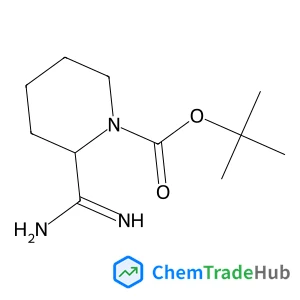
2-Methyl-2-propanyl 2-carbamimidoyl-1-piperidinecarboxylate
CAS Number:
1258640-98-0
Molecular Formula:
C11H21N3O2
Recommended Suppliers






Disclaimer
This page provides academic journal information for reference and research purposes only. We are not affiliated with any journal publishers and do not handle publication submissions. For publication-related inquiries, please contact the respective journal publishers directly.
If you notice any inaccuracies in the information displayed, please contact us at support@chemtradehub.com. We will promptly review and address your concerns.