


M24+ paddlewheel clusters as junction points in single-chain nanoparticles
Literature Information
Publication Date
2018-11-10
DOI
10.1039/C8PY01486H
Impact Factor
5.582
Authors
Nicolai D. Knöfel, Hannah Rothfuss, Peter W. Roesky
View Original
Abstract
We report the formation of well-defined copper and molybdenum single-chain nanoparticles, exhibiting metal clusters (M24+) as junction points. Upon addition of dimetallic precursor complexes [Cu2(OAc)4] and [Mo2(OAc)4], carboxylic acid functionalized polymer chains collapse into nanoparticles containing a M24+ (M = Cu, Mo) centered paddlewheel folding moiety. This synthetic strategy allows a high crosslinking per metal unit and the incorporation of an adjustable number of dimetallic centers into a single polymer chain. The successful formation of M2-SCNPs is evidenced by size exclusion chromatography and diffusion-ordered NMR spectroscopy. Detailed insight into the dimetallic folding unit is provided by 1H/2H NMR-, IR-, Raman- and UV-Vis spectroscopy as well as comparative analyses of molecular dicopper and dimolybdenum model-complexes. For the first time, M24+ paddlewheel folding motifs, including quadruple bonded dimetallic units, as in the case of Mo24+, are utilized as structure forming elements in the realm of SCNP chemistry.
Recommended Journals

Bioorganic & Medicinal Chemistry Letters

Journal of the Indian Institute of Science

Journal of Chemical Sciences

Herald of the Russian Academy of Sciences

Biocatalysis and Biotransformation

Medicinal Chemistry Research

Heteroatom Chemistry

Atomization and Sprays

Bioorganic & Medicinal Chemistry

Critical Reviews in Solid State and Materials Sciences
Related Literature
Manipulating dynamics with chemical structure: probing vibrationally-enhanced tunnelling in photoexcited catechol
Jamie D. Young, Dave Townsend, Justyna M. Żurek, Martin J. Paterson, Gareth M. Roberts, Vasilios G. Stavros
2013-03-22
Paper
DOI: 10.1039/C3CP51108A
Microscopic effects of the bonding configuration of nitrogen-doped graphene on its reactivity toward hydrogen peroxide reduction reaction
Ping Wu, Pan Du, Hui Zhang, Chenxin Cai
2013-03-15
Paper
DOI: 10.1039/C3CP50900A
Impact of short and long-range effects on the magnetic interactions in neutral organic radical-based materials
Alex Domingo, Martin Vérot, Fernando Mota, Juan J. Novoa, Vincent Robert
2013-03-18
Paper
DOI: 10.1039/C3CP44647F
Raman microspectroscopy and vibrational sum frequency generation spectroscopy as probes of the bulk and surface compositions of size-resolved sea spray aerosol particles
Andrew P. Ault, Defeng Zhao, Carlena J. Ebben, Michael J. Tauber, Franz M. Geiger, Vicki H. Grassian
2013-02-19
Paper
DOI: 10.1039/C3CP43899F
Laser directed lithography of asymmetric graphene ribbons on a polydimethylsiloxane trench structure
Yi Yang, Dan Xie, Tian-Ling Ren, Yi Shu, Hui Sun, Chang-Jian Zhou, Xuan Liu, Lu-Qi Tao, Jie Ge, Cang-Hai Zhang, Yuegang Zhang
2013-02-28
Paper
DOI: 10.1039/C3CP50538C
An oxygen pumping anode for electrowinning aluminium
Changqing Liu, Xiaobo Ji, Pingmin Zhang, Qiyuan Chen, Craig E. Banks
2013-03-22
Paper
DOI: 10.1039/C3CP44171G
Visible light initiated and collapsed resistive switching in TbMnO3/Nb:SrTiO3 heterojunctions
Yimin Cui, Wei Liu, Rongming Wang
2013-03-14
Paper
DOI: 10.1039/C3CP00132F
Changed reactivity of the 1-bromo-4-nitrobenzene radical anion in a room temperature ionic liquid
Sven Ernst, Kristopher R. Ward, Sarah E. Norman, Christopher Hardacre, Richard G. Compton
2013-03-15
Paper
DOI: 10.1039/C3CP51004B
Linking interfacial chemistry of CO2 to surface structures of hydrated metal oxide nanoparticles: hematite
Irina V. Chernyshova, Sathish Ponnurangam, Ponisseril Somasundaran
2013-03-18
Paper
DOI: 10.1039/C3CP44264K
You might also like
Compound Q&A
What precautions should be taken when handling 4-(2-Furylmethyl)thiomorpholine 1,1-dioxide (CAS: 79206-94-3)?
When handling 4-(2-Furylmethyl)thiomorpholine 1,1-dioxide (CAS: 79206-94-3), it ...
79206-94-34-(2-Furylmethyl)thi...
Compound Q&A
What precautions should be taken when handling 4-Chloro-N-[2-(4-morpholinyl)ethyl]benzamide (CAS: 71320-77-9)?
When handling 4-Chloro-N-[2-(4-morpholinyl)ethyl]benzamide (CAS: 71320-77-9), it...
71320-77-94-Chloro-N-[2-(4-mor...
Compound Q&A
How should waste containing 2-[2-(2-Methoxyethoxy)ethoxy]ethyl 4-methylbenzenesulfonate (CAS: 62921-74-8) be handled?
Waste containing this compound (CAS: 62921-74-8) should be handled according to ...
62921-74-82-[2-(2-Methoxyethox...
Compound Q&A
How should waste containing (S)-Methyl 2-amino-3-cyclohexylpropanoate be handled?
Waste containing (S)-Methyl 2-amino-3-cyclohexylpropanoate should be collected i...
40056-18-6(S)-Methyl 2-amino-3...
Compound Q&A
How is 5-({4-[(2S,4R)-4-Hydroxy-2-methyltetrahydro-2H-pyran-4-yl]-2-thienyl}sulfanyl)-1-methyl-1,3-dihydro-2H-indol-2-one (CAS: 166882-70-8) typically synthesized?
This compound can be synthesized using a multi-step process involving the conjug...
166882-70-85-({4-[(2S,4R)-4-Hyd...
Compound Q&A
Are there alternatives to (2E)-3-(3,4-Dichlorophenyl)acrylic acid (CAS: 7312-27-8) in synthesis?
There are several alternatives to (2E)-3-(3,4-Dichlorophenyl)acrylic acid in syn...
7312-27-8(2E)-3-(3,4-Dichloro...
Compound Q&A
How should Ethyl 6-(2-nitrophenyl)imidazo[2,1-b][1,3]thiazole-3-carboxylate (CAS: 925437-84-9) be stored?
Ethyl 6-(2-nitrophenyl)imidazo[2,1-b][1,3]thiazole-3-carboxylate (CAS: 925437-84...
925437-84-9Ethyl 6-(2-nitrophen...
Compound Q&A
How should waste containing 2-(1,3-Thiazol-2-yl)ethanamine (CAS: 18453-07-1) be handled?
Waste containing 2-(1,3-Thiazol-2-yl)ethanamine (CAS: 18453-07-1) should be coll...
18453-07-12-(1,3-Thiazol-2-yl)...
Compound Q&A
How is Methyl 5-iodo-2-methylbenzoate (CAS: 103440-54-6) typically synthesized?
Methyl 5-iodo-2-methylbenzoate can be synthesized through the iodination of meth...
103440-54-6Methyl 5-iodo-2-meth...
Compound Q&A
How is 5-Chloro[1,2,4]triazolo[1,5-a]pyridine (CAS: 1427399-34-5) typically synthesized?
5-Chloro[1,2,4]triazolo[1,5-a]pyridine is commonly synthesized via the condensat...
1427399-34-55-Chloro[1,2,4]triaz...
Source Journal
Polymer Chemistry

CiteScore:
8.6
Self-citation Rate:
7.3%
Articles per Year:
457
Polymer Chemistry welcomes submissions in all areas of polymer science that have a strong focus on macromolecular chemistry. Manuscripts may cover a broad range of fields, yet no direct application focus is required.
Recommended Compounds
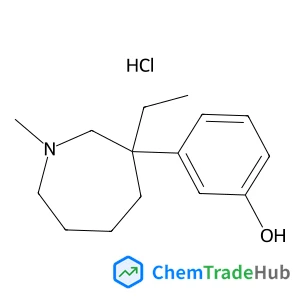
3-(3-Ethyl-1-methyl-3-azepanyl)phenol hydrochloride (1:1)
CAS Number:
59263-76-2
Molecular Formula:
C15H24ClNO
Recommended Suppliers





Disclaimer
This page provides academic journal information for reference and research purposes only. We are not affiliated with any journal publishers and do not handle publication submissions. For publication-related inquiries, please contact the respective journal publishers directly.
If you notice any inaccuracies in the information displayed, please contact us at support@chemtradehub.com. We will promptly review and address your concerns.