












![1-[6-(1H-Imidazol-1-yl)-3-pyridinyl]methanamine structure](https://static.chemtradehub.com/structs/914/914637-08-4-8825.webp "1-[6-(1H-Imidazol-1-yl)-3-pyridinyl]methanamine structure")
Changed reactivity of the 1-bromo-4-nitrobenzene radical anion in a room temperature ionic liquid
Literature Information
Publication Date
2013-03-15
DOI
10.1039/C3CP51004B
Impact Factor
3.676
Authors
Sven Ernst, Kristopher R. Ward, Sarah E. Norman, Christopher Hardacre, Richard G. Compton
View Original
Abstract
Radical anions of 1-bromo-4-nitrobenzene (p-BrC6H4NO2) are shown to be reactive in the room temperature ionic liquid N-butyl-N-methylpyrrolidinium bis(trifluoromethylsulfonyl)imide, ([C4mPyrr][NTf2]), by means of voltammetric measurements. In particular, they are shown to react via a DISP type mechanism such that the electrolysis of p-BrC6H4NO2 occurs consuming between one and two electrons per reactant molecule, leading to the formation of the nitrobenzene radical anion and bromide ions. This behaviour is a stark contrast to that in conventional non-aqueous solvents such as acetonitrile, dimethyl sulfoxide or N,N-dimethylformamide, which suggests that the ionic solvent promotes the reactivity of the radical anion, probably via stabilisation of the charged products.
Recommended Journals
Related Literature
Local electronic structure of aqueous zinc acetate: oxygen K-edge X-ray absorption and emission spectroscopy on micro-jets
Edlira Suljoti, Kai F. Hodeck, Kathrin M. Lange, Mikhail A. Soldatov
2013-04-17
Communication
DOI: 10.1039/C3CP50686J
Molecular dynamics investigation of the disordered crystal structure of hexagonal LiBH4
Keith Refson
2013-01-29
Paper
DOI: 10.1039/C3CP44520H
Chemically modified ribbon edge stimulated H2 dissociation: a first-principles computational study
Ting Liao, Ziqi Sun, Aijun Du, Sean Smith
2013-04-12
Communication
DOI: 10.1039/C3CP50654A
Faceting preferences for AuN and PdN nanoclusters with high-symmetry motifs
Z. Y. Li, Roy L. Johnston
2013-04-15
Paper
DOI: 10.1039/C3CP50978H
Strain-induced Dirac cone-like electronic structures and semiconductor–semimetal transition in graphdiyne
Hui-Juan Cui, Xian-Lei Sheng, Qing-Bo Yan, Qing-Rong Zheng, Gang Su
2013-03-22
Paper
DOI: 10.1039/C3CP44457K
The impact of spectator species on the interaction of H2O2 with platinum – implications for the oxygen reduction reaction pathways
Ioannis Katsounaros, Josef C. Meier, Udo Benedikt, P. Ulrich Biedermann, Angel Cuesta, Alexander A. Auer, Karl J. J. Mayrhofer
2013-03-01
Paper
DOI: 10.1039/C3CP50649E
Tandem cathode for proton exchange membrane fuel cells
Samira Siahrostami, Mårten E. Björketun, Peter Strasser, Jeff Greeley, Jan Rossmeisl
2013-04-22
Paper
DOI: 10.1039/C3CP51479J
Single-layered V2O5 a promising cathode material for rechargeable Li and Mg ion batteries: an ab initio study
Zhiguo Wang, Qiulei Su, Huiqiu Deng
2013-04-12
Communication
DOI: 10.1039/C3CP51167G
Lone-pair distribution and plumbite network formation in high lead silicate glass, 80PbO·20SiO2
Oliver L. G. Alderman, Alex C. Hannon, Diane Holland, Steve Feller, Gloria Lehr, Adam J. Vitale, Uwe Hoppe, Martin v. Zimmerman, Anke Watenphul
2013-04-29
Paper
DOI: 10.1039/C3CP51348C
You might also like
Compound Q&A
What is the market or research trend for N-(4-Methoxybenzyl)-2-pyridinamine (CAS: 52818-63-0)?
N-(4-Methoxybenzyl)-2-pyridinamine (CAS: 52818-63-0) is increasingly being used ...
52818-63-0N-(4-Methoxybenzyl)-...
Compound Q&A
What precautions should be taken when handling Ethyl 4-(2-chlorophenyl)-1,3-thiazole-2-carboxylate (CAS: 1050507-06-6)?
When handling Ethyl 4-(2-chlorophenyl)-1,3-thiazole-2-carboxylate, appropriate p...
1050507-06-6Ethyl 4-(2-chlorophe...
Compound Q&A
What regulatory guidelines apply to diethyldiselane (CAS: 628-39-7)?
Diethyldiselane (CAS: 628-39-7) is classified under the Globally Harmonized Syst...
628-39-7Diethyldiselane
Compound Q&A
What is the market or research trend for oxocopper (CAS: 12053-18-8)?
The market for oxocopper (CAS: 12053-18-8) is primarily driven by its use in cat...
12053-18-8oxocopper; oxo-(oxoc...
Compound Q&A
What is the market or research trend for 5-{[(2-Methyl-2-propanyl)oxy]carbonyl}-5-azaspiro[2.4]heptane-7-carboxylic acid?
The market for 5-{[(2-Methyl-2-propanyl)oxy]carbonyl}-5-azaspiro[2.4]heptane-7-c...
1268519-54-55-{[(2-Methyl-2-prop...
Compound Q&A
What is 2-(1-Pyrrolidinyl)-4-pyridinamine (CAS: 35981-63-6)?
2-(1-Pyrrolidinyl)-4-pyridinamine is a chemical compound with the CAS number 359...
35981-63-62-(1-Pyrrolidinyl)-4...
Compound Q&A
What are the physical and chemical properties of 2-(3-Pyridinyl)-1-azabicyclo[2.2.2]octane (CAS: 91556-75-1)?
2-(3-Pyridinyl)-1-azabicyclo[2.2.2]octane (CAS: 91556-75-1) is a crystalline sol...
91556-75-12-(3-Pyridinyl)-1-az...
Compound Q&A
How is (S)-Alpha-allyl-proline hydrochloride (CAS: 129704-91-2) typically synthesized?
(S)-Alpha-allyl-proline hydrochloride is usually synthesized via a Wittig reacti...
129704-91-2(S)-Alpha-allyl-prol...
Compound Q&A
What is 3-Methyl-1,2-oxazole-5-carboxylic acid (CAS: 4857-42-5)?
3-Methyl-1,2-oxazole-5-carboxylic acid (CAS: 4857-42-5) is an organic compound w...
4857-42-53-Methyl-1,2-oxazole...
Compound Q&A
How is Lys-SMCC-DM1 (CAS: 1281816-04-3) typically synthesized?
Lys-SMCC-DM1 is synthesized via a multi-step process involving the coupling of S...
1281816-04-3Lys-SMCC-DM1
Source Journal
Physical Chemistry Chemical Physics

CiteScore:
5.5
Self-citation Rate:
10.3%
Articles per Year:
3036
Physical Chemistry Chemical Physics (PCCP) is an international journal co-owned by 19 physical chemistry and physics societies from around the world. This journal publishes original, cutting-edge research in physical chemistry, chemical physics and biophysical chemistry. To be suitable for publication in PCCP, articles must include significant innovation and/or insight into physical chemistry; this is the most important criterion that reviewers and Editors will judge against when evaluating submissions. The journal has a broad scope and welcomes contributions spanning experiment, theory, computation and data science. Topical coverage includes spectroscopy, dynamics, kinetics, statistical mechanics, thermodynamics, electrochemistry, catalysis, surface science, quantum mechanics, quantum computing and machine learning. Interdisciplinary research areas such as polymers and soft matter, materials, nanoscience, energy, surfaces/interfaces, and biophysical chemistry are welcomed if they demonstrate significant innovation and/or insight into physical chemistry. Joined experimental/theoretical studies are particularly appreciated when complementary and based on up-to-date approaches.
Recommended Compounds
![1,10-bis(3,5-dimethylphenyl)-12-hydroxy-4,5,6,7-tetrahydroiindeno[7,1-de:1',7'-fg][1,3,2]dioxaphosphocine 12-oxide structure](https://static.chemtradehub.com/structs/141/1412439-82-7-b9a9.webp "1,10-bis(3,5-dimethylphenyl)-12-hydroxy-4,5,6,7-tetrahydroiindeno[7,1-de:1',7'-fg][1,3,2]dioxaphosphocine 12-oxide structure")
1,10-bis(3,5-dimethylphenyl)-12-hydroxy-4,5,6,7-tetrahydroiindeno[7,1-de:1',7'-fg][1,3,2]dioxaphosphocine 12-oxide
CAS Number:
1412439-82-7
Molecular Formula:
C33H31O4P
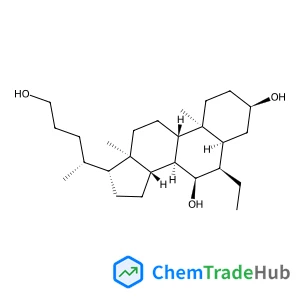
(3alpha,5beta,6alpha,7alpha)-6-Ethylcholane-3,7,24-triol
CAS Number:
1537866-49-1
Molecular Formula:
C26H46O3
Recommended Suppliers





Disclaimer
This page provides academic journal information for reference and research purposes only. We are not affiliated with any journal publishers and do not handle publication submissions. For publication-related inquiries, please contact the respective journal publishers directly.
If you notice any inaccuracies in the information displayed, please contact us at support@chemtradehub.com. We will promptly review and address your concerns.