












Microscopic effects of the bonding configuration of nitrogen-doped graphene on its reactivity toward hydrogen peroxide reduction reaction
Literature Information
Publication Date
2013-03-15
DOI
10.1039/C3CP50900A
Impact Factor
3.676
Authors
Ping Wu, Pan Du, Hui Zhang, Chenxin Cai
View Original
Abstract
We report a density functional theory (DFT) study of microscopic detailed effects of the bonding configuration of nitrogen-doped graphene (N-graphene) within the carbon lattice (including pyridinic, pyrrolic, and graphitic N) on the reactivity and mechanistic processes of H2O2 reduction reaction. We simulated the adsorption process of H2O2, analyzed the mechanistic processes, and calculated the reversible potential of each reaction step of the H2O2 reduction reaction on N-graphene. The results indicate that the adsorption of H2O2 on the pristine and N-doped graphene surfaces occurs via physisorption without the formation of a chemical bond. When H+ is introduced into the system, a series of reactions can occur, including the breakage of the O–O bond, the formation of an O–C chemical bond between oxygen and graphene, and the creation of water molecules. The results also indicate a decrease in the energy of the system and a positive reversible potential for each reaction step. The calculations of the relative energy of each reaction step and the value of the onset potential for H2O2 reduction reaction suggest that the reactivity of pristine and N-doped graphene has the following order: pyridinic N-graphene > pyrrolic N-graphene > graphitic N-graphene > pristine graphene. We also proposed an explanation based on electrostatic potential calculations for this dependence of the reactivity order on the bond configuration of the doping in N-graphene. The results of this study should help in the atomic-scale understanding of the dependence of the reactivity of N-graphene on its microstructure, inspire the study of various types of heteroatom-doped graphenes to improve their catalytic efficiency, and provide a theoretical framework to analyze their reactivities.
Related Literature
ZnO nanoparticle based highly efficient CdS/CdSe quantum dot-sensitized solar cells
Chunhui Li, Lei Yang, Junyan Xiao, Yih-Chyng Wu, Martin Søndergaard, Yanhong Luo, Dongmei Li, Qingbo Meng, Bo Brummerstedt Iversen
2013-03-27
Communication
DOI: 10.1039/C3CP50365H
Strong-pump strong-probe spectroscopy: effects of higher excited electronic states
Maxim F. Gelin, Dassia Egorova, Wolfgang Domcke
2013-03-22
Paper
DOI: 10.1039/C3CP44454F
New Li2FeSiO4–carbon monoliths with controlled macropores: effects of pore properties on electrode performance
George Hasegawa, Mai Sannohe, Yuya Ishihara, Kazuyoshi Kanamori, Kazuki Nakanishi, Takeshi Abe
2013-04-09
Paper
DOI: 10.1039/C3CP50352F
Insights into the adsorption and energy transfer of Ag clusters on the AgCl(100) surface
Xiangchao Ma, Ying Dai, Meng Guo, Yingtao Zhu, Baibiao Huang
2013-01-30
Paper
DOI: 10.1039/C3CP44519D
An ab initio investigation of Li2M0.5N0.5SiO4 (M, N = Mn, Fe, Co Ni) as Li-ion battery cathode materials
Sirous Asgari, Doretta Capsoni, Piercarlo Mustarelli
2013-04-23
Communication
DOI: 10.1039/C3CP51481A
A time resolved high energy X-ray diffraction study of cooling liquid SiO2
C. J. Benmore, M. C. Wilding, S. K. Tumber
2013-04-05
Paper
DOI: 10.1039/C3CP44347G
Synthesis of chemically pure, luminescent Eu3+ doped HAp nanoparticles: a promising fluorescent probe for in vivo imaging applications
S. Sasanka Kumar, Manoj Komath, Manoj Raama Varma, M. K. Jayaraj, K. Rajeev Kumar
2013-04-12
Paper
DOI: 10.1039/C3CP42648C
Synthesis and acid catalysis of zeolite-templated microporous carbons with SO3H groups
Kiichi Fukuhara, Masaaki Kitano, Shigenobu Hayashi, Michikazu Hara
2013-04-26
Paper
DOI: 10.1039/C3CP43853H
Tandem cathode for proton exchange membrane fuel cells
Samira Siahrostami, Mårten E. Björketun, Peter Strasser, Jeff Greeley, Jan Rossmeisl
2013-04-22
Paper
DOI: 10.1039/C3CP51479J
You might also like
Compound Q&A
What is the market or research trend for N-(4-Methoxybenzyl)-2-pyridinamine (CAS: 52818-63-0)?
N-(4-Methoxybenzyl)-2-pyridinamine (CAS: 52818-63-0) is increasingly being used ...
52818-63-0N-(4-Methoxybenzyl)-...
Compound Q&A
What precautions should be taken when handling Ethyl 4-(2-chlorophenyl)-1,3-thiazole-2-carboxylate (CAS: 1050507-06-6)?
When handling Ethyl 4-(2-chlorophenyl)-1,3-thiazole-2-carboxylate, appropriate p...
1050507-06-6Ethyl 4-(2-chlorophe...
Compound Q&A
What regulatory guidelines apply to diethyldiselane (CAS: 628-39-7)?
Diethyldiselane (CAS: 628-39-7) is classified under the Globally Harmonized Syst...
628-39-7Diethyldiselane
Compound Q&A
What is the market or research trend for oxocopper (CAS: 12053-18-8)?
The market for oxocopper (CAS: 12053-18-8) is primarily driven by its use in cat...
12053-18-8oxocopper; oxo-(oxoc...
Compound Q&A
What is the market or research trend for 5-{[(2-Methyl-2-propanyl)oxy]carbonyl}-5-azaspiro[2.4]heptane-7-carboxylic acid?
The market for 5-{[(2-Methyl-2-propanyl)oxy]carbonyl}-5-azaspiro[2.4]heptane-7-c...
1268519-54-55-{[(2-Methyl-2-prop...
Compound Q&A
What is 2-(1-Pyrrolidinyl)-4-pyridinamine (CAS: 35981-63-6)?
2-(1-Pyrrolidinyl)-4-pyridinamine is a chemical compound with the CAS number 359...
35981-63-62-(1-Pyrrolidinyl)-4...
Compound Q&A
What are the physical and chemical properties of 2-(3-Pyridinyl)-1-azabicyclo[2.2.2]octane (CAS: 91556-75-1)?
2-(3-Pyridinyl)-1-azabicyclo[2.2.2]octane (CAS: 91556-75-1) is a crystalline sol...
91556-75-12-(3-Pyridinyl)-1-az...
Compound Q&A
How is (S)-Alpha-allyl-proline hydrochloride (CAS: 129704-91-2) typically synthesized?
(S)-Alpha-allyl-proline hydrochloride is usually synthesized via a Wittig reacti...
129704-91-2(S)-Alpha-allyl-prol...
Compound Q&A
What is 3-Methyl-1,2-oxazole-5-carboxylic acid (CAS: 4857-42-5)?
3-Methyl-1,2-oxazole-5-carboxylic acid (CAS: 4857-42-5) is an organic compound w...
4857-42-53-Methyl-1,2-oxazole...
Compound Q&A
How is Lys-SMCC-DM1 (CAS: 1281816-04-3) typically synthesized?
Lys-SMCC-DM1 is synthesized via a multi-step process involving the coupling of S...
1281816-04-3Lys-SMCC-DM1
Source Journal
Physical Chemistry Chemical Physics

CiteScore:
5.5
Self-citation Rate:
10.3%
Articles per Year:
3036
Physical Chemistry Chemical Physics (PCCP) is an international journal co-owned by 19 physical chemistry and physics societies from around the world. This journal publishes original, cutting-edge research in physical chemistry, chemical physics and biophysical chemistry. To be suitable for publication in PCCP, articles must include significant innovation and/or insight into physical chemistry; this is the most important criterion that reviewers and Editors will judge against when evaluating submissions. The journal has a broad scope and welcomes contributions spanning experiment, theory, computation and data science. Topical coverage includes spectroscopy, dynamics, kinetics, statistical mechanics, thermodynamics, electrochemistry, catalysis, surface science, quantum mechanics, quantum computing and machine learning. Interdisciplinary research areas such as polymers and soft matter, materials, nanoscience, energy, surfaces/interfaces, and biophysical chemistry are welcomed if they demonstrate significant innovation and/or insight into physical chemistry. Joined experimental/theoretical studies are particularly appreciated when complementary and based on up-to-date approaches.
Recommended Compounds
![1-[6-(1H-Imidazol-1-yl)-3-pyridinyl]methanamine structure](https://static.chemtradehub.com/structs/914/914637-08-4-8825.webp "1-[6-(1H-Imidazol-1-yl)-3-pyridinyl]methanamine structure")
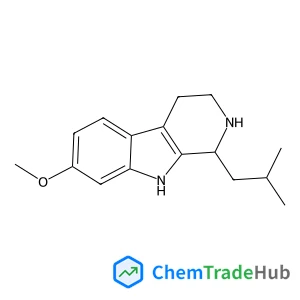
1-Isobutyl-7-methoxy-2,3,4,9-tetrahydro-1H-beta-carboline
CAS Number:
175975-76-5
Molecular Formula:
C16H22N2O
![1-oxaspiro[4.4]nonan-6-one structure](https://static.chemtradehub.com/structs/134/134179-01-4-e051.webp "1-oxaspiro[4.4]nonan-6-one structure")
Recommended Suppliers


Disclaimer
This page provides academic journal information for reference and research purposes only. We are not affiliated with any journal publishers and do not handle publication submissions. For publication-related inquiries, please contact the respective journal publishers directly.
If you notice any inaccuracies in the information displayed, please contact us at support@chemtradehub.com. We will promptly review and address your concerns.