












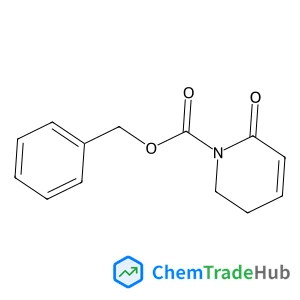
Benzyl 6-oxo-3,6-dihydro-1(2H)-pyridinecarboxylate
CAS Number:
725746-35-0
Molecular Formula:
C13H13NO3
Yi Yang, Dan Xie, Tian-Ling Ren, Yi Shu, Hui Sun, Chang-Jian Zhou, Xuan Liu, Lu-Qi Tao, Jie Ge, Cang-Hai Zhang, Yuegang Zhang
Recently, manipulating heat transport by asymmetric graphene ribbons has received significant attention, in which phonons in the carbon lattice are used to carry energy. In addition to heat control, asymmetric graphene ribbons might also have broad applications in renewable energy engineering, such as thermoelectric energy harvesting. Here, we transfer a single sheet of graphene over a 5 μm trench of polydimethylsiloxane (PDMS) structure. By using a laser (1.77 mW, 1 μm diameter spot size, 517 nm wavelength) focusing on one side of the suspended graphene, a triangular shaped graphene ribbon is obtained. As the graphene has a negative thermal expansion coefficient, local laser heating could make the affected graphene area shrink and eventually break. Theoretical calculation shows that the 1.77 mW laser could create a local hot spot as high as 1462.5 °C, which could induce an asymmetric shape structure. We also find the temperature coefficient (−13.06 cm−1 mW) of suspended graphene on PDMS trench substrate is ten times higher than that reported on SiO2/Si trench substrate. Collectively, our results raise the exciting prospect that the realization of graphene with asymmetric shape on thermally insulating substrate is technologically feasible, which may open up important applications in thermal circuits and thermal management.
Bing Liu, Xinyu Zhao, Yuan Tian, Di Zhao, Changwen Hu, Minhua Cao
DOI: 10.1039/C3CP44707C
Paola D'Angelo, Valentina Migliorati, Riccardo Spezia, Simone De Panfilis, Ingmar Persson, Andrea Zitolo
DOI: 10.1039/C3CP50842K
Yuriy I. Prylutskyy, Anatoly S. Buchelnikov, Dmitry P. Voronin, Viktor V. Kostjukov, Uwe Ritter, John A. Parkinson, Maxim P. Evstigneev
DOI: 10.1039/C3CP50187F
Damien Thompson, Mateusz Sikora, Piotr Szymczak, Marek Cieplak
DOI: 10.1039/C3CP50523E
V. Petkov, Y. Ren, S. Kabekkodu, D. Murphy
DOI: 10.1039/C2CP43378H
Jonathon Duay, Eleanor Gillette, Junkai Hu
DOI: 10.1039/C3CP50724F
Thomas K. Wallace, Ross H. Colman, Abbie C. Mclaughlin
DOI: 10.1039/C2CP43732E
John L. Provis, Breaunnah Bloomer, Neil J. Henson, Katharine Page
DOI: 10.1039/C3CP44342F
Ying Dai, Baibiao Huang, Timo Jacob
DOI: 10.1039/C3CP51078F
Reshma Sultana, Naser Reza, Helena Woodvine, Jonathan G. Terry, Anthony J. Walton, Charlotte L. Brady, Ilka Schmueser, Andrew R. Mount
DOI: 10.1039/C3CP50759A
N-(4-Methoxybenzyl)-2-pyridinamine (CAS: 52818-63-0) is increasingly being used ...
When handling Ethyl 4-(2-chlorophenyl)-1,3-thiazole-2-carboxylate, appropriate p...
Diethyldiselane (CAS: 628-39-7) is classified under the Globally Harmonized Syst...
The market for oxocopper (CAS: 12053-18-8) is primarily driven by its use in cat...
The market for 5-{[(2-Methyl-2-propanyl)oxy]carbonyl}-5-azaspiro[2.4]heptane-7-c...
2-(1-Pyrrolidinyl)-4-pyridinamine is a chemical compound with the CAS number 359...
2-(3-Pyridinyl)-1-azabicyclo[2.2.2]octane (CAS: 91556-75-1) is a crystalline sol...
(S)-Alpha-allyl-proline hydrochloride is usually synthesized via a Wittig reacti...
3-Methyl-1,2-oxazole-5-carboxylic acid (CAS: 4857-42-5) is an organic compound w...
Lys-SMCC-DM1 is synthesized via a multi-step process involving the coupling of S...

Physical Chemistry Chemical Physics (PCCP) is an international journal co-owned by 19 physical chemistry and physics societies from around the world. This journal publishes original, cutting-edge research in physical chemistry, chemical physics and biophysical chemistry. To be suitable for publication in PCCP, articles must include significant innovation and/or insight into physical chemistry; this is the most important criterion that reviewers and Editors will judge against when evaluating submissions. The journal has a broad scope and welcomes contributions spanning experiment, theory, computation and data science. Topical coverage includes spectroscopy, dynamics, kinetics, statistical mechanics, thermodynamics, electrochemistry, catalysis, surface science, quantum mechanics, quantum computing and machine learning. Interdisciplinary research areas such as polymers and soft matter, materials, nanoscience, energy, surfaces/interfaces, and biophysical chemistry are welcomed if they demonstrate significant innovation and/or insight into physical chemistry. Joined experimental/theoretical studies are particularly appreciated when complementary and based on up-to-date approaches.
![1-(1-Benzyl-1,2,3,6-tetrahydropyridin-4-yl)-1H-benzo[d]imidazol-2(3H)-one structure](https://static.chemtradehub.com/structs/603/60373-71-9-7dfb.webp "1-(1-Benzyl-1,2,3,6-tetrahydropyridin-4-yl)-1H-benzo[d]imidazol-2(3H)-one structure")
![1-{3-[4-Amino-3-(4-phenoxyphenyl)-1H-pyrazolo[3,4-d]pyrimidin-1-yl]-1-piperidinyl}-2,3-dihydroxy-1-propanone structure](https://static.chemtradehub.com/structs/122/1226872-27-0-e037.webp "1-{3-[4-Amino-3-(4-phenoxyphenyl)-1H-pyrazolo[3,4-d]pyrimidin-1-yl]-1-piperidinyl}-2,3-dihydroxy-1-propanone structure")





