2-(4,4-Difluorobutyl)-1H-isoindole-1,3(2H)-dione
CAS Number:
1265341-14-7
Molecular Formula:
C12H11F2NO2
Qinghe Gao, Yakun Wang, Qianqian Wang, Yanping Zhu, Zhaomin Liu, Jixia Zhang
A facile and complementary [3 + 2 + 1] annulation of aryl ketoxime acetates and 3-formylindoles to give pyridine derivatives is reported. The condensation reaction demonstrated that I2 was capable of triggering N–O bond cleavage of ketoxime acetates to generate iminyl radicals via a single electron transfer pathway. This direct and operationally simple protocol provides a fundamental platform to synthesize 3-(4-pyridyl)indoles with high functional group compatibility and high regioselectivity.
Michael Vester, Andreas Grueter, Björn Finkler, Robert Becker, Gregor Jung
DOI: 10.1039/C6CP00718J
DOI: 10.1039/C5CP03393D
Adrien A. P. Chauvet, Rachna Agarwal, André al Haddad, Frank van Mourik, William A. Cramer
DOI: 10.1039/C6CP01592A
MinHo Yang, Seok Bok Hong, Bong Gill Choi
DOI: 10.1039/C5CP04761G
Saori Noge
DOI: 10.1039/C5CP08008H
Brandon Bukowski, N. Aaron Deskins
DOI: 10.1039/C5CP04073F
Géza Fogarasi, Péter G. Szalay
DOI: 10.1039/C5CP04563K
Sudip Pan, Ranajit Saha, Subhajit Mandal, Pratim K. Chattaraj
DOI: 10.1039/C5CP06282A
Gang Wang, Weina Wang, Rong Miao, Congdi Shang, Meixia He, Haonan Peng, Gang He, Yu Fang
DOI: 10.1039/C6CP01447J
Lixia Zhang, Li Huang, Zehua Zeng, Jun Qian
DOI: 10.1039/C6CP01234E
N-(4-Methoxybenzyl)-2-pyridinamine (CAS: 52818-63-0) is increasingly being used ...
When handling Ethyl 4-(2-chlorophenyl)-1,3-thiazole-2-carboxylate, appropriate p...
Diethyldiselane (CAS: 628-39-7) is classified under the Globally Harmonized Syst...
The market for oxocopper (CAS: 12053-18-8) is primarily driven by its use in cat...
The market for 5-{[(2-Methyl-2-propanyl)oxy]carbonyl}-5-azaspiro[2.4]heptane-7-c...
2-(1-Pyrrolidinyl)-4-pyridinamine is a chemical compound with the CAS number 359...
2-(3-Pyridinyl)-1-azabicyclo[2.2.2]octane (CAS: 91556-75-1) is a crystalline sol...
(S)-Alpha-allyl-proline hydrochloride is usually synthesized via a Wittig reacti...
3-Methyl-1,2-oxazole-5-carboxylic acid (CAS: 4857-42-5) is an organic compound w...
Lys-SMCC-DM1 is synthesized via a multi-step process involving the coupling of S...

Organic & Biomolecular Chemistry (OBC) publishes original and high impact research and reviews in organic chemistry. We welcome research that shows new or significantly improved protocols or methodologies in total synthesis, synthetic methodology or physical and theoretical organic chemistry as well as research that shows a significant advance in the organic chemistry or molecular design aspects of chemical biology, catalysis, supramolecular and macromolecular chemistry, theoretical chemistry, mechanism-oriented physical organic chemistry, medicinal chemistry or natural products. Articles published in the journal should report new work which makes a highly-significant impact in the field. Routine and incremental work is generally not suitable for publication in the journal. More details about key areas of our scope are below. In all cases authors should include in their article clear rationale for why their research has been carried out.
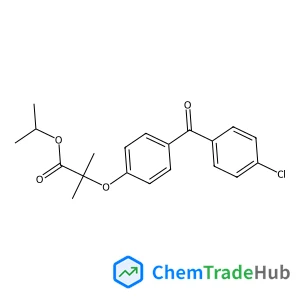
![1,10-bis(3,5-dimethylphenyl)-12-hydroxy-4,5,6,7-tetrahydroiindeno[7,1-de:1',7'-fg][1,3,2]dioxaphosphocine 12-oxide structure](https://static.chemtradehub.com/structs/141/1412439-82-7-b9a9.webp "1,10-bis(3,5-dimethylphenyl)-12-hydroxy-4,5,6,7-tetrahydroiindeno[7,1-de:1',7'-fg][1,3,2]dioxaphosphocine 12-oxide structure")