












σ-Aromatic cyclic M3+ (M = Cu, Ag, Au) clusters and their complexation with dimethyl imidazol-2-ylidene, pyridine, isoxazole, furan, noble gases and carbon monoxide
Literature Information
Publication Date
2015-11-20
DOI
10.1039/C5CP06282A
Impact Factor
3.676
Authors
Sudip Pan, Ranajit Saha, Subhajit Mandal, Pratim K. Chattaraj
View Original
Abstract
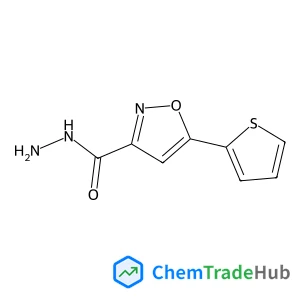
The σ-aromaticity of M3+ (M = Cu, Ag, Au) is analyzed and compared with that of Li3+ and a prototype σ-aromatic system, H3+. Ligands (L) like dimethyl imidazol-2-ylidene, pyridine, isoxazole and furan are employed to stabilize these monocationic M3+ clusters. They all bind M3+ with favorable interaction energy. Dimethyl imidazol-2-ylidene forms the strongest bond with M3+ followed by pyridine, isoxazole and furan. Electrostatic contribution is considerably more than that of orbital contribution in these M–L bonds. The orbital interaction arises from both L → M σ donation and L ← M back donation. M3+ clusters also bind noble gas atoms and carbon monoxide effectively. In general, among the studied systems Au3+ binds a given L most strongly followed by Cu3+ and Ag3+. Computation of the nucleus-independent chemical shift (NICS) and its different extensions like the NICS-rate and NICS in-plane component vs. NICS out-of-plane component shows that the σ-aromaticity in L bound M3+ increases compared to that of bare clusters. The aromaticity in pyridine, isoxazole and furan bound Au3+ complexes is quite comparable with that in the recently synthesized Zn3(C5(CH3)5)3+. The energy gap between the highest occupied molecular orbital and the lowest unoccupied molecular orbital also increases upon binding with L. The blue-shift and red-shift in the C–O stretching frequency of M3(CO)3+ and M3(OC)3+, respectively, are analyzed through reverse polarization of the σ- and π-orbitals of CO as well as the relative amount of OC → M σ donation and M → CO π back donation. The electron density analysis is also performed to gain further insight into the nature of interaction.
Related Literature
Interactions of Hg(ii) with oligonucleotides having thymine–thymine mispairs. Optimization of an impedimetric Hg(ii) sensor
Ajar Kamal, Zhe She, Renu Sharma, Heinz-Bernhard Kraatz
2017-04-19
Paper
DOI: 10.1039/C7AN00238F
Digital enzyme assay using attoliter droplet array
Takao Ono, Takanori Ichiki
2018-09-17
Paper
DOI: 10.1039/C8AN01152D
Ratiometric red-emission fluorescence detection of Al3+ in pure aqueous solution and live cells by a fluorescent peptidyl probe using aggregation-induced emission
Lok Nath Neupane, Pramod Kumar Mehta, Semin Oh, See-Hyoung Park, Keun-Hyeung Lee
2018-09-04
Paper
DOI: 10.1039/C8AN01221K
Sensitive fluorescence detection of heparin based on self-assembly of mesoporous silica nanoparticle–gold nanoclusters with emission enhancement characteristics
Lin Ma, Mengyue Zhang, Aijun Yang, Qin Wang, Fei Qu, Fengli Qu, Rong-Mei Kong
2018-09-18
Paper
DOI: 10.1039/C8AN01556B
Optical properties of porcine dermis in the mid-infrared absorption band of glucose
Arthur Schönhals, Hans Tholl, Mathias Glasmacher, Niels Kröger-Lui, Annemarie Pucci, Wolfgang Petrich
2016-11-09
Paper
DOI: 10.1039/C6AN01757F
Rapid infrared mapping for highly accurate automated histology in Barrett's oesophagus
G. R. Lloyd, J. Nallala, M. Isabelle, L. M. Almond, N. A. Shepherd, C. A. Kendall, A. C. Shore, N. Stone
2016-10-03
Paper
DOI: 10.1039/C6AN01871H
Simultaneous viscosity and density measurement of small volumes of liquids using a vibrating microcantilever
A. F. Payam, W. Trewby, K. Voïtchovsky
2017-03-20
Paper
DOI: 10.1039/C6AN02674E
Rapid single-cell detection and identification of pathogens by using surface-enhanced Raman spectroscopy
N. E. Dina, H. Zhou, A. Colniţă, N. Leopold, C. Coman, C. Haisch
2017-03-28
Paper
DOI: 10.1039/C7AN00106A
Optimal voltage for nanoparticle detection with thin nanopores
2018-08-16
Paper
DOI: 10.1039/C8AN01270A
Ion mobility mass spectrometry provides novel insights into the expression and structure of gangliosides in the normal adult human hippocampus
Mirela Sarbu, Željka Vukelić, David E. Clemmer
2018-09-06
Paper
DOI: 10.1039/C8AN01118D
You might also like
Compound Q&A
What is the market or research trend for N-(4-Methoxybenzyl)-2-pyridinamine (CAS: 52818-63-0)?
N-(4-Methoxybenzyl)-2-pyridinamine (CAS: 52818-63-0) is increasingly being used ...
52818-63-0N-(4-Methoxybenzyl)-...
Compound Q&A
What precautions should be taken when handling Ethyl 4-(2-chlorophenyl)-1,3-thiazole-2-carboxylate (CAS: 1050507-06-6)?
When handling Ethyl 4-(2-chlorophenyl)-1,3-thiazole-2-carboxylate, appropriate p...
1050507-06-6Ethyl 4-(2-chlorophe...
Compound Q&A
What regulatory guidelines apply to diethyldiselane (CAS: 628-39-7)?
Diethyldiselane (CAS: 628-39-7) is classified under the Globally Harmonized Syst...
628-39-7Diethyldiselane
Compound Q&A
What is the market or research trend for oxocopper (CAS: 12053-18-8)?
The market for oxocopper (CAS: 12053-18-8) is primarily driven by its use in cat...
12053-18-8oxocopper; oxo-(oxoc...
Compound Q&A
What is the market or research trend for 5-{[(2-Methyl-2-propanyl)oxy]carbonyl}-5-azaspiro[2.4]heptane-7-carboxylic acid?
The market for 5-{[(2-Methyl-2-propanyl)oxy]carbonyl}-5-azaspiro[2.4]heptane-7-c...
1268519-54-55-{[(2-Methyl-2-prop...
Compound Q&A
What is 2-(1-Pyrrolidinyl)-4-pyridinamine (CAS: 35981-63-6)?
2-(1-Pyrrolidinyl)-4-pyridinamine is a chemical compound with the CAS number 359...
35981-63-62-(1-Pyrrolidinyl)-4...
Compound Q&A
What are the physical and chemical properties of 2-(3-Pyridinyl)-1-azabicyclo[2.2.2]octane (CAS: 91556-75-1)?
2-(3-Pyridinyl)-1-azabicyclo[2.2.2]octane (CAS: 91556-75-1) is a crystalline sol...
91556-75-12-(3-Pyridinyl)-1-az...
Compound Q&A
How is (S)-Alpha-allyl-proline hydrochloride (CAS: 129704-91-2) typically synthesized?
(S)-Alpha-allyl-proline hydrochloride is usually synthesized via a Wittig reacti...
129704-91-2(S)-Alpha-allyl-prol...
Compound Q&A
What is 3-Methyl-1,2-oxazole-5-carboxylic acid (CAS: 4857-42-5)?
3-Methyl-1,2-oxazole-5-carboxylic acid (CAS: 4857-42-5) is an organic compound w...
4857-42-53-Methyl-1,2-oxazole...
Compound Q&A
How is Lys-SMCC-DM1 (CAS: 1281816-04-3) typically synthesized?
Lys-SMCC-DM1 is synthesized via a multi-step process involving the coupling of S...
1281816-04-3Lys-SMCC-DM1
Source Journal
Physical Chemistry Chemical Physics

CiteScore:
5.5
Self-citation Rate:
10.3%
Articles per Year:
3036
Physical Chemistry Chemical Physics (PCCP) is an international journal co-owned by 19 physical chemistry and physics societies from around the world. This journal publishes original, cutting-edge research in physical chemistry, chemical physics and biophysical chemistry. To be suitable for publication in PCCP, articles must include significant innovation and/or insight into physical chemistry; this is the most important criterion that reviewers and Editors will judge against when evaluating submissions. The journal has a broad scope and welcomes contributions spanning experiment, theory, computation and data science. Topical coverage includes spectroscopy, dynamics, kinetics, statistical mechanics, thermodynamics, electrochemistry, catalysis, surface science, quantum mechanics, quantum computing and machine learning. Interdisciplinary research areas such as polymers and soft matter, materials, nanoscience, energy, surfaces/interfaces, and biophysical chemistry are welcomed if they demonstrate significant innovation and/or insight into physical chemistry. Joined experimental/theoretical studies are particularly appreciated when complementary and based on up-to-date approaches.
Recommended Compounds
![1-(1-Benzyl-1,2,3,6-tetrahydropyridin-4-yl)-1H-benzo[d]imidazol-2(3H)-one structure](https://static.chemtradehub.com/structs/603/60373-71-9-7dfb.webp "1-(1-Benzyl-1,2,3,6-tetrahydropyridin-4-yl)-1H-benzo[d]imidazol-2(3H)-one structure")
1-(1-Benzyl-1,2,3,6-tetrahydropyridin-4-yl)-1H-benzo[d]imidazol-2(3H)-one
CAS Number:
60373-71-9
Molecular Formula:
C19H19N3O

Recommended Suppliers




Disclaimer
This page provides academic journal information for reference and research purposes only. We are not affiliated with any journal publishers and do not handle publication submissions. For publication-related inquiries, please contact the respective journal publishers directly.
If you notice any inaccuracies in the information displayed, please contact us at support@chemtradehub.com. We will promptly review and address your concerns.