












Photo-induced oxidation of the uniquely liganded heme f in the cytochrome b6f complex of oxygenic photosynthesis
Literature Information
Publication Date
2016-04-19
DOI
10.1039/C6CP01592A
Impact Factor
3.676
Authors
Adrien A. P. Chauvet, Rachna Agarwal, André al Haddad, Frank van Mourik, William A. Cramer
View Original
Abstract
The ultrafast behavior of the ferrous heme f from the cytochrome b6f complex of oxygenic photosynthesis is revealed by means of transient absorption spectroscopy. Benefiting from the use of microfluidic technologies for handling the sample as well as from a complementary frame-by-frame analysis of the heme dynamics, the different relaxation mechanisms from vibrationally excited states are disentangled and monitored via the shifts of the heme α-absorption band. Under 520 nm laser excitation, about 85% of the heme f undergoes pulse-limited photo-oxidation (<100 fs), with the electron acceptor being most probably one of the adjacent aromatic amino acid residues. After charge recombination in 5.3 ps, the residual excess energy is dissipated in 3.6 ps. In a parallel pathway, the remaining 15% of the hemes directly relax from their excited state in 2.5 ps. In contrast to a vast variety of heme-proteins, including the homologous heme c1 from the cytochrome bc1 complex, there is no evidence that heme f photo-dissociates from its axial ligands. Due to its unique binding, with histidine and an unusual tyrosine as axial ligands, the heme f exemplifies a dependence of ultrafast dynamics on the structural environment.
Related Literature
Quantitative NMR of quadrupolar nucleus as a novel analytical method: hydrolysis behaviour analysis of aluminum ion
Genki Sakata, Minoru Mizuhata
2017-04-19
Paper
DOI: 10.1039/C7AN00067G
Monitoring the biochemical alterations in hypertension affected salivary gland tissues using Fourier transform infrared hyperspectral imaging
Shaiju S. Nazeer, Rarinthorn Samrid, David Perez-Guaita, Parichat Prachaney, Kowit Chaisiwamongkol, Poungrat Pakdeechote, Bayden R. Wood
2017-01-25
Paper
DOI: 10.1039/C6AN02074G
Dicarboxylic acids as pH sensors for hyperpolarized 13C magnetic resonance spectroscopic imaging
C. Taglang, C. von Morze, J. E. Blecha, J. W. Gordon, R. Sriram, D. B. Vigneron, H. F. VanBrocklin, D. M. Wilson, R. R. Flavell
2017-03-13
Communication
DOI: 10.1039/C7AN00076F
Electrochemical aptasensors for zeatin detection based on MoS2 nanosheets and enzymatic signal amplification
Yunlei Zhou, Huanshun Yin, Yue Wang, Chengji Sui, Minghui Wang, Shiyun Ai
2018-09-07
Paper
DOI: 10.1039/C8AN01356J
Design of a simple paper-based colorimetric biosensor using polydiacetylene liposomes for neomycin detection
Do Hyun Kang, Keesung Kim, Younghwan Son, Pahn-Shick Chang, Ho-Sup Jung
2018-09-04
Paper
DOI: 10.1039/C8AN01097H
Ion mobility mass spectrometry provides novel insights into the expression and structure of gangliosides in the normal adult human hippocampus
Mirela Sarbu, Željka Vukelić, David E. Clemmer
2018-09-06
Paper
DOI: 10.1039/C8AN01118D
Rapid infrared mapping for highly accurate automated histology in Barrett's oesophagus
G. R. Lloyd, J. Nallala, M. Isabelle, L. M. Almond, N. A. Shepherd, C. A. Kendall, A. C. Shore, N. Stone
2016-10-03
Paper
DOI: 10.1039/C6AN01871H
You might also like
Compound Q&A
What is the market or research trend for N-(4-Methoxybenzyl)-2-pyridinamine (CAS: 52818-63-0)?
N-(4-Methoxybenzyl)-2-pyridinamine (CAS: 52818-63-0) is increasingly being used ...
52818-63-0N-(4-Methoxybenzyl)-...
Compound Q&A
What precautions should be taken when handling Ethyl 4-(2-chlorophenyl)-1,3-thiazole-2-carboxylate (CAS: 1050507-06-6)?
When handling Ethyl 4-(2-chlorophenyl)-1,3-thiazole-2-carboxylate, appropriate p...
1050507-06-6Ethyl 4-(2-chlorophe...
Compound Q&A
What regulatory guidelines apply to diethyldiselane (CAS: 628-39-7)?
Diethyldiselane (CAS: 628-39-7) is classified under the Globally Harmonized Syst...
628-39-7Diethyldiselane
Compound Q&A
What is the market or research trend for oxocopper (CAS: 12053-18-8)?
The market for oxocopper (CAS: 12053-18-8) is primarily driven by its use in cat...
12053-18-8oxocopper; oxo-(oxoc...
Compound Q&A
What is the market or research trend for 5-{[(2-Methyl-2-propanyl)oxy]carbonyl}-5-azaspiro[2.4]heptane-7-carboxylic acid?
The market for 5-{[(2-Methyl-2-propanyl)oxy]carbonyl}-5-azaspiro[2.4]heptane-7-c...
1268519-54-55-{[(2-Methyl-2-prop...
Compound Q&A
What is 2-(1-Pyrrolidinyl)-4-pyridinamine (CAS: 35981-63-6)?
2-(1-Pyrrolidinyl)-4-pyridinamine is a chemical compound with the CAS number 359...
35981-63-62-(1-Pyrrolidinyl)-4...
Compound Q&A
What are the physical and chemical properties of 2-(3-Pyridinyl)-1-azabicyclo[2.2.2]octane (CAS: 91556-75-1)?
2-(3-Pyridinyl)-1-azabicyclo[2.2.2]octane (CAS: 91556-75-1) is a crystalline sol...
91556-75-12-(3-Pyridinyl)-1-az...
Compound Q&A
How is (S)-Alpha-allyl-proline hydrochloride (CAS: 129704-91-2) typically synthesized?
(S)-Alpha-allyl-proline hydrochloride is usually synthesized via a Wittig reacti...
129704-91-2(S)-Alpha-allyl-prol...
Compound Q&A
What is 3-Methyl-1,2-oxazole-5-carboxylic acid (CAS: 4857-42-5)?
3-Methyl-1,2-oxazole-5-carboxylic acid (CAS: 4857-42-5) is an organic compound w...
4857-42-53-Methyl-1,2-oxazole...
Compound Q&A
How is Lys-SMCC-DM1 (CAS: 1281816-04-3) typically synthesized?
Lys-SMCC-DM1 is synthesized via a multi-step process involving the coupling of S...
1281816-04-3Lys-SMCC-DM1
Source Journal
Physical Chemistry Chemical Physics

CiteScore:
5.5
Self-citation Rate:
10.3%
Articles per Year:
3036
Physical Chemistry Chemical Physics (PCCP) is an international journal co-owned by 19 physical chemistry and physics societies from around the world. This journal publishes original, cutting-edge research in physical chemistry, chemical physics and biophysical chemistry. To be suitable for publication in PCCP, articles must include significant innovation and/or insight into physical chemistry; this is the most important criterion that reviewers and Editors will judge against when evaluating submissions. The journal has a broad scope and welcomes contributions spanning experiment, theory, computation and data science. Topical coverage includes spectroscopy, dynamics, kinetics, statistical mechanics, thermodynamics, electrochemistry, catalysis, surface science, quantum mechanics, quantum computing and machine learning. Interdisciplinary research areas such as polymers and soft matter, materials, nanoscience, energy, surfaces/interfaces, and biophysical chemistry are welcomed if they demonstrate significant innovation and/or insight into physical chemistry. Joined experimental/theoretical studies are particularly appreciated when complementary and based on up-to-date approaches.
Recommended Compounds
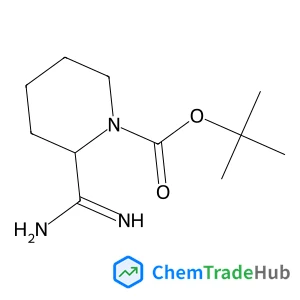
2-Methyl-2-propanyl 2-carbamimidoyl-1-piperidinecarboxylate
CAS Number:
1258640-98-0
Molecular Formula:
C11H21N3O2
![1,10-bis(3,5-dimethylphenyl)-12-hydroxy-4,5,6,7-tetrahydroiindeno[7,1-de:1',7'-fg][1,3,2]dioxaphosphocine 12-oxide structure](https://static.chemtradehub.com/structs/141/1412439-82-7-b9a9.webp "1,10-bis(3,5-dimethylphenyl)-12-hydroxy-4,5,6,7-tetrahydroiindeno[7,1-de:1',7'-fg][1,3,2]dioxaphosphocine 12-oxide structure")
1,10-bis(3,5-dimethylphenyl)-12-hydroxy-4,5,6,7-tetrahydroiindeno[7,1-de:1',7'-fg][1,3,2]dioxaphosphocine 12-oxide
CAS Number:
1412439-82-7
Molecular Formula:
C33H31O4P
Recommended Suppliers





Disclaimer
This page provides academic journal information for reference and research purposes only. We are not affiliated with any journal publishers and do not handle publication submissions. For publication-related inquiries, please contact the respective journal publishers directly.
If you notice any inaccuracies in the information displayed, please contact us at support@chemtradehub.com. We will promptly review and address your concerns.