












Biexponential photon antibunching: recombination kinetics within the Förster-cycle in DMSO
Literature Information
Publication Date
2016-03-11
DOI
10.1039/C6CP00718J
Impact Factor
3.676
Authors
Michael Vester, Andreas Grueter, Björn Finkler, Robert Becker, Gregor Jung
View Original
Abstract
Time-resolved experiments with pulsed-laser excitation are the standard approach to map the dynamic evolution of excited states, but ground-state kinetics remain hidden or require pump–dump–probe schemes. Here, we exploit the so-called photon antibunching, a purely quantum-optical effect related to single molecule detection to assess the rate constants for a chemical reaction in the electronic ground state. The measurement of the second-order correlation function g(2), i.e. the evaluation of inter-photon arrival times, is applied to the reprotonation in a Förster-cycle. We find that the antibunching of three different photoacids in the aprotic solvent DMSO significantly differs from the behavior in water. The longer decay constant of the biexponential antibunching tl is linked to the bimolecular reprotonation kinetics of the fully separated ion-pair, independent of the acidic additives. The value of the corresponding bimolecular rate constant, kp = 4 × 10⁹ M−1 s−1, indicates diffusion-controlled reprotonation. The analysis of tl also allows for the extraction of the separation yield of proton and the conjugated base after excitation and amounts to approximately 15%. The shorter time component ts is connected to the decay of the solvent-separated ion pair. The associated time constant for geminate reprotonation is approximately 3 ± 1 ns in agreement with independent tcspc experiments. These experiments verify that the transfer of quantum-optical experiments to problems in chemistry enables mechanistic conclusions which are hardly accessible by other methods.
Related Literature
Post-polymerization modification of polybenzoxazines with boronic acids supported by B–N interactions
Yuki Tsukamoto, Jumpei Kida, Daisuke Aoki, Hideyuki Otsuka
2021-09-01
Communication
DOI: 10.1039/D1PY00657F
Unprecedentedly high active organocatalysts for the copolymerization of carbonyl sulfide and propylene oxide: steric hindrance effect of tertiary amines
Jiraya Kiriratnikom, Xin-Chen Yue, Jia-Liang Yang, Ying Wang, Shuo-Hong Chen, Ke-Ke Zhang, Cheng-Jian Zhang, Munir Ullah Khan
2021-08-23
Paper
DOI: 10.1039/D1PY01013A
Tuning the thermoresponsive properties of PEG-based fluorinated polymers and stimuli responsive drug release for switchable 19F magnetic resonance imaging
Nyoman D. Kurniawan
2021-09-08
Paper
DOI: 10.1039/D1PY00602A
Bis(N-acylated imidazolin-2-imine) nickel catalyzed norbornene copolymerization with methyl acrylate
Hu Zhang, Ru Xiao, Zhengguo Cai
2020-07-28
Paper
DOI: 10.1039/D0PY00857E
Structure–property relations of amphiphilic poly(furfuryl glycidyl ether)-block-poly(ethylene glycol) macromonomers at the air–water interface
Alexander Holm, Alexander Southan, Curtis W. Frank
2020-07-30
Paper
DOI: 10.1039/D0PY00697A
Anion-induced thermoresponsiveness in cationic polycysteine and DNA binding
Mahammad Anas, Priyanka Dinda, Mahuya Kar, Tarun K. Mandal
2021-10-12
Paper
DOI: 10.1039/D1PY01187A
Poly(ε-caprolactone) with pH and UCST responsiveness as a 5-fluorouracil carrier
Shuang Zhu, Lianlei Wen, Yan Xiao, Meidong Lang
2020-07-13
Paper
DOI: 10.1039/D0PY00865F
Sustainable synthesis of CO2-derived polycarbonates from d-xylose
David K. Tran, Ahmed Z. Rashad, Donald J. Darensbourg
2021-09-10
Communication
DOI: 10.1039/D1PY00784J
You might also like
Compound Q&A
What is the market or research trend for N-(4-Methoxybenzyl)-2-pyridinamine (CAS: 52818-63-0)?
N-(4-Methoxybenzyl)-2-pyridinamine (CAS: 52818-63-0) is increasingly being used ...
52818-63-0N-(4-Methoxybenzyl)-...
Compound Q&A
What precautions should be taken when handling Ethyl 4-(2-chlorophenyl)-1,3-thiazole-2-carboxylate (CAS: 1050507-06-6)?
When handling Ethyl 4-(2-chlorophenyl)-1,3-thiazole-2-carboxylate, appropriate p...
1050507-06-6Ethyl 4-(2-chlorophe...
Compound Q&A
What regulatory guidelines apply to diethyldiselane (CAS: 628-39-7)?
Diethyldiselane (CAS: 628-39-7) is classified under the Globally Harmonized Syst...
628-39-7Diethyldiselane
Compound Q&A
What is the market or research trend for oxocopper (CAS: 12053-18-8)?
The market for oxocopper (CAS: 12053-18-8) is primarily driven by its use in cat...
12053-18-8oxocopper; oxo-(oxoc...
Compound Q&A
What is the market or research trend for 5-{[(2-Methyl-2-propanyl)oxy]carbonyl}-5-azaspiro[2.4]heptane-7-carboxylic acid?
The market for 5-{[(2-Methyl-2-propanyl)oxy]carbonyl}-5-azaspiro[2.4]heptane-7-c...
1268519-54-55-{[(2-Methyl-2-prop...
Compound Q&A
What is 2-(1-Pyrrolidinyl)-4-pyridinamine (CAS: 35981-63-6)?
2-(1-Pyrrolidinyl)-4-pyridinamine is a chemical compound with the CAS number 359...
35981-63-62-(1-Pyrrolidinyl)-4...
Compound Q&A
What are the physical and chemical properties of 2-(3-Pyridinyl)-1-azabicyclo[2.2.2]octane (CAS: 91556-75-1)?
2-(3-Pyridinyl)-1-azabicyclo[2.2.2]octane (CAS: 91556-75-1) is a crystalline sol...
91556-75-12-(3-Pyridinyl)-1-az...
Compound Q&A
How is (S)-Alpha-allyl-proline hydrochloride (CAS: 129704-91-2) typically synthesized?
(S)-Alpha-allyl-proline hydrochloride is usually synthesized via a Wittig reacti...
129704-91-2(S)-Alpha-allyl-prol...
Compound Q&A
What is 3-Methyl-1,2-oxazole-5-carboxylic acid (CAS: 4857-42-5)?
3-Methyl-1,2-oxazole-5-carboxylic acid (CAS: 4857-42-5) is an organic compound w...
4857-42-53-Methyl-1,2-oxazole...
Compound Q&A
How is Lys-SMCC-DM1 (CAS: 1281816-04-3) typically synthesized?
Lys-SMCC-DM1 is synthesized via a multi-step process involving the coupling of S...
1281816-04-3Lys-SMCC-DM1
Source Journal
Physical Chemistry Chemical Physics

CiteScore:
5.5
Self-citation Rate:
10.3%
Articles per Year:
3036
Physical Chemistry Chemical Physics (PCCP) is an international journal co-owned by 19 physical chemistry and physics societies from around the world. This journal publishes original, cutting-edge research in physical chemistry, chemical physics and biophysical chemistry. To be suitable for publication in PCCP, articles must include significant innovation and/or insight into physical chemistry; this is the most important criterion that reviewers and Editors will judge against when evaluating submissions. The journal has a broad scope and welcomes contributions spanning experiment, theory, computation and data science. Topical coverage includes spectroscopy, dynamics, kinetics, statistical mechanics, thermodynamics, electrochemistry, catalysis, surface science, quantum mechanics, quantum computing and machine learning. Interdisciplinary research areas such as polymers and soft matter, materials, nanoscience, energy, surfaces/interfaces, and biophysical chemistry are welcomed if they demonstrate significant innovation and/or insight into physical chemistry. Joined experimental/theoretical studies are particularly appreciated when complementary and based on up-to-date approaches.
Recommended Compounds
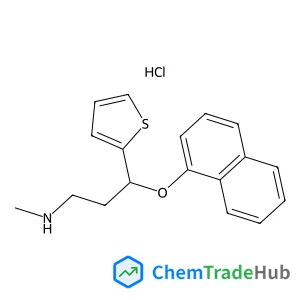
N-Methyl-3-(1-naphthyloxy)-3-(2-thienyl)-1-propanamine hydrochloride (1:1)
CAS Number:
1188266-11-6
Molecular Formula:
C18H20ClNOS
Recommended Suppliers




Disclaimer
This page provides academic journal information for reference and research purposes only. We are not affiliated with any journal publishers and do not handle publication submissions. For publication-related inquiries, please contact the respective journal publishers directly.
If you notice any inaccuracies in the information displayed, please contact us at support@chemtradehub.com. We will promptly review and address your concerns.