


![1-[6-(1H-Imidazol-1-yl)-3-pyridinyl]methanamine structure](https://static.chemtradehub.com/structs/914/914637-08-4-8825.webp "1-[6-(1H-Imidazol-1-yl)-3-pyridinyl]methanamine structure")
Cesium carbonate-promoted synthesis of aryl methyl sulfides using S-methylisothiourea sulfate under transition-metal-free conditions
Literature Information
Publication Date
2018-08-15
DOI
10.1039/C8OB01758A
Impact Factor
3.876
Authors
Caiyang Zhang, You Zhou, Jintao Huang, Canhui Tu, Xiaoai Zhou, Guodong Yin
View Original
Abstract
In the presence of cesium carbonate, an efficient synthesis of aryl methyl sulfides by the reactions of aryl halides with commercially available S-methylisothiourea sulfate is developed. This odourless and highly crystalline solid can be used as the substitute for malodorous methanethiol. The gram-scale reaction also proceeds smoothly without the use of column chromatography separation. Similarly, 2-(dimethylamino)ethylthio and cyclopropylmethylthio groups can be easily introduced into the aromatic rings from the corresponding S-[2-(dimethylamino)ethyl]isothiourea dihydrochloride and S-cyclopropylmethylisothiourea hydrobromide. The possible reaction mechanism is proposed. It is believed that this route to aryl alkyl sulfides is well competitive with currently known methods due to its wide substrate scope, excellent yields, easy operation and transition-metal-free conditions.
Recommended Journals

Saudi Pharmaceutical Journal

Journal of Natural Medicines

Russian Chemical Bulletin

Russian Journal of General Chemistry

Russian Journal of Coordination Chemistry

Drug Discovery Today

Russian Journal of Bioorganic Chemistry

Current Opinion in Solid State & Materials Science

Current Opinion in Colloid & Interface Science

Acta Materialia
Related Literature
Synthesis of polyethers from epoxides via a binary organocatalyst system
Ge-Ge Gu, Li-Yang Wang, Rong Zhang, Tian-Jun Yue, Bai-Hao Ren, Wei-Min Ren
2021-10-19
Paper
DOI: 10.1039/D1PY01085A
Synthesis and optoelectronic properties of benzodithiophene-based conjugated polymers with hydrogen bonding nucleobase side chain functionality
Sina Sabury, Tyler J. Adams, Margaret Kocherga, Michael G. Walter
2020-08-11
Paper
DOI: 10.1039/D0PY00972E
Amino-acid-substituted polyacetylene-based chiral core–shell microspheres: helix structure induction and application for chiral resolution and adsorption
Lijie Yin, Huimin Duan, Tao Chen, Dongming Qi, Jianping Deng
2021-09-20
Paper
DOI: 10.1039/D1PY01067K
Folded amphiphilic homopolymer micelles in water: uniform self-assembly beyond amphiphilic random copolymers
Yoshihiko Kimura, Makoto Ouchi, Takaya Terashima
2020-07-06
Paper
DOI: 10.1039/D0PY00685H
Impacts of performing electrolysis during organocatalyzed atom transfer radical polymerization
Daniel A. Corbin, Blaine G. McCarthy, Garret M. Miyake
2020-06-30
Paper
DOI: 10.1039/D0PY00643B
Hydrogen-bonding mediated self-assembly of amphiphilic ABA triblock copolymers into well-defined giant vesicles
Huiying Wang, Qiang Chen, Zhen Geng, Jingyi Rao, Bijin Xiong, Frédéric Lortie, Julien Bernard, Wolfgang H. Binder, Senbin Chen, Jintao Zhu
2021-10-14
Paper
DOI: 10.1039/D1PY01061A
Synthesis and sequencing of informational poly(amino phosphodiester)s
Ian Roszak, Laurence Oswald, Abdelaziz Al Ouahabi, Eline Laurent, Olivier Felix, Isaure Carvin-Sergent, Laurence Charles, Jean-François Lutz
2021-09-13
Communication
DOI: 10.1039/D1PY01052B
Polymer actuators based on covalent adaptable networks
Yahe Wu, Yan Ji
2020-05-14
Review Article
DOI: 10.1039/D0PY00075B
The influences of monomer structure and solvent on the radical copolymerization of tertiary amine and PEGylated methacrylates
Priscila Quiñonez-Angulo, Robin A. Hutchinson, Ángel Licea-Claveríe, Enrique Saldívar-Guerra, Iván Zapata-González
2021-08-24
Paper
DOI: 10.1039/D1PY00750E
You might also like
Compound Q&A
What is the market or research trend for N-(4-Methoxybenzyl)-2-pyridinamine (CAS: 52818-63-0)?
N-(4-Methoxybenzyl)-2-pyridinamine (CAS: 52818-63-0) is increasingly being used ...
52818-63-0N-(4-Methoxybenzyl)-...
Compound Q&A
What precautions should be taken when handling Ethyl 4-(2-chlorophenyl)-1,3-thiazole-2-carboxylate (CAS: 1050507-06-6)?
When handling Ethyl 4-(2-chlorophenyl)-1,3-thiazole-2-carboxylate, appropriate p...
1050507-06-6Ethyl 4-(2-chlorophe...
Compound Q&A
What regulatory guidelines apply to diethyldiselane (CAS: 628-39-7)?
Diethyldiselane (CAS: 628-39-7) is classified under the Globally Harmonized Syst...
628-39-7Diethyldiselane
Compound Q&A
What is the market or research trend for oxocopper (CAS: 12053-18-8)?
The market for oxocopper (CAS: 12053-18-8) is primarily driven by its use in cat...
12053-18-8oxocopper; oxo-(oxoc...
Compound Q&A
What is the market or research trend for 5-{[(2-Methyl-2-propanyl)oxy]carbonyl}-5-azaspiro[2.4]heptane-7-carboxylic acid?
The market for 5-{[(2-Methyl-2-propanyl)oxy]carbonyl}-5-azaspiro[2.4]heptane-7-c...
1268519-54-55-{[(2-Methyl-2-prop...
Compound Q&A
What is 2-(1-Pyrrolidinyl)-4-pyridinamine (CAS: 35981-63-6)?
2-(1-Pyrrolidinyl)-4-pyridinamine is a chemical compound with the CAS number 359...
35981-63-62-(1-Pyrrolidinyl)-4...
Compound Q&A
What are the physical and chemical properties of 2-(3-Pyridinyl)-1-azabicyclo[2.2.2]octane (CAS: 91556-75-1)?
2-(3-Pyridinyl)-1-azabicyclo[2.2.2]octane (CAS: 91556-75-1) is a crystalline sol...
91556-75-12-(3-Pyridinyl)-1-az...
Compound Q&A
How is (S)-Alpha-allyl-proline hydrochloride (CAS: 129704-91-2) typically synthesized?
(S)-Alpha-allyl-proline hydrochloride is usually synthesized via a Wittig reacti...
129704-91-2(S)-Alpha-allyl-prol...
Compound Q&A
What is 3-Methyl-1,2-oxazole-5-carboxylic acid (CAS: 4857-42-5)?
3-Methyl-1,2-oxazole-5-carboxylic acid (CAS: 4857-42-5) is an organic compound w...
4857-42-53-Methyl-1,2-oxazole...
Compound Q&A
How is Lys-SMCC-DM1 (CAS: 1281816-04-3) typically synthesized?
Lys-SMCC-DM1 is synthesized via a multi-step process involving the coupling of S...
1281816-04-3Lys-SMCC-DM1
Source Journal
Organic & Biomolecular Chemistry

CiteScore:
3.4
Self-citation Rate:
10.3%
Articles per Year:
1041
Organic & Biomolecular Chemistry (OBC) publishes original and high impact research and reviews in organic chemistry. We welcome research that shows new or significantly improved protocols or methodologies in total synthesis, synthetic methodology or physical and theoretical organic chemistry as well as research that shows a significant advance in the organic chemistry or molecular design aspects of chemical biology, catalysis, supramolecular and macromolecular chemistry, theoretical chemistry, mechanism-oriented physical organic chemistry, medicinal chemistry or natural products. Articles published in the journal should report new work which makes a highly-significant impact in the field. Routine and incremental work is generally not suitable for publication in the journal. More details about key areas of our scope are below. In all cases authors should include in their article clear rationale for why their research has been carried out.
Recommended Compounds
![(2R,6S)-6-[(Benzyloxy)methyl]-4-{[(2-methyl-2-propanyl)oxy]carbonyl}-2-morpholinecarboxylic acid structure](https://static.chemtradehub.com/structs/109/1093085-91-6-3382.webp "(2R,6S)-6-[(Benzyloxy)methyl]-4-{[(2-methyl-2-propanyl)oxy]carbonyl}-2-morpholinecarboxylic acid structure")
(2R,6S)-6-[(Benzyloxy)methyl]-4-{[(2-methyl-2-propanyl)oxy]carbonyl}-2-morpholinecarboxylic acid
CAS Number:
1093085-91-6
Molecular Formula:
C18H25NO6
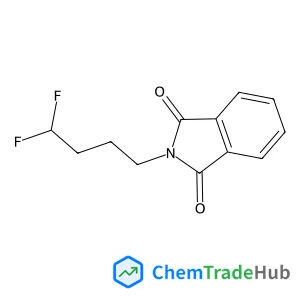
2-(4,4-Difluorobutyl)-1H-isoindole-1,3(2H)-dione
CAS Number:
1265341-14-7
Molecular Formula:
C12H11F2NO2
Recommended Suppliers






Disclaimer
This page provides academic journal information for reference and research purposes only. We are not affiliated with any journal publishers and do not handle publication submissions. For publication-related inquiries, please contact the respective journal publishers directly.
If you notice any inaccuracies in the information displayed, please contact us at support@chemtradehub.com. We will promptly review and address your concerns.