












Amino-acid-substituted polyacetylene-based chiral core–shell microspheres: helix structure induction and application for chiral resolution and adsorption
Literature Information
Publication Date
2021-09-20
DOI
10.1039/D1PY01067K
Impact Factor
5.582
Authors
Lijie Yin, Huimin Duan, Tao Chen, Dongming Qi, Jianping Deng
View Original
Abstract
The chiral composite materials currently synthesized with helical polymers directly compounded with the substrate, due to changes in chemical bonds and steric hindrance during the compounding process, may result in destruction of the helical structure. This article reports on a novel method to prepare chiral core–shell microspheres. Specifically, a random coil polymer was first compounded with the substrate and subsequently induced into a helical structure. We have synthesized chiral core–shell microspheres using amino-acid-substituted polyacetylene and preformed polydivinylbenzene (PDVB) microspheres. It was found that the polymer chains forming the shell can transform from random coil to one-handed helix in aqueous Cu2+ solution. Due to their outstanding optical activity, the chiral microspheres successfully induced enantioselective crystallization and adsorption from racemic Boc-(D,L)-alanine, Boc-(D,L)-asparagine, (D,L)-methionine and (D,L)-proline, with ee up to 95%, 90%, 78% and 80%. This work presents a new strategy to fabricate chiral composite materials and provides the possibility to synthesize chiral materials from nonhelical structured polymers.
Related Literature
In vivo measurement of the dynamics of norepinephrine in an olfactory bulb following ischemia-induced olfactory dysfunction and its responses to dexamethasone treatment
Yinghong Zhang, Lijuan Li, Tao Li, Ying Xin, Junxiu Liu, Furong Ma, Lanqun Mao
2018-09-06
Paper
DOI: 10.1039/C8AN01300D
Correction: The mechanism and regularity of quenching the effect of bases on fluorophores: the base-quenched probe method
Huihui Mao, Guanghua Luo, Yuxia Zhan, Jun Zhang, Shuang Yao, Yang Yu
2018-10-01
Correction
DOI: 10.1039/C8AN90083C
Ion mobility mass spectrometry provides novel insights into the expression and structure of gangliosides in the normal adult human hippocampus
Mirela Sarbu, Željka Vukelić, David E. Clemmer
2018-09-06
Paper
DOI: 10.1039/C8AN01118D
Fully convolutional neural network for removing background in noisy images of uranium bearing particles
Jay G. Tarolli, Benjamin E. Naes, Lamar Butler, Keeyahna Foster, Caleb M. Gumbs, Andrea L. Howard, David Willingham
2017-03-31
Paper
DOI: 10.1039/C7AN00175D
A dual chemosensor for Cu2+ and Hg2+ based on a rhodamine-terminated water-soluble polymer in 100% aqueous solution
Guang Li, Liping Bai, Farong Tao, Aixia Deng, Liping Wang
2018-09-17
Paper
DOI: 10.1039/C8AN01130C
Electrochemical aptasensors for zeatin detection based on MoS2 nanosheets and enzymatic signal amplification
Yunlei Zhou, Huanshun Yin, Yue Wang, Chengji Sui, Minghui Wang, Shiyun Ai
2018-09-07
Paper
DOI: 10.1039/C8AN01356J
A novel electrochemical immunoassay for carcinoembryonic antigen based on glucose oxidase-encapsulated nanogold hollow spheres with a pH meter readout
Yu Jiang, Zhiying Su, Jian Zhang, Meijiao Cai, Lili Wu
2018-09-13
Paper
DOI: 10.1039/C8AN01436A
Diatoms response to salinity changes: investigations using single pulse and cross polarisation magic angle spinning 29Si NMR spectra
M. R. Johnston, J. R. Gascooke, A. V. Ellis, S. C. Leterme
2018-09-05
Paper
DOI: 10.1039/C8AN00948A
Infrared spectral histopathology using haematoxylin and eosin (H&E) stained glass slides: a major step forward towards clinical translation
Michael J. Pilling, Alex Henderson, Jonathan H. Shanks, Michael D. Brown, Noel W. Clarke, Peter Gardner
2016-11-28
Paper
DOI: 10.1039/C6AN02224C
You might also like
Compound Q&A
What is the market or research trend for N-(4-Methoxybenzyl)-2-pyridinamine (CAS: 52818-63-0)?
N-(4-Methoxybenzyl)-2-pyridinamine (CAS: 52818-63-0) is increasingly being used ...
52818-63-0N-(4-Methoxybenzyl)-...
Compound Q&A
What precautions should be taken when handling Ethyl 4-(2-chlorophenyl)-1,3-thiazole-2-carboxylate (CAS: 1050507-06-6)?
When handling Ethyl 4-(2-chlorophenyl)-1,3-thiazole-2-carboxylate, appropriate p...
1050507-06-6Ethyl 4-(2-chlorophe...
Compound Q&A
What regulatory guidelines apply to diethyldiselane (CAS: 628-39-7)?
Diethyldiselane (CAS: 628-39-7) is classified under the Globally Harmonized Syst...
628-39-7Diethyldiselane
Compound Q&A
What is the market or research trend for oxocopper (CAS: 12053-18-8)?
The market for oxocopper (CAS: 12053-18-8) is primarily driven by its use in cat...
12053-18-8oxocopper; oxo-(oxoc...
Compound Q&A
What is the market or research trend for 5-{[(2-Methyl-2-propanyl)oxy]carbonyl}-5-azaspiro[2.4]heptane-7-carboxylic acid?
The market for 5-{[(2-Methyl-2-propanyl)oxy]carbonyl}-5-azaspiro[2.4]heptane-7-c...
1268519-54-55-{[(2-Methyl-2-prop...
Compound Q&A
What is 2-(1-Pyrrolidinyl)-4-pyridinamine (CAS: 35981-63-6)?
2-(1-Pyrrolidinyl)-4-pyridinamine is a chemical compound with the CAS number 359...
35981-63-62-(1-Pyrrolidinyl)-4...
Compound Q&A
What are the physical and chemical properties of 2-(3-Pyridinyl)-1-azabicyclo[2.2.2]octane (CAS: 91556-75-1)?
2-(3-Pyridinyl)-1-azabicyclo[2.2.2]octane (CAS: 91556-75-1) is a crystalline sol...
91556-75-12-(3-Pyridinyl)-1-az...
Compound Q&A
How is (S)-Alpha-allyl-proline hydrochloride (CAS: 129704-91-2) typically synthesized?
(S)-Alpha-allyl-proline hydrochloride is usually synthesized via a Wittig reacti...
129704-91-2(S)-Alpha-allyl-prol...
Compound Q&A
What is 3-Methyl-1,2-oxazole-5-carboxylic acid (CAS: 4857-42-5)?
3-Methyl-1,2-oxazole-5-carboxylic acid (CAS: 4857-42-5) is an organic compound w...
4857-42-53-Methyl-1,2-oxazole...
Compound Q&A
How is Lys-SMCC-DM1 (CAS: 1281816-04-3) typically synthesized?
Lys-SMCC-DM1 is synthesized via a multi-step process involving the coupling of S...
1281816-04-3Lys-SMCC-DM1
Source Journal
Polymer Chemistry

CiteScore:
8.6
Self-citation Rate:
7.3%
Articles per Year:
457
Polymer Chemistry welcomes submissions in all areas of polymer science that have a strong focus on macromolecular chemistry. Manuscripts may cover a broad range of fields, yet no direct application focus is required.
Recommended Compounds
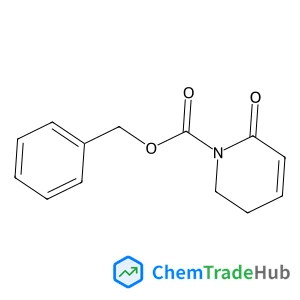
Benzyl 6-oxo-3,6-dihydro-1(2H)-pyridinecarboxylate
CAS Number:
725746-35-0
Molecular Formula:
C13H13NO3

![1-{3-[4-Amino-3-(4-phenoxyphenyl)-1H-pyrazolo[3,4-d]pyrimidin-1-yl]-1-piperidinyl}-2,3-dihydroxy-1-propanone structure](https://static.chemtradehub.com/structs/122/1226872-27-0-e037.webp "1-{3-[4-Amino-3-(4-phenoxyphenyl)-1H-pyrazolo[3,4-d]pyrimidin-1-yl]-1-piperidinyl}-2,3-dihydroxy-1-propanone structure")
1-{3-[4-Amino-3-(4-phenoxyphenyl)-1H-pyrazolo[3,4-d]pyrimidin-1-yl]-1-piperidinyl}-2,3-dihydroxy-1-propanone
CAS Number:
1226872-27-0
Molecular Formula:
C25H26N6O4
![1-(1-Benzyl-1,2,3,6-tetrahydropyridin-4-yl)-1H-benzo[d]imidazol-2(3H)-one structure](https://static.chemtradehub.com/structs/603/60373-71-9-7dfb.webp "1-(1-Benzyl-1,2,3,6-tetrahydropyridin-4-yl)-1H-benzo[d]imidazol-2(3H)-one structure")
1-(1-Benzyl-1,2,3,6-tetrahydropyridin-4-yl)-1H-benzo[d]imidazol-2(3H)-one
CAS Number:
60373-71-9
Molecular Formula:
C19H19N3O
Recommended Suppliers






Disclaimer
This page provides academic journal information for reference and research purposes only. We are not affiliated with any journal publishers and do not handle publication submissions. For publication-related inquiries, please contact the respective journal publishers directly.
If you notice any inaccuracies in the information displayed, please contact us at support@chemtradehub.com. We will promptly review and address your concerns.