













Molecular tweezers with a rotationally restricted linker and freely rotating porphyrin moieties
Literature Information
Publication Date
2018-08-14
DOI
10.1039/C8OB00944A
Impact Factor
3.876
Authors
Rhys B. Murphy, Duc-Truc Pham, Jonathan M. White, Stephen F. Lincoln, Martin R. Johnston
View Original
Abstract
The effect of the degree of conformational rigidity and/or flexibility on preorganisation in artificial molecular receptors continues to be actively explored by supramolecular chemists. This work describes a bis-porphyrin architecture, linked via a rigid polycyclic backbone, in which a sterically bulky 2,3,5,6-tetramethylphenyl diimide core restricts rotation to afford two non-interconvertible tweezer conformations; syn- and anti-. After separation, the host–guest chemistry of each conformation was studied independently. The difference in host geometry allows only the syn-conformation to form a strong 1 : 1 bis-porphyrin complex with the diamino ligand 1,4-diazabicyclo[2.2.2]octane (DABCO) (K11 = 1.25 × 10⁸ M−1), with the anti-conformation adopting a 2 : 2 sandwich complex with DABCO (K22 = 5.57 × 10¹⁷ M−3).
Related Literature
Understanding the viral load during the synthesis and after rebinding of virus imprinted particles via real-time quantitative PCR
M. Gast, S. Kühner, H. Sobek, B. Mizaikoff
2018-04-13
Paper
DOI: 10.1039/C8AN00300A
A novel liquid chromatography detector based on a dielectric barrier discharge molecular emission spectrometer with online microwave-assisted hydrolysis for determination of dithiocarbamates
Bingjun Han, Ya Li, Yan He, Huamei Yu
2018-05-03
Paper
DOI: 10.1039/C8AN00613J
The utility of polarization modulation infrared reflection absorption spectroscopy (PM-IRRAS) in surface and in situ studies: new data processing and presentation approach
Vlad Zamlynny, Tom K. Woo, Elena A. Baranova
2018-04-06
Paper
DOI: 10.1039/C8AN00572A
Recent advances in ambient mass spectrometry of trace explosives
Thomas P. Forbes, Edward Sisco
2018-04-06
Critical Review
DOI: 10.1039/C7AN02066J
A coumarin-based fluorescent probe for monitoring labile ferrous iron in living systems
Lingliang Long, Ning Wang, Yuanyuan Han, Meiyu Huang, Xiangqi Yuan, Siyu Cao, Aihua Gong, Kun Wang
2018-04-24
Paper
DOI: 10.1039/C8AN00556G
Quantitative analysis of multiple high-resolution mass spectrometry images using chemometric methods: quantitation of chlordecone in mouse liver
Saeedeh Mohammadi, Hadi Parastar
2018-04-05
Paper
DOI: 10.1039/C7AN02059G
Quantitative colorimetric paper analytical devices based on radial distance measurements for aqueous metal determination
Josephine C. Hofstetter, John B. Wydallis, Gabe Neymark, Thomas H. Reilly III, Jim Harrington
2018-06-04
Paper
DOI: 10.1039/C8AN00632F
Diagnosis of thymic epithelial tumor subtypes by a quantitative proteomic approach
Ting Zhao, Jie Wu, Xiaohui Liu, Lei Zhang, Gang Chen
2018-03-21
Paper
DOI: 10.1039/C8AN00218E
Engineering molecularly imprinted polymers (MIPs) for the selective extraction and quantification of the novel psychoactive substance (NPS) methoxphenidine and its regioisomers
J. W. Lowdon, S. M. O. Alkirkit, R. E. Mewis, D. Fulton, C. E. Banks, M. Peeters
2018-04-12
Communication
DOI: 10.1039/C8AN00131F
You might also like
Compound Q&A
What is the market or research trend for N-(4-Methoxybenzyl)-2-pyridinamine (CAS: 52818-63-0)?
N-(4-Methoxybenzyl)-2-pyridinamine (CAS: 52818-63-0) is increasingly being used ...
52818-63-0N-(4-Methoxybenzyl)-...
Compound Q&A
What precautions should be taken when handling Ethyl 4-(2-chlorophenyl)-1,3-thiazole-2-carboxylate (CAS: 1050507-06-6)?
When handling Ethyl 4-(2-chlorophenyl)-1,3-thiazole-2-carboxylate, appropriate p...
1050507-06-6Ethyl 4-(2-chlorophe...
Compound Q&A
What regulatory guidelines apply to diethyldiselane (CAS: 628-39-7)?
Diethyldiselane (CAS: 628-39-7) is classified under the Globally Harmonized Syst...
628-39-7Diethyldiselane
Compound Q&A
What is the market or research trend for oxocopper (CAS: 12053-18-8)?
The market for oxocopper (CAS: 12053-18-8) is primarily driven by its use in cat...
12053-18-8oxocopper; oxo-(oxoc...
Compound Q&A
What is the market or research trend for 5-{[(2-Methyl-2-propanyl)oxy]carbonyl}-5-azaspiro[2.4]heptane-7-carboxylic acid?
The market for 5-{[(2-Methyl-2-propanyl)oxy]carbonyl}-5-azaspiro[2.4]heptane-7-c...
1268519-54-55-{[(2-Methyl-2-prop...
Compound Q&A
What is 2-(1-Pyrrolidinyl)-4-pyridinamine (CAS: 35981-63-6)?
2-(1-Pyrrolidinyl)-4-pyridinamine is a chemical compound with the CAS number 359...
35981-63-62-(1-Pyrrolidinyl)-4...
Compound Q&A
What are the physical and chemical properties of 2-(3-Pyridinyl)-1-azabicyclo[2.2.2]octane (CAS: 91556-75-1)?
2-(3-Pyridinyl)-1-azabicyclo[2.2.2]octane (CAS: 91556-75-1) is a crystalline sol...
91556-75-12-(3-Pyridinyl)-1-az...
Compound Q&A
How is (S)-Alpha-allyl-proline hydrochloride (CAS: 129704-91-2) typically synthesized?
(S)-Alpha-allyl-proline hydrochloride is usually synthesized via a Wittig reacti...
129704-91-2(S)-Alpha-allyl-prol...
Compound Q&A
What is 3-Methyl-1,2-oxazole-5-carboxylic acid (CAS: 4857-42-5)?
3-Methyl-1,2-oxazole-5-carboxylic acid (CAS: 4857-42-5) is an organic compound w...
4857-42-53-Methyl-1,2-oxazole...
Compound Q&A
How is Lys-SMCC-DM1 (CAS: 1281816-04-3) typically synthesized?
Lys-SMCC-DM1 is synthesized via a multi-step process involving the coupling of S...
1281816-04-3Lys-SMCC-DM1
Source Journal
Organic & Biomolecular Chemistry

CiteScore:
3.4
Self-citation Rate:
10.3%
Articles per Year:
1041
Organic & Biomolecular Chemistry (OBC) publishes original and high impact research and reviews in organic chemistry. We welcome research that shows new or significantly improved protocols or methodologies in total synthesis, synthetic methodology or physical and theoretical organic chemistry as well as research that shows a significant advance in the organic chemistry or molecular design aspects of chemical biology, catalysis, supramolecular and macromolecular chemistry, theoretical chemistry, mechanism-oriented physical organic chemistry, medicinal chemistry or natural products. Articles published in the journal should report new work which makes a highly-significant impact in the field. Routine and incremental work is generally not suitable for publication in the journal. More details about key areas of our scope are below. In all cases authors should include in their article clear rationale for why their research has been carried out.
Recommended Compounds
![1-oxaspiro[4.4]nonan-6-one structure](https://static.chemtradehub.com/structs/134/134179-01-4-e051.webp "1-oxaspiro[4.4]nonan-6-one structure")
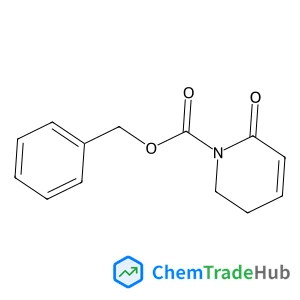
Benzyl 6-oxo-3,6-dihydro-1(2H)-pyridinecarboxylate
CAS Number:
725746-35-0
Molecular Formula:
C13H13NO3
Recommended Suppliers




Disclaimer
This page provides academic journal information for reference and research purposes only. We are not affiliated with any journal publishers and do not handle publication submissions. For publication-related inquiries, please contact the respective journal publishers directly.
If you notice any inaccuracies in the information displayed, please contact us at support@chemtradehub.com. We will promptly review and address your concerns.