











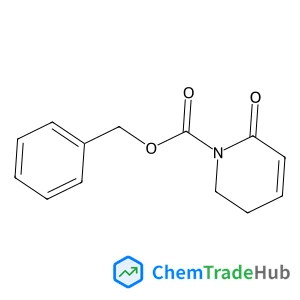
Benzyl 6-oxo-3,6-dihydro-1(2H)-pyridinecarboxylate
CAS Number:
725746-35-0
Molecular Formula:
C13H13NO3
Bingjun Han, Ya Li, Yan He, Huamei Yu
A novel detector for liquid chromatography (LC) for the determination of dithiocarbamate (DTC) fungicides is presented with a miniaturized dielectric barrier discharge–microplasma molecular emission spectrometer and an online microwave-assisted hydrolysis reactor. DTCs in the sample/standard solutions together with SnCl2 were pumped to the reactor to be converted to CS2 with high efficiency, which was then separated from the liquid phase and transformed for the detection of the specific molecular emission at 257.49 nm by the spectrometer. Under optimized conditions, the performance of this new detector was evaluated by its determination of different types of DTC including mancozeb, thiram, zineb, propineb, and metiram, and the limit of detection (LOD) values were found to be in the range 0.1–1.0 μg mL−1. The results from 20 test vegetable and fruit samples determined with the proposed method agreed well with those obtained using the standard headspace gas chromatography–electron capture detector (GC–ECD) method. Preliminary experimental results showed that the proposed method provided slightly higher LOD values than those obtained using GC–ECD. Most importantly, the new LC detector could detect each DTC chemical, whereas the traditional method could not distinguish between analytes of different subclasses of DTC.
Feng-Yang Bai, Ming-Shuai Deng, Mei-Yan Chen, Lian Kong, Shuang Ni, Xiu-Mei Pan
DOI: 10.1039/D1CP01324F
Fenfen Ma, Xiaoyan Zheng, Zesheng Li
DOI: 10.1039/D1CP01326B
Fukiko Ota, Shigeru Abe, Keisuke Hatada, Kiyoshi Ueda
DOI: 10.1039/D1CP02055B
Rui Xiong, Rong Hu, Yinggan Zhang, Xuhui Yang, Peng Lin, Cuilian Wen, Baisheng Sa, Zhimei Sun
DOI: 10.1039/D1CP02436A
Jordan M. Rabus, Robert P. Pellegrinelli, Ali Hassan Abi Khodr, Benjamin J. Bythell, Thomas R. Rizzo, Eduardo Carrascosa
DOI: 10.1039/D1CP01058A
Huixue Li, Xiaofeng Wang, Kun Yuan, Lingling Lv, Zhifeng Li
DOI: 10.1039/D1CP00578B
Bing-shuang Qian, Wen-de Tian
DOI: 10.1039/D1CP01234G
Lihong Zhang, Shunqing Wu, Jianwei Shuai, Zhufeng Hou
DOI: 10.1039/D1CP02539B
N-(4-Methoxybenzyl)-2-pyridinamine (CAS: 52818-63-0) is increasingly being used ...
When handling Ethyl 4-(2-chlorophenyl)-1,3-thiazole-2-carboxylate, appropriate p...
Diethyldiselane (CAS: 628-39-7) is classified under the Globally Harmonized Syst...
The market for oxocopper (CAS: 12053-18-8) is primarily driven by its use in cat...
The market for 5-{[(2-Methyl-2-propanyl)oxy]carbonyl}-5-azaspiro[2.4]heptane-7-c...
2-(1-Pyrrolidinyl)-4-pyridinamine is a chemical compound with the CAS number 359...
2-(3-Pyridinyl)-1-azabicyclo[2.2.2]octane (CAS: 91556-75-1) is a crystalline sol...
(S)-Alpha-allyl-proline hydrochloride is usually synthesized via a Wittig reacti...
3-Methyl-1,2-oxazole-5-carboxylic acid (CAS: 4857-42-5) is an organic compound w...
Lys-SMCC-DM1 is synthesized via a multi-step process involving the coupling of S...

Analyst publishes analytical and bioanalytical research that reports premier fundamental discoveries and inventions, and the applications of those discoveries, unconfined by traditional discipline barriers.
![(2R,6S)-6-[(Benzyloxy)methyl]-4-{[(2-methyl-2-propanyl)oxy]carbonyl}-2-morpholinecarboxylic acid structure](https://static.chemtradehub.com/structs/109/1093085-91-6-3382.webp "(2R,6S)-6-[(Benzyloxy)methyl]-4-{[(2-methyl-2-propanyl)oxy]carbonyl}-2-morpholinecarboxylic acid structure")




