











Diagnosis of thymic epithelial tumor subtypes by a quantitative proteomic approach
Literature Information
Publication Date
2018-03-21
DOI
10.1039/C8AN00218E
Impact Factor
4.616
Authors
Ting Zhao, Jie Wu, Xiaohui Liu, Lei Zhang, Gang Chen
View Original
Abstract
The histological typing of thymic epithelial tumours (TETs) still remains a challenge for surgical pathologists, especially when encountering borderline cases mainly focused on spindle cell types (including type A, atypical type A (aA), AB, and B3). A systematic proteomics analysis of TETs was performed using isobaric tags for relative and absolute quantification (iTRAQ) labeling coupled with two-dimensional liquid chromatography-tandem mass spectrometry (2D-LC-MS/MS). In total, 6479 and 6305 proteins were identified and quantified, respectively. After Gene Ontology (GO) annotation and Ingenuity Pathway Analysis (IPA), six differentially expressed proteins were validated by tissue microarray or multiple reaction monitoring (MRM) quantification. ABCE1 and CLIC2 are promising to be diagnostic candidate biomarkers in thymic carcinomas (TCs). CHD1L was up-regulated in type AB and type B thymomas compared with type A thymoma. Both CLIC2 and MAP7 were negatively detected in type B1 and B2 thymomas. SMAD4 was overexpressed in type aA thymomas and TCs. CDC42 was significantly down-regulated in type B2 thymomas compared with other subtypes. Six novel candidate biomarkers were found to be useful in differentiating subtypes of TETs. SMAD4 may play a specific role in tumorigenesis and the development of aA thymomas and thymic carcinomas.
Related Literature
Biliverdin chiral derivatives as chiroptical switches for pH and metal cation sensing
Simone Ghidinelli, Giuseppe Mazzeo, Stefan E. Boiadjiev, David A. Lightner
2021-08-26
Paper
DOI: 10.1039/D1CP02571F
Bonding of C1 fragments on metal nanoclusters: a search for methane conversion catalysts with swarm intelligence
Mikiya Hori, Yuta Tsuji, Kazunari Yoshizawa
2021-06-01
Paper
DOI: 10.1039/D1CP00345C
Quantitative analysis of ACE2 binding to coronavirus spike proteins: SARS-CoV-2 vs. SARS-CoV and RaTG13
Zhendong Li
2021-05-28
Paper
DOI: 10.1039/D1CP01075A
Absorption of self-propelled particles into a dense porous medium
Bing-shuang Qian, Wen-de Tian
2021-08-20
Paper
DOI: 10.1039/D1CP01234G
Characterization of cisplatin/membrane interactions by QM/MM energy decomposition analysis
Gustavo Cárdenas, Álvaro Pérez-Barcia, Marcos Mandado
2021-09-03
Paper
DOI: 10.1039/D1CP03382D
The impact of insufficient time resolution on dye regeneration lifetime determined using transient absorption spectroscopy
Inseong Cho, Pawel Wagner, Peter C. Innis, Attila J. Mozer
2021-05-29
Paper
DOI: 10.1039/D1CP01217G
You might also like
Compound Q&A
What is the market or research trend for N-(4-Methoxybenzyl)-2-pyridinamine (CAS: 52818-63-0)?
N-(4-Methoxybenzyl)-2-pyridinamine (CAS: 52818-63-0) is increasingly being used ...
52818-63-0N-(4-Methoxybenzyl)-...
Compound Q&A
What precautions should be taken when handling Ethyl 4-(2-chlorophenyl)-1,3-thiazole-2-carboxylate (CAS: 1050507-06-6)?
When handling Ethyl 4-(2-chlorophenyl)-1,3-thiazole-2-carboxylate, appropriate p...
1050507-06-6Ethyl 4-(2-chlorophe...
Compound Q&A
What regulatory guidelines apply to diethyldiselane (CAS: 628-39-7)?
Diethyldiselane (CAS: 628-39-7) is classified under the Globally Harmonized Syst...
628-39-7Diethyldiselane
Compound Q&A
What is the market or research trend for oxocopper (CAS: 12053-18-8)?
The market for oxocopper (CAS: 12053-18-8) is primarily driven by its use in cat...
12053-18-8oxocopper; oxo-(oxoc...
Compound Q&A
What is the market or research trend for 5-{[(2-Methyl-2-propanyl)oxy]carbonyl}-5-azaspiro[2.4]heptane-7-carboxylic acid?
The market for 5-{[(2-Methyl-2-propanyl)oxy]carbonyl}-5-azaspiro[2.4]heptane-7-c...
1268519-54-55-{[(2-Methyl-2-prop...
Compound Q&A
What is 2-(1-Pyrrolidinyl)-4-pyridinamine (CAS: 35981-63-6)?
2-(1-Pyrrolidinyl)-4-pyridinamine is a chemical compound with the CAS number 359...
35981-63-62-(1-Pyrrolidinyl)-4...
Compound Q&A
What are the physical and chemical properties of 2-(3-Pyridinyl)-1-azabicyclo[2.2.2]octane (CAS: 91556-75-1)?
2-(3-Pyridinyl)-1-azabicyclo[2.2.2]octane (CAS: 91556-75-1) is a crystalline sol...
91556-75-12-(3-Pyridinyl)-1-az...
Compound Q&A
How is (S)-Alpha-allyl-proline hydrochloride (CAS: 129704-91-2) typically synthesized?
(S)-Alpha-allyl-proline hydrochloride is usually synthesized via a Wittig reacti...
129704-91-2(S)-Alpha-allyl-prol...
Compound Q&A
What is 3-Methyl-1,2-oxazole-5-carboxylic acid (CAS: 4857-42-5)?
3-Methyl-1,2-oxazole-5-carboxylic acid (CAS: 4857-42-5) is an organic compound w...
4857-42-53-Methyl-1,2-oxazole...
Compound Q&A
How is Lys-SMCC-DM1 (CAS: 1281816-04-3) typically synthesized?
Lys-SMCC-DM1 is synthesized via a multi-step process involving the coupling of S...
1281816-04-3Lys-SMCC-DM1
Source Journal
Analyst

CiteScore:
7.8
Self-citation Rate:
5.6%
Articles per Year:
653
Analyst publishes analytical and bioanalytical research that reports premier fundamental discoveries and inventions, and the applications of those discoveries, unconfined by traditional discipline barriers.
Recommended Compounds
![1-oxaspiro[4.4]nonan-6-one structure](https://static.chemtradehub.com/structs/134/134179-01-4-e051.webp "1-oxaspiro[4.4]nonan-6-one structure")
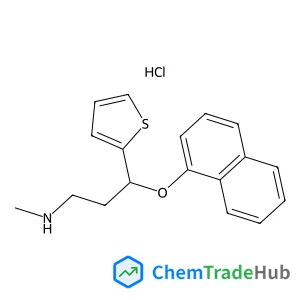
N-Methyl-3-(1-naphthyloxy)-3-(2-thienyl)-1-propanamine hydrochloride (1:1)
CAS Number:
1188266-11-6
Molecular Formula:
C18H20ClNOS
![(2R,6S)-6-[(Benzyloxy)methyl]-4-{[(2-methyl-2-propanyl)oxy]carbonyl}-2-morpholinecarboxylic acid structure](https://static.chemtradehub.com/structs/109/1093085-91-6-3382.webp "(2R,6S)-6-[(Benzyloxy)methyl]-4-{[(2-methyl-2-propanyl)oxy]carbonyl}-2-morpholinecarboxylic acid structure")
(2R,6S)-6-[(Benzyloxy)methyl]-4-{[(2-methyl-2-propanyl)oxy]carbonyl}-2-morpholinecarboxylic acid
CAS Number:
1093085-91-6
Molecular Formula:
C18H25NO6
Recommended Suppliers






Disclaimer
This page provides academic journal information for reference and research purposes only. We are not affiliated with any journal publishers and do not handle publication submissions. For publication-related inquiries, please contact the respective journal publishers directly.
If you notice any inaccuracies in the information displayed, please contact us at support@chemtradehub.com. We will promptly review and address your concerns.