












Quantitative analysis of multiple high-resolution mass spectrometry images using chemometric methods: quantitation of chlordecone in mouse liver
Literature Information
Publication Date
2018-04-05
DOI
10.1039/C7AN02059G
Impact Factor
4.616
Authors
Saeedeh Mohammadi, Hadi Parastar
View Original
Abstract
In this work, a chemometrics-based strategy is developed for quantitative mass spectrometry imaging (MSI). In this regard, quantification of chlordecone as a carcinogenic organochlorinated pesticide (C10Cll0O) in mouse liver using the matrix-assisted laser desorption ionization MSI (MALDI-MSI) method is used as a case study. The MSI datasets corresponded to 1, 5 and 10 days of mouse exposure to the standard chlordecone in the quantity range of 0 to 450 μg g−1. The binning approach in the m/z direction is used to group high resolution m/z values and to reduce the big data size. To consider the effect of bin size on the quality of results, three different bin sizes of 0.25, 0.5 and 1.0 were chosen. Afterwards, three-way MSI data arrays (two spatial and one m/z dimensions) for seven standards and four unknown samples were column-wise augmented with m/z values as the common mode. Then, these datasets were analyzed using multivariate curve resolution-alternating least squares (MCR-ALS) using proper constraints. The resolved mass spectra were used for identification of chlordecone in the presence of a complex background and interference. Additionally, the augmented spatial profiles were post-processed and 2D images for each component were obtained in calibration and unknown samples. The sum of these profiles was utilized to set the calibration curve and to obtain the analytical figures of merit (AFOMs). Inspection of the results showed that the lower bin size (i.e., 0.25) provides more accurate results. Finally, the obtained results by MCR for three datasets were compared with those of gas chromatography-mass spectrometry (GC-MS) and MALDI-MSI. The results showed that the MCR-assisted method gives a higher amount of chlordecone than MALDI-MSI and a lower amount than GC-MS. It is concluded that a combination of chemometric methods with MSI can be considered as an alternative way for MSI quantification.
Related Literature
Triangular boron carbon nitrides: an unexplored family of chromophores with unique properties for photocatalysis and optoelectronics
Sebastian Pios, Xiang Huang, Andrzej L. Sobolewski, Wolfgang Domcke
2021-05-26
Paper
DOI: 10.1039/D1CP02026A
Pattern recognition as a new strategy in high-resolution spectroscopy: application to methanol OH-stretch overtones
Jozef Rakovský, Ondrej Votava
2021-08-09
Paper
DOI: 10.1039/D1CP02639A
Absorption of self-propelled particles into a dense porous medium
Bing-shuang Qian, Wen-de Tian
2021-08-20
Paper
DOI: 10.1039/D1CP01234G
NMR study on the cellulose dissolution mechanism in CaCl2·6H2O–LiCl molten salt hydrate
Rui Tang, Ling Han, Jing Yang, Min Xu, Min Ge, Yuanyuan Tang, Xiaobin Fu, Hongtao Liu, Yuan Qian
2021-08-27
Paper
DOI: 10.1039/D1CP02769G
The structure of isolated thalidomide as reference for its chirality-dependent biological activity: a laser-ablation rotational study
Susana Blanco, Alberto Macario, Juan Carlos López
2021-06-07
Paper
DOI: 10.1039/D1CP01691A
Controlled 2H/1T phase transition in MoS2 monolayers by a strong interface with M2C MXenes: a computational study
Zhongxu Wang, Yu Liu, FengYu Li, Jingxiang Zhao
2021-08-25
Paper
DOI: 10.1039/D1CP02648H
Prediction of the standard potentials for one-electron oxidation of N,N,N′,N′ tetrasubstituted p-phenylenediamines by calculation
Cecilie L. Andersen, Evanildo G. Lacerda, Jr, Jørn B. Christensen, Stephan P. A. Sauer, Ole Hammerich
2021-09-02
Paper
DOI: 10.1039/D1CP02315B
Incorporation efficiency and inhibition mechanism of 2′-substituted nucleotide analogs against SARS-CoV-2 RNA-dependent RNA polymerase
2021-09-03
Paper
DOI: 10.1039/D1CP03049C
You might also like
Compound Q&A
What is the market or research trend for N-(4-Methoxybenzyl)-2-pyridinamine (CAS: 52818-63-0)?
N-(4-Methoxybenzyl)-2-pyridinamine (CAS: 52818-63-0) is increasingly being used ...
52818-63-0N-(4-Methoxybenzyl)-...
Compound Q&A
What precautions should be taken when handling Ethyl 4-(2-chlorophenyl)-1,3-thiazole-2-carboxylate (CAS: 1050507-06-6)?
When handling Ethyl 4-(2-chlorophenyl)-1,3-thiazole-2-carboxylate, appropriate p...
1050507-06-6Ethyl 4-(2-chlorophe...
Compound Q&A
What regulatory guidelines apply to diethyldiselane (CAS: 628-39-7)?
Diethyldiselane (CAS: 628-39-7) is classified under the Globally Harmonized Syst...
628-39-7Diethyldiselane
Compound Q&A
What is the market or research trend for oxocopper (CAS: 12053-18-8)?
The market for oxocopper (CAS: 12053-18-8) is primarily driven by its use in cat...
12053-18-8oxocopper; oxo-(oxoc...
Compound Q&A
What is the market or research trend for 5-{[(2-Methyl-2-propanyl)oxy]carbonyl}-5-azaspiro[2.4]heptane-7-carboxylic acid?
The market for 5-{[(2-Methyl-2-propanyl)oxy]carbonyl}-5-azaspiro[2.4]heptane-7-c...
1268519-54-55-{[(2-Methyl-2-prop...
Compound Q&A
What is 2-(1-Pyrrolidinyl)-4-pyridinamine (CAS: 35981-63-6)?
2-(1-Pyrrolidinyl)-4-pyridinamine is a chemical compound with the CAS number 359...
35981-63-62-(1-Pyrrolidinyl)-4...
Compound Q&A
What are the physical and chemical properties of 2-(3-Pyridinyl)-1-azabicyclo[2.2.2]octane (CAS: 91556-75-1)?
2-(3-Pyridinyl)-1-azabicyclo[2.2.2]octane (CAS: 91556-75-1) is a crystalline sol...
91556-75-12-(3-Pyridinyl)-1-az...
Compound Q&A
How is (S)-Alpha-allyl-proline hydrochloride (CAS: 129704-91-2) typically synthesized?
(S)-Alpha-allyl-proline hydrochloride is usually synthesized via a Wittig reacti...
129704-91-2(S)-Alpha-allyl-prol...
Compound Q&A
What is 3-Methyl-1,2-oxazole-5-carboxylic acid (CAS: 4857-42-5)?
3-Methyl-1,2-oxazole-5-carboxylic acid (CAS: 4857-42-5) is an organic compound w...
4857-42-53-Methyl-1,2-oxazole...
Compound Q&A
How is Lys-SMCC-DM1 (CAS: 1281816-04-3) typically synthesized?
Lys-SMCC-DM1 is synthesized via a multi-step process involving the coupling of S...
1281816-04-3Lys-SMCC-DM1
Source Journal
Analyst

CiteScore:
7.8
Self-citation Rate:
5.6%
Articles per Year:
653
Analyst publishes analytical and bioanalytical research that reports premier fundamental discoveries and inventions, and the applications of those discoveries, unconfined by traditional discipline barriers.
Recommended Compounds
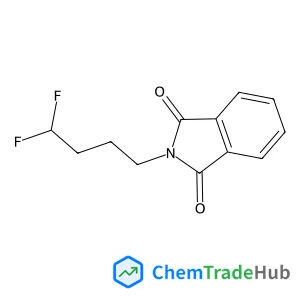
2-(4,4-Difluorobutyl)-1H-isoindole-1,3(2H)-dione
CAS Number:
1265341-14-7
Molecular Formula:
C12H11F2NO2
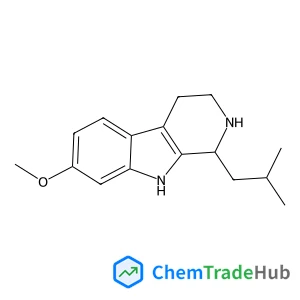
1-Isobutyl-7-methoxy-2,3,4,9-tetrahydro-1H-beta-carboline
CAS Number:
175975-76-5
Molecular Formula:
C16H22N2O
![1,10-bis(3,5-dimethylphenyl)-12-hydroxy-4,5,6,7-tetrahydroiindeno[7,1-de:1',7'-fg][1,3,2]dioxaphosphocine 12-oxide structure](https://static.chemtradehub.com/structs/141/1412439-82-7-b9a9.webp "1,10-bis(3,5-dimethylphenyl)-12-hydroxy-4,5,6,7-tetrahydroiindeno[7,1-de:1',7'-fg][1,3,2]dioxaphosphocine 12-oxide structure")
1,10-bis(3,5-dimethylphenyl)-12-hydroxy-4,5,6,7-tetrahydroiindeno[7,1-de:1',7'-fg][1,3,2]dioxaphosphocine 12-oxide
CAS Number:
1412439-82-7
Molecular Formula:
C33H31O4P
Recommended Suppliers





Disclaimer
This page provides academic journal information for reference and research purposes only. We are not affiliated with any journal publishers and do not handle publication submissions. For publication-related inquiries, please contact the respective journal publishers directly.
If you notice any inaccuracies in the information displayed, please contact us at support@chemtradehub.com. We will promptly review and address your concerns.