













Binary mixtures of novel sulfoxides and water: intermolecular structure, dynamic properties, thermodynamics, and cluster analysis
Literature Information
Publication Date
2018-08-30
DOI
10.1039/C8CP04012E
Impact Factor
3.676
Authors
View Original
Abstract
Higher molecular weight dialkyl sulfoxides attract interest in the context of biomedical sciences due to their ability to penetrate phospholipid bilayers, dissolve drugs, and serve as cryoprotectants. Intermolecular interactions with water, a paramount component of the living cell, determine the performance of the sulfoxide-based artificial systems in their prospective applications. Herein, we simulated a wide composition range of sulfoxide/water mixtures, up to 85 w/w% sulfoxide, using classical molecular dynamics to determine structure, dynamics, and thermodynamics as a function of the mixture composition. As found, both diethyl sulfoxide (DESO) and ethyl methyl sulfoxide (EMSO) are strongly miscible with water. DESO- and EMSO-based aqueous mixtures exhibit similar structure and thermodynamic properties, however, quite different dynamic properties over the entire range of compositions. Strong deviations from an ideal mixture of between 30–50 mol% (based on molar volume) of sulfoxide content lead to relatively high dynamic viscosities of the mixtures. The free energy of mixing with water is only slightly more favorable for EMSO than for DESO. The results, for the first time, quantify high miscibilities of both sulfoxides with water and motivate comprehensive in vivo investigation of the proposed mixtures.
Related Literature
Free electron transfer from several phenols to radical cations of non-polar solvents
Mahalaxmi R. Ganapathi, Ralf Hermann, Sergei Naumov, Ortwin Brede
2000-10-06
Paper
DOI: 10.1039/B005864P
Structures and phase transitions in aqueous dispersions of branched-chain glycerophosphoethanolamines
Frank Bringezu, Gert Rapp, Bodo Dobner, Peter Nuhn, Gerald Brezesinski
2000-09-18
Paper
DOI: 10.1039/B003516P
Interaction of thiophene with a molybdenum disulfide catalyst—an inelastic neutron scattering study
Paper
DOI: 10.1039/A902617G
Photophysical and photochemical properties of bis-silylated C60 derivatives
Paper
DOI: 10.1039/A902939G
Isothermal vapour/liquid equilibria of binary mixtures with dibutyl ether at 298.15 K
Luciano Lepori, Enrico Matteoli, Luca Bernazzani, Norberto Ceccanti, Giovanni Conti, Paolo Gianni, Vincenzo Mollica, Maria R. Tinè
2000-10-13
Paper
DOI: 10.1039/B005160H
Photometathesis activity and thermal stability of two types of mesoporous silica materials, FSM-16 and MCM-41
Yoshitaka Inaki, Hisao Yoshida, Koichi Kimura, Shinji Inagaki, Yoshiaki Fukushima, Tadashi Hattori
2000-10-26
Paper
DOI: 10.1039/B002501L
You might also like
Compound Q&A
What precautions should be taken when handling 4-(2-Furylmethyl)thiomorpholine 1,1-dioxide (CAS: 79206-94-3)?
When handling 4-(2-Furylmethyl)thiomorpholine 1,1-dioxide (CAS: 79206-94-3), it ...
79206-94-34-(2-Furylmethyl)thi...
Compound Q&A
What precautions should be taken when handling 4-Chloro-N-[2-(4-morpholinyl)ethyl]benzamide (CAS: 71320-77-9)?
When handling 4-Chloro-N-[2-(4-morpholinyl)ethyl]benzamide (CAS: 71320-77-9), it...
71320-77-94-Chloro-N-[2-(4-mor...
Compound Q&A
How should waste containing 2-[2-(2-Methoxyethoxy)ethoxy]ethyl 4-methylbenzenesulfonate (CAS: 62921-74-8) be handled?
Waste containing this compound (CAS: 62921-74-8) should be handled according to ...
62921-74-82-[2-(2-Methoxyethox...
Compound Q&A
How should waste containing (S)-Methyl 2-amino-3-cyclohexylpropanoate be handled?
Waste containing (S)-Methyl 2-amino-3-cyclohexylpropanoate should be collected i...
40056-18-6(S)-Methyl 2-amino-3...
Compound Q&A
How is 5-({4-[(2S,4R)-4-Hydroxy-2-methyltetrahydro-2H-pyran-4-yl]-2-thienyl}sulfanyl)-1-methyl-1,3-dihydro-2H-indol-2-one (CAS: 166882-70-8) typically synthesized?
This compound can be synthesized using a multi-step process involving the conjug...
166882-70-85-({4-[(2S,4R)-4-Hyd...
Compound Q&A
Are there alternatives to (2E)-3-(3,4-Dichlorophenyl)acrylic acid (CAS: 7312-27-8) in synthesis?
There are several alternatives to (2E)-3-(3,4-Dichlorophenyl)acrylic acid in syn...
7312-27-8(2E)-3-(3,4-Dichloro...
Compound Q&A
How should Ethyl 6-(2-nitrophenyl)imidazo[2,1-b][1,3]thiazole-3-carboxylate (CAS: 925437-84-9) be stored?
Ethyl 6-(2-nitrophenyl)imidazo[2,1-b][1,3]thiazole-3-carboxylate (CAS: 925437-84...
925437-84-9Ethyl 6-(2-nitrophen...
Compound Q&A
How should waste containing 2-(1,3-Thiazol-2-yl)ethanamine (CAS: 18453-07-1) be handled?
Waste containing 2-(1,3-Thiazol-2-yl)ethanamine (CAS: 18453-07-1) should be coll...
18453-07-12-(1,3-Thiazol-2-yl)...
Compound Q&A
How is Methyl 5-iodo-2-methylbenzoate (CAS: 103440-54-6) typically synthesized?
Methyl 5-iodo-2-methylbenzoate can be synthesized through the iodination of meth...
103440-54-6Methyl 5-iodo-2-meth...
Compound Q&A
How is 5-Chloro[1,2,4]triazolo[1,5-a]pyridine (CAS: 1427399-34-5) typically synthesized?
5-Chloro[1,2,4]triazolo[1,5-a]pyridine is commonly synthesized via the condensat...
1427399-34-55-Chloro[1,2,4]triaz...
Source Journal
Physical Chemistry Chemical Physics

CiteScore:
5.5
Self-citation Rate:
10.3%
Articles per Year:
3036
Physical Chemistry Chemical Physics (PCCP) is an international journal co-owned by 19 physical chemistry and physics societies from around the world. This journal publishes original, cutting-edge research in physical chemistry, chemical physics and biophysical chemistry. To be suitable for publication in PCCP, articles must include significant innovation and/or insight into physical chemistry; this is the most important criterion that reviewers and Editors will judge against when evaluating submissions. The journal has a broad scope and welcomes contributions spanning experiment, theory, computation and data science. Topical coverage includes spectroscopy, dynamics, kinetics, statistical mechanics, thermodynamics, electrochemistry, catalysis, surface science, quantum mechanics, quantum computing and machine learning. Interdisciplinary research areas such as polymers and soft matter, materials, nanoscience, energy, surfaces/interfaces, and biophysical chemistry are welcomed if they demonstrate significant innovation and/or insight into physical chemistry. Joined experimental/theoretical studies are particularly appreciated when complementary and based on up-to-date approaches.
Recommended Compounds

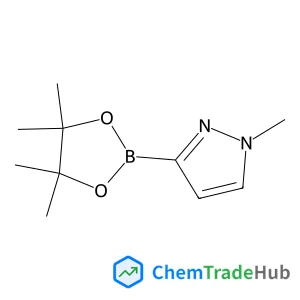
1-Methyl-3-(4,4,5,5-tetramethyl-1,3,2-dioxaborolan-2-yl)-1H-pyrazole
CAS Number:
1020174-04-2
Molecular Formula:
C10H17BN2O2
![4-{2-[4-(2-Methyl-2-propanyl)phenyl]ethoxy}quinazoline structure](https://static.chemtradehub.com/structs/120/120928-09-8-d3db.webp "4-{2-[4-(2-Methyl-2-propanyl)phenyl]ethoxy}quinazoline structure")
4-{2-[4-(2-Methyl-2-propanyl)phenyl]ethoxy}quinazoline
CAS Number:
120928-09-8
Molecular Formula:
C20H22N2O
Recommended Suppliers






Disclaimer
This page provides academic journal information for reference and research purposes only. We are not affiliated with any journal publishers and do not handle publication submissions. For publication-related inquiries, please contact the respective journal publishers directly.
If you notice any inaccuracies in the information displayed, please contact us at support@chemtradehub.com. We will promptly review and address your concerns.