













Photometathesis activity and thermal stability of two types of mesoporous silica materials, FSM-16 and MCM-41
Literature Information
Publication Date
2000-10-26
DOI
10.1039/B002501L
Impact Factor
3.676
Authors
Yoshitaka Inaki, Hisao Yoshida, Koichi Kimura, Shinji Inagaki, Yoshiaki Fukushima, Tadashi Hattori
View Original
Abstract
The metathesis reaction of propene under photoirradiation was performed over two types of mesoporous silica materials, FSM-16 and MCM-41, and amorphous silica evacuated at high temperature. The activity increased with increasing evacuation temperature, and moreover, prehydration treatment before evacuation influenced the activity. The effect of these pretreatment conditions, however, differed from sample to sample. FSM-16 and MCM-41, exhibited activity after evacuation at considerably lower temperature than amorphous silica. Prehydration enhanced the activity of FSM-16 and amorphous silica, but suppressed that of MCM-41. It was also observed that the stability of FSM-16 is higher than MCM-41 under pretreatment conditions. From these results, the specific features of mesoporous silica materials and the difference between FSM-16 and MCM-41 were discussed.
Related Literature
A new organic superconductor, (DODHT)2BF4·H2O
Hiroyuki Nishikawa, Asami Machida, Takanobu Morimoto, Koichi Kikuchi, Takeshi Kodama, Isao Ikemoto, Jun-ichi Yamada, Harukazu Yoshino, Keizo Murata
2003-01-27
Communication
DOI: 10.1039/B211275B
Synthesis of a η2-2,3-diphosphabutadiene complex of zerovalent platinum from the corresponding η2-phosphaalkyne complex
Maria Helena Araujo, Peter B. Hitchcock, John F. Nixon, Uwe Kuehner, Othmar Stelzer
2003-04-02
Communication
DOI: 10.1039/B301335A
Decorating catalytic palladium nanoparticles on carbon nanotubes in supercritical carbon dioxide
Yuehe Lin, Chien M. Wai
2003-02-10
Communication
DOI: 10.1039/B211350C
Pyridine–sugar conjugates as potent inhibitors of enzyme-catalysed glycosidehydrolysis
Peter A. Nkansah, Alan H. Haines, N. Patrick J. Stamford
2003-02-20
Communication
DOI: 10.1039/B211399F
Highly regio- and stereoselective four-component iodoamination of Se-substituted allenes. an efficient synthesis of N-(3-organoseleno-2-iodo-2(Z)-propenyl) acetamides
Xueshi Hao, Xian Huang
2003-04-02
Communication
DOI: 10.1039/B300879G
Facile fabrication of polypyrrolenanotubes using reverse microemulsion polymerization
Jyongsik Jang, Hyeonseok Yoon
2003-02-12
Communication
DOI: 10.1039/B211716A
Control of Al distribution in ZSM-5 by conditions of zeolite synthesis
2003-04-23
Communication
DOI: 10.1039/B301634J
The diatropic σ ring currents of [π2s + π2s + π2s] pericyclic transition states
Leonardus W. Jenneskens, Patrick W. Fowler, Erich Steiner
2003-02-20
Communication
DOI: 10.1039/B212251K
A novel and efficient method for the Pd-catalysed oxidative carbonylation of amines to symmetrically and unsymmetrically substituted ureas
Bartolo Gabriele, Raffaella Mancuso, Giuseppe Salerno, Mirco Costa
2003-01-24
Communication
DOI: 10.1039/B211740A
Self-assembly of a ferrocene-substituted porphyrin capable of electrochemically sensing neutral molecules via a “tail on–tail off” process
Christophe Bucher, Charles H. Devillers, Jean-Claude Moutet, Guy Royal, Eric Saint-Aman
2003-03-05
Communication
DOI: 10.1039/B301177A
You might also like
Compound Q&A
What precautions should be taken when handling 4-(2-Furylmethyl)thiomorpholine 1,1-dioxide (CAS: 79206-94-3)?
When handling 4-(2-Furylmethyl)thiomorpholine 1,1-dioxide (CAS: 79206-94-3), it ...
79206-94-34-(2-Furylmethyl)thi...
Compound Q&A
What precautions should be taken when handling 4-Chloro-N-[2-(4-morpholinyl)ethyl]benzamide (CAS: 71320-77-9)?
When handling 4-Chloro-N-[2-(4-morpholinyl)ethyl]benzamide (CAS: 71320-77-9), it...
71320-77-94-Chloro-N-[2-(4-mor...
Compound Q&A
How should waste containing 2-[2-(2-Methoxyethoxy)ethoxy]ethyl 4-methylbenzenesulfonate (CAS: 62921-74-8) be handled?
Waste containing this compound (CAS: 62921-74-8) should be handled according to ...
62921-74-82-[2-(2-Methoxyethox...
Compound Q&A
How should waste containing (S)-Methyl 2-amino-3-cyclohexylpropanoate be handled?
Waste containing (S)-Methyl 2-amino-3-cyclohexylpropanoate should be collected i...
40056-18-6(S)-Methyl 2-amino-3...
Compound Q&A
How is 5-({4-[(2S,4R)-4-Hydroxy-2-methyltetrahydro-2H-pyran-4-yl]-2-thienyl}sulfanyl)-1-methyl-1,3-dihydro-2H-indol-2-one (CAS: 166882-70-8) typically synthesized?
This compound can be synthesized using a multi-step process involving the conjug...
166882-70-85-({4-[(2S,4R)-4-Hyd...
Compound Q&A
Are there alternatives to (2E)-3-(3,4-Dichlorophenyl)acrylic acid (CAS: 7312-27-8) in synthesis?
There are several alternatives to (2E)-3-(3,4-Dichlorophenyl)acrylic acid in syn...
7312-27-8(2E)-3-(3,4-Dichloro...
Compound Q&A
How should Ethyl 6-(2-nitrophenyl)imidazo[2,1-b][1,3]thiazole-3-carboxylate (CAS: 925437-84-9) be stored?
Ethyl 6-(2-nitrophenyl)imidazo[2,1-b][1,3]thiazole-3-carboxylate (CAS: 925437-84...
925437-84-9Ethyl 6-(2-nitrophen...
Compound Q&A
How should waste containing 2-(1,3-Thiazol-2-yl)ethanamine (CAS: 18453-07-1) be handled?
Waste containing 2-(1,3-Thiazol-2-yl)ethanamine (CAS: 18453-07-1) should be coll...
18453-07-12-(1,3-Thiazol-2-yl)...
Compound Q&A
How is Methyl 5-iodo-2-methylbenzoate (CAS: 103440-54-6) typically synthesized?
Methyl 5-iodo-2-methylbenzoate can be synthesized through the iodination of meth...
103440-54-6Methyl 5-iodo-2-meth...
Compound Q&A
How is 5-Chloro[1,2,4]triazolo[1,5-a]pyridine (CAS: 1427399-34-5) typically synthesized?
5-Chloro[1,2,4]triazolo[1,5-a]pyridine is commonly synthesized via the condensat...
1427399-34-55-Chloro[1,2,4]triaz...
Source Journal
Physical Chemistry Chemical Physics

CiteScore:
5.5
Self-citation Rate:
10.3%
Articles per Year:
3036
Physical Chemistry Chemical Physics (PCCP) is an international journal co-owned by 19 physical chemistry and physics societies from around the world. This journal publishes original, cutting-edge research in physical chemistry, chemical physics and biophysical chemistry. To be suitable for publication in PCCP, articles must include significant innovation and/or insight into physical chemistry; this is the most important criterion that reviewers and Editors will judge against when evaluating submissions. The journal has a broad scope and welcomes contributions spanning experiment, theory, computation and data science. Topical coverage includes spectroscopy, dynamics, kinetics, statistical mechanics, thermodynamics, electrochemistry, catalysis, surface science, quantum mechanics, quantum computing and machine learning. Interdisciplinary research areas such as polymers and soft matter, materials, nanoscience, energy, surfaces/interfaces, and biophysical chemistry are welcomed if they demonstrate significant innovation and/or insight into physical chemistry. Joined experimental/theoretical studies are particularly appreciated when complementary and based on up-to-date approaches.
Recommended Compounds

![1-Naphthalenesulfonic acid, 2-[(2-hydroxy-1-naphthalenyl)azo]-, bariumsalt (2:1) structure](https://static.chemtradehub.com/structs/110/1103-38-4-0b33.webp "1-Naphthalenesulfonic acid, 2-[(2-hydroxy-1-naphthalenyl)azo]-, bariumsalt (2:1) structure")
1-Naphthalenesulfonic acid, 2-[(2-hydroxy-1-naphthalenyl)azo]-, bariumsalt (2:1)
CAS Number:
1103-38-4
Molecular Formula:
C20H14BaN2O4S
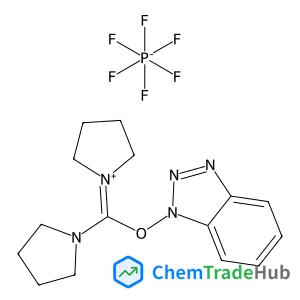
(1H-Benzotriazol-1-yloxy)(di-1-pyrrolidinyl)methylium hexafluorophosphate
CAS Number:
105379-24-6
Molecular Formula:
C15H21F6N5OP
Recommended Suppliers





Disclaimer
This page provides academic journal information for reference and research purposes only. We are not affiliated with any journal publishers and do not handle publication submissions. For publication-related inquiries, please contact the respective journal publishers directly.
If you notice any inaccuracies in the information displayed, please contact us at support@chemtradehub.com. We will promptly review and address your concerns.