












The Cd22+ in molten metal halides and at electrode interfaces
Literature Information
Publication Date
DOI
10.1039/A902843I
Impact Factor
3.676
Authors
View Original
Abstract
The structural properties of the cadmium species formed by dissolution of cadmium metal in molten cadmium halides (CdX2: X=Cl, Br, I) and in molten mixtures of cadmium chloride with alkali chlorides have been investigated by Raman spectroscopy. The data indicate that in these ionic solvents the predominant species present is the solvated Cd22+ subvalent cation. With increasing ionic strength of the counter anion the frequency of the diatomic cation shifts from 158 cm-1 for the chloride melt to 183 cm-1 for the iodide melt. Due to the overlap of the electronic absorption edge of the Cd22+ with the laser lines used to excite the spectra the Raman band intensities of the solute species are preresonance enhanced. The dissolution of cadmium metal in the cadmium chloride–alkali chloride mixtures increases with temperature and depends on the stability of the CdCl42- species formed in these melts. The looser the CdCl42- association the higher the solubility and the stability of the Cd22+ species. Raman spectroelectrochemical methods have been applied for studying amorphous carbon electrode surfaces during electrolysis of CdCl2 in LiCl–KCl eutectic. A new Raman band measured at ∽158 cm-1 during electrolysis was attributed to the subvalent Cd22+ species. It seems that these species are formed in the vicinity of the electrode by a homogeneous electrochemical reaction.
Related Literature
Cooperative effects in the complexation of anions and Lewis bases by a heteronuclear bifunctional Lewis acid
James D. Hoefelmeyer, François P. Gabbaï
2003-02-14
Communication
DOI: 10.1039/B212127A
Facile fabrication of polypyrrolenanotubes using reverse microemulsion polymerization
Jyongsik Jang, Hyeonseok Yoon
2003-02-12
Communication
DOI: 10.1039/B211716A
The first NH aldimineorganometallic compound. Isolation and crystal structure
Joan Albert, J. Magali Cadena, Asensio González, Jaume Granell, Xavier Solans, Mercè Font-Bardia
2003-01-20
Communication
DOI: 10.1039/B211808D
Enhancement of facilitated olefin transport by amino acid in silver–polymer complex membranes
Sang Wook Kang, Jong Hak Kim, Jongok Won, Kookheon Char, Yong Soo Kang
2003-02-25
Communication
DOI: 10.1039/B211933A
Synthesis and characterization of highly ordered functional mesoporous silica thin films with positively chargeable –NH2 groups
Nanguo Liu, Roger A. Assink, Bernd Smarsly
2003-04-16
Communication
DOI: 10.1039/B301910A
A novel bioassay for screening and quantification of taxanes
Sergi Morais, P. C. Pandey, Wilfred Chen, Ashok Mulchandani
2003-04-17
Communication
DOI: 10.1039/B302112B
The first example of direct oxidation of sulfides to sulfones by an osmate molecular oxygen system
Boyapati M. Choudary, Chinta Reddy V. Reddy, Billakanti V. Prakash, Mannepalli L. Kantam, B. Sreedhar
2003-02-20
Communication
DOI: 10.1039/B212749K
TEM stereo-imaging of mesoporous zeolite single crystals
Iver Schmidt, Anna Carlsson, Søren Dahl, Michael Brorson, Claus J. H. Jacobsen
2003-03-14
Communication
DOI: 10.1039/B212646J
Electrochemically tuneable hydrogen bonding interactions between a phenyl-urea terminated dendrimer and phenanthrenequinone
Graeme Cooke, Vladimir Sindelar, Vincent M. Rotello
2003-02-20
Communication
DOI: 10.1039/B211370H
Non-covalent switch for intramolecular energy transfer
Joe Otsuki, Akane Yasuda, Toshio Takido
2003-02-05
Communication
DOI: 10.1039/B212912D
You might also like
Compound Q&A
What precautions should be taken when handling 4-(2-Furylmethyl)thiomorpholine 1,1-dioxide (CAS: 79206-94-3)?
When handling 4-(2-Furylmethyl)thiomorpholine 1,1-dioxide (CAS: 79206-94-3), it ...
79206-94-34-(2-Furylmethyl)thi...
Compound Q&A
What precautions should be taken when handling 4-Chloro-N-[2-(4-morpholinyl)ethyl]benzamide (CAS: 71320-77-9)?
When handling 4-Chloro-N-[2-(4-morpholinyl)ethyl]benzamide (CAS: 71320-77-9), it...
71320-77-94-Chloro-N-[2-(4-mor...
Compound Q&A
How should waste containing 2-[2-(2-Methoxyethoxy)ethoxy]ethyl 4-methylbenzenesulfonate (CAS: 62921-74-8) be handled?
Waste containing this compound (CAS: 62921-74-8) should be handled according to ...
62921-74-82-[2-(2-Methoxyethox...
Compound Q&A
How should waste containing (S)-Methyl 2-amino-3-cyclohexylpropanoate be handled?
Waste containing (S)-Methyl 2-amino-3-cyclohexylpropanoate should be collected i...
40056-18-6(S)-Methyl 2-amino-3...
Compound Q&A
How is 5-({4-[(2S,4R)-4-Hydroxy-2-methyltetrahydro-2H-pyran-4-yl]-2-thienyl}sulfanyl)-1-methyl-1,3-dihydro-2H-indol-2-one (CAS: 166882-70-8) typically synthesized?
This compound can be synthesized using a multi-step process involving the conjug...
166882-70-85-({4-[(2S,4R)-4-Hyd...
Compound Q&A
Are there alternatives to (2E)-3-(3,4-Dichlorophenyl)acrylic acid (CAS: 7312-27-8) in synthesis?
There are several alternatives to (2E)-3-(3,4-Dichlorophenyl)acrylic acid in syn...
7312-27-8(2E)-3-(3,4-Dichloro...
Compound Q&A
How should Ethyl 6-(2-nitrophenyl)imidazo[2,1-b][1,3]thiazole-3-carboxylate (CAS: 925437-84-9) be stored?
Ethyl 6-(2-nitrophenyl)imidazo[2,1-b][1,3]thiazole-3-carboxylate (CAS: 925437-84...
925437-84-9Ethyl 6-(2-nitrophen...
Compound Q&A
How should waste containing 2-(1,3-Thiazol-2-yl)ethanamine (CAS: 18453-07-1) be handled?
Waste containing 2-(1,3-Thiazol-2-yl)ethanamine (CAS: 18453-07-1) should be coll...
18453-07-12-(1,3-Thiazol-2-yl)...
Compound Q&A
How is Methyl 5-iodo-2-methylbenzoate (CAS: 103440-54-6) typically synthesized?
Methyl 5-iodo-2-methylbenzoate can be synthesized through the iodination of meth...
103440-54-6Methyl 5-iodo-2-meth...
Compound Q&A
How is 5-Chloro[1,2,4]triazolo[1,5-a]pyridine (CAS: 1427399-34-5) typically synthesized?
5-Chloro[1,2,4]triazolo[1,5-a]pyridine is commonly synthesized via the condensat...
1427399-34-55-Chloro[1,2,4]triaz...
Source Journal
Physical Chemistry Chemical Physics

CiteScore:
5.5
Self-citation Rate:
10.3%
Articles per Year:
3036
Physical Chemistry Chemical Physics (PCCP) is an international journal co-owned by 19 physical chemistry and physics societies from around the world. This journal publishes original, cutting-edge research in physical chemistry, chemical physics and biophysical chemistry. To be suitable for publication in PCCP, articles must include significant innovation and/or insight into physical chemistry; this is the most important criterion that reviewers and Editors will judge against when evaluating submissions. The journal has a broad scope and welcomes contributions spanning experiment, theory, computation and data science. Topical coverage includes spectroscopy, dynamics, kinetics, statistical mechanics, thermodynamics, electrochemistry, catalysis, surface science, quantum mechanics, quantum computing and machine learning. Interdisciplinary research areas such as polymers and soft matter, materials, nanoscience, energy, surfaces/interfaces, and biophysical chemistry are welcomed if they demonstrate significant innovation and/or insight into physical chemistry. Joined experimental/theoretical studies are particularly appreciated when complementary and based on up-to-date approaches.
Recommended Compounds
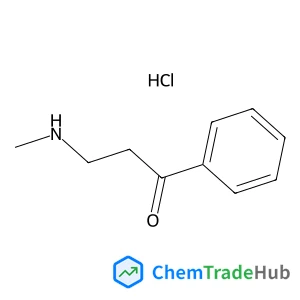
3-(Methylamino)-1-phenyl-1-propanone hydrochloride (1:1)
CAS Number:
2538-50-3
Molecular Formula:
C10H14ClNO

![4-{2-[4-(2-Methyl-2-propanyl)phenyl]ethoxy}quinazoline structure](https://static.chemtradehub.com/structs/120/120928-09-8-d3db.webp "4-{2-[4-(2-Methyl-2-propanyl)phenyl]ethoxy}quinazoline structure")
4-{2-[4-(2-Methyl-2-propanyl)phenyl]ethoxy}quinazoline
CAS Number:
120928-09-8
Molecular Formula:
C20H22N2O
Recommended Suppliers





Disclaimer
This page provides academic journal information for reference and research purposes only. We are not affiliated with any journal publishers and do not handle publication submissions. For publication-related inquiries, please contact the respective journal publishers directly.
If you notice any inaccuracies in the information displayed, please contact us at support@chemtradehub.com. We will promptly review and address your concerns.