


Anomalous molecular infiltration in graphene laminates
Literature Information
Publication Date
2018-08-09
DOI
10.1039/C8CP03879A
Impact Factor
3.676
Authors
Riccardo Checchetto, Paolo Bettotti, Gianfranco Carotenuto, Werner Egger, Christoph Hugenschmidt, Antonio Miotello
View Original
Abstract
Graphene laminated (GL) coatings formed by stacked few layer graphene (FLG) nanocrystals were deposited on low-density polyethylene (PE) films by the mechanical rubbing technique. Molecular transport through the bilayer membrane was studied by the gas phase permeation technique by monitoring the CO2, N2 and 2H2 transport fluxes in transient conditions. The results evidenced that the transport exhibited anomalous character. The experimental data could be reproduced assuming that the penetrant concentration in the GL coating, cint(t), reached a saturation value cs following compressed exponential kinetics cint(t) = cs[1 − e−(λrelt)β]. The relaxation time τrel = 1/λrel showed thermally activated behavior, and its value increased with the kinetic diameter of the penetrant molecules. The critical exponent β = 1.5 ± 0.1 for CO2 and N2 and β = 2.0 ± 0.1 for 2H2 did not change with temperature. Positron annihilation lifetime spectroscopy (PALS) analysis indicated that the average cross-section (hg) of the cavities in the GL coating exhibited comparable size to the kinetic diameter (σk) of the penetrant molecules. The results could be explained by assuming that the molecular infiltration in the GL structure occurred in nano-channels having distributed path lengths where the penetrant transport obeyed a configurational diffusion mechanism.
Recommended Journals

Nature Medicine

Acta Materialia

Journal of Peptide Science

Current Opinion in Solid State & Materials Science

Russian Journal of Applied Chemistry

Chemical Communications

Russian Journal of Bioorganic Chemistry

Drug Discovery Today

Chemistry Education Research and Practice

Russian Journal of Organic Chemistry
Related Literature
Enhanced electrocatalytic hydrogen evolution from nitrogen plasma-tailored MoS2 nanostructures
You Li, Yi Wan, Jiamin Yao, Hongqian Zheng, Xi Wang, Xuan Liu, Bo Ouyang, Chengxi Huang, Kaiming Deng, Erjun Kan
2023-11-03
Paper
DOI: 10.1039/D3CP04951E
Formation of superoxide and ozone-like species on Cu doped CeO2(111) and their CO oxidation reactivity: a DFT study
Hao Wang, Yuan Li, Jiao Han, Caishun Zhang, Honghao Wang, Daosheng Liu, Xiaoning Hou, Lei Zhang, Zhixian Gao
2023-11-24
Paper
DOI: 10.1039/D3CP03885H
Blue shifts in helium-surface bound-state resonances and quantum effects in cosine-law scattering
Luke Staszewski, Nadav Avidor
2023-11-15
Paper
DOI: 10.1039/D3CP02291A
Target–ligand binding affinity from single point enthalpy calculation and elemental composition
Viktor Szél, Balázs Zoltán Zsidó, Norbert Jeszenői, Csaba Hetényi
2023-11-03
Paper
DOI: 10.1039/D3CP04483A
Blocking recombination centers by controlling the charge density of a sulfur vacancy in antimony trisulfide
Xiao Han, Qi Zhao, Xiaodan Yan, Ting Meng, Jinlu He
2023-11-15
Paper
DOI: 10.1039/D3CP05217F
The intrinsically low lattice thermal conductivity of monolayer T-Au6X2 (X = S, Se and Te)
Yupin Ji, Xihao Chen, Zhehao Sun, Chen Shen, Ning Wang
2023-11-06
Paper
DOI: 10.1039/D3CP03580H
Computational study of the photophysical properties and electronic structure of iridium(iii) photosensitizer complexes with electron-withdrawing groups
Zhoujie Zhang, Mengping Huang, Na Shu, Hanyu Luo, Qiyan Cao, Bingbing Fan, Yu Han, Yong Wu
2023-11-15
Paper
DOI: 10.1039/D3CP04900K
Electronic, optoelectronic, and thermoelectric properties of single molecular devices of 2D fullerenes with zigzag graphene nanoribbons as electrodes
Ping Zhou, Guohao Li, Mengtao Sun
2023-10-31
Paper
DOI: 10.1039/D3CP04725C
You might also like
Compound Q&A
Are there alternatives to 1-(4-Chlorophenyl)-N-hydroxymethanimine (CAS: 3848-36-0) in synthesis?
When considering alternatives to 1-(4-Chlorophenyl)-N-hydroxymethanimine (CAS: 3...
3848-36-01-(4-Chlorophenyl)-N...
Compound Q&A
How should (1R,9S,10S,12S,14E,16S,19R,20R,21S,22R)-3,9,21-Trihydroxy-5,10,12,14,16,20,22-heptamethyl-23,24-dioxatetracyclo[17.3.1.1~6,9~.0~2,7~]tetracosa-2,5,7,14-tetraen-4-one (CAS: 183202-73-5) be stored?
This compound should be stored in a cool, dry place away from direct sunlight. I...
183202-73-5(1R,9S,10S,12S,14E,1...
Compound Q&A
How is 3-(4-Bromophenyl)-5-(2-fluorophenyl)-1,2,4-oxadiazole (CAS: 419553-16-5) typically synthesized?
3-(4-Bromophenyl)-5-(2-fluorophenyl)-1,2,4-oxadiazole is synthesized through a m...
419553-16-53-(4-Bromophenyl)-5-...
Compound Q&A
How is 5-Chloro-2-(4-chlorophenyl)-4-methyl-6-[3-(1-piperidinyl)propoxy]pyrimidine (CAS: 1639220-19-1) typically synthesized?
5-Chloro-2-(4-chlorophenyl)-4-methyl-6-[3-(1-piperidinyl)propoxy]pyrimidine (CAS...
1639220-19-15-Chloro-2-(4-chloro...
Compound Q&A
What industries use 2-Chloro-4-(difluoromethoxy)pyridine (CAS: 1206978-15-5)?
2-Chloro-4-(difluoromethoxy)pyridine is used in the pharmaceutical industry for ...
1206978-15-52-Chloro-4-(difluoro...
Compound Q&A
What regulatory guidelines apply to 3-Chloro-6-methylpyridazine (CAS: 1121-79-5)?
3-Chloro-6-methylpyridazine (CAS: 1121-79-5) is classified under the Globally Ha...
1121-79-53-Chloro-6-methylpyr...
Compound Q&A
Are there alternatives to Methyl 4,5-dimethyl-2-nitrobenzoate in synthesis?
Several alternatives can be used in the synthesis of Methyl 4,5-dimethyl-2-nitro...
90922-74-0Methyl 4,5-dimethyl-...
Compound Q&A
Are there alternatives to (2E,2'E)-3,3'-(1,4-Phenylene)bisacrylaldehyde in synthesis?
Alternatives to (2E,2'E)-3,3'-(1,4-Phenylene)bisacrylaldehyde include other acry...
63405-68-5(2E,2'E)-3,3'-(1,4-P...
Compound Q&A
What is 3-Amino-5-chloropyridin-2-ol hydrochloride (CAS: 1261906-29-9)?
3-Amino-5-chloropyridin-2-ol hydrochloride is an organic compound with the CAS n...
1261906-29-93-Amino-5-chloropyri...
Compound Q&A
What precautions should be taken when handling 6,7-Difluoro-2,3-dihydro-4H-chromen-4-one (CAS: 1092349-93-3)?
When handling 6,7-Difluoro-2,3-dihydro-4H-chromen-4-one, it is essential to wear...
1092349-93-36,7-Difluoro-2,3-dih...
Source Journal
Physical Chemistry Chemical Physics

CiteScore:
5.5
Self-citation Rate:
10.3%
Articles per Year:
3036
Physical Chemistry Chemical Physics (PCCP) is an international journal co-owned by 19 physical chemistry and physics societies from around the world. This journal publishes original, cutting-edge research in physical chemistry, chemical physics and biophysical chemistry. To be suitable for publication in PCCP, articles must include significant innovation and/or insight into physical chemistry; this is the most important criterion that reviewers and Editors will judge against when evaluating submissions. The journal has a broad scope and welcomes contributions spanning experiment, theory, computation and data science. Topical coverage includes spectroscopy, dynamics, kinetics, statistical mechanics, thermodynamics, electrochemistry, catalysis, surface science, quantum mechanics, quantum computing and machine learning. Interdisciplinary research areas such as polymers and soft matter, materials, nanoscience, energy, surfaces/interfaces, and biophysical chemistry are welcomed if they demonstrate significant innovation and/or insight into physical chemistry. Joined experimental/theoretical studies are particularly appreciated when complementary and based on up-to-date approaches.
Recommended Compounds

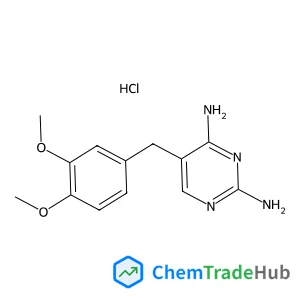
5-(3,4-Dimethoxybenzyl)-2,4-pyrimidinediamine hydrochloride (1:1)
CAS Number:
2507-23-5
Molecular Formula:
C13H17ClN4O2
![[4-(Isobutyrylamino)phenyl]boronic acid structure](https://static.chemtradehub.com/structs/874/874219-50-8-6ab5.webp "[4-(Isobutyrylamino)phenyl]boronic acid structure")
Recommended Suppliers






Disclaimer
This page provides academic journal information for reference and research purposes only. We are not affiliated with any journal publishers and do not handle publication submissions. For publication-related inquiries, please contact the respective journal publishers directly.
If you notice any inaccuracies in the information displayed, please contact us at support@chemtradehub.com. We will promptly review and address your concerns.