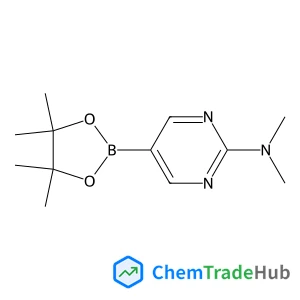
N,N-Dimethyl-5-(4,4,5,5-tetramethyl-1,3,2-dioxaborolan-2-yl)-2-pyrimidinamine
CAS Number:
1032759-30-0
Molecular Formula:
C12H20BN3O2
You Li, Yi Wan, Jiamin Yao, Hongqian Zheng, Xi Wang, Xuan Liu, Bo Ouyang, Chengxi Huang, Kaiming Deng, Erjun Kan
Two-dimensional (2D) layered transition metal dichalcogenides such as MoS2 have been viewed as the most favorable candidates for replacing noble metals in catalyzing the hydrogen evolution reaction in water splitting owing to their earth abundance, superb chemical stability, and appropriate Gibbs free energy. However, due to its low number of catalytic sites and basal catalytic inertia, the pristine MoS2 displayed intrinsically unsatisfactory HER catalytic activity. Here, the hydrogen evolution catalytic activities of nanostructured MoS2 powder before and after plasma modification with nitrogen doping were experimentally compared, and the influence of treatment parameters on the hydrogen evolution catalytic performance of MoS2 has been studied. The feasibility of regulating hydrogen evolution catalytic activity by nitrogen doping of MoS2 was verified based on density functional theory calculations. Our work demonstrates a more convenient and faster way to develop cheap and efficient MoS2-based catalysts for electrochemical hydrogen evolution reactions. Additionally, theoretical studies reveal that N-doped MoS2 exhibits strong hybridization between Mo-d and N-p states, causing magnetism to evolve, as confirmed by experiments.
J. Ulises Reveles, Khaled M. Saoud, M. Samy El-Shall
DOI: 10.1039/C6CP05431E
Carl P. Romao
DOI: 10.1039/C6CP06356J
Peter Psarras, Jiajun He, Jennifer Wilcox
DOI: 10.1039/C6CP05865E
Mireille Khalil, Zahia Boubegtiten-Fezoua, Nadja Hellmann, Petra Hellwig
DOI: 10.1039/C6CP03510H
Yong Seok Hwang, Valery I. Levitas
DOI: 10.1039/C6CP03897B
Pushpendra Kumar, Suman Kalyan Pal
DOI: 10.1039/C6CP04610J
A. Jolene Mork, Elizabeth M. Y. Lee, William A. Tisdale
DOI: 10.1039/C6CP05683K
David R. Bell, Rui Qi, Zhifeng Jing, Jin Yu Xiang, Christopher Mejias, Michael J. Schnieders, Jay W. Ponder, Pengyu Ren
DOI: 10.1039/C6CP02509A
When considering alternatives to 1-(4-Chlorophenyl)-N-hydroxymethanimine (CAS: 3...
This compound should be stored in a cool, dry place away from direct sunlight. I...
3-(4-Bromophenyl)-5-(2-fluorophenyl)-1,2,4-oxadiazole is synthesized through a m...
5-Chloro-2-(4-chlorophenyl)-4-methyl-6-[3-(1-piperidinyl)propoxy]pyrimidine (CAS...
2-Chloro-4-(difluoromethoxy)pyridine is used in the pharmaceutical industry for ...
3-Chloro-6-methylpyridazine (CAS: 1121-79-5) is classified under the Globally Ha...
Several alternatives can be used in the synthesis of Methyl 4,5-dimethyl-2-nitro...
Alternatives to (2E,2'E)-3,3'-(1,4-Phenylene)bisacrylaldehyde include other acry...
3-Amino-5-chloropyridin-2-ol hydrochloride is an organic compound with the CAS n...
When handling 6,7-Difluoro-2,3-dihydro-4H-chromen-4-one, it is essential to wear...

Physical Chemistry Chemical Physics (PCCP) is an international journal co-owned by 19 physical chemistry and physics societies from around the world. This journal publishes original, cutting-edge research in physical chemistry, chemical physics and biophysical chemistry. To be suitable for publication in PCCP, articles must include significant innovation and/or insight into physical chemistry; this is the most important criterion that reviewers and Editors will judge against when evaluating submissions. The journal has a broad scope and welcomes contributions spanning experiment, theory, computation and data science. Topical coverage includes spectroscopy, dynamics, kinetics, statistical mechanics, thermodynamics, electrochemistry, catalysis, surface science, quantum mechanics, quantum computing and machine learning. Interdisciplinary research areas such as polymers and soft matter, materials, nanoscience, energy, surfaces/interfaces, and biophysical chemistry are welcomed if they demonstrate significant innovation and/or insight into physical chemistry. Joined experimental/theoretical studies are particularly appreciated when complementary and based on up-to-date approaches.
![[4-(Isobutyrylamino)phenyl]boronic acid structure](https://static.chemtradehub.com/structs/874/874219-50-8-6ab5.webp "[4-(Isobutyrylamino)phenyl]boronic acid structure")