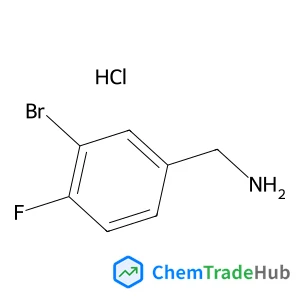
1-(3-Bromo-4-fluorophenyl)methanamine hydrochloride (1:1)
CAS Number:
202865-68-7
Molecular Formula:
C7H8BrClFN
Xiao Han, Qi Zhao, Xiaodan Yan, Ting Meng, Jinlu He
By performing nonadiabatic molecular dynamics combined with ab initio time-domain density functional theory, we have explored the effects of the charge density of a sulfur vacancy on charge trapping and recombination in antimony trisulfide (Sb2S3). The simulations demonstrate that, compared to an antimony vacancy, the sulfur vacancy generates a high charge density trap state within the band gap. This state acts as the recombination center and provides new channels for charge carrier relaxation. Filling the sulfur vacancy with electron donors elevates the defect state to the Fermi level due to the introduced extra electrons. In contrast, the electron acceptor lowers the charge density of the sulfur vacancy by capturing its local electrons, eliminating the charge recombination center and extending the photo-generated charge carrier lifetime. Additionally, compared with electron injection, hole injection can also decrease the charge density of the trap state via neutralizing its local electronic states, eliminate the trap state within the band gap, and suppress nonradiative electron–hole recombination. This study is expected to shed new light on the blocking recombination centers and provide valuable insights into the design of high-performance solar cells.
Changsheng Ding, Toshiyuki Nohira, Rika Hagiwara
DOI: 10.1039/C6CP05944A
C. Satriano, G. Forte, A. Magrì, P. Di Pietro, A. Travaglia, G. Pandini, F. Gianì, D. La Mendola
DOI: 10.1039/C6CP05476E
Weiyao Jia, Qiusong Chen, Yingbing Chen, Lixiang Chen, Zuhong Xiong
DOI: 10.1039/C6CP06322E
Yuri Alexandre Aoto, Andreas Köhn
DOI: 10.1039/C6CP05782A
Wenqi Xiong, Congxin Xia, Tianxing Wang, Juan Du, Yuting Peng, Xu Zhao, Yu Jia
DOI: 10.1039/C6CP04794G
Hacan Ali Ahmad, Sébastien Thomas, Philippe Bazin, Aurélie Vicente, Christian Fernandez, Hussein Awala, Svetlana Mintova
DOI: 10.1039/C6CP05766G
Masashi Tsuge, Mohammed Bahou, Yu-Jong Wu, Louis Allamandola
DOI: 10.1039/C6CP05701B
Michiel J. T. Raaijmakers, Nieck E. Benes
DOI: 10.1039/C6CP06184B
When considering alternatives to 1-(4-Chlorophenyl)-N-hydroxymethanimine (CAS: 3...
This compound should be stored in a cool, dry place away from direct sunlight. I...
3-(4-Bromophenyl)-5-(2-fluorophenyl)-1,2,4-oxadiazole is synthesized through a m...
5-Chloro-2-(4-chlorophenyl)-4-methyl-6-[3-(1-piperidinyl)propoxy]pyrimidine (CAS...
2-Chloro-4-(difluoromethoxy)pyridine is used in the pharmaceutical industry for ...
3-Chloro-6-methylpyridazine (CAS: 1121-79-5) is classified under the Globally Ha...
Several alternatives can be used in the synthesis of Methyl 4,5-dimethyl-2-nitro...
Alternatives to (2E,2'E)-3,3'-(1,4-Phenylene)bisacrylaldehyde include other acry...
3-Amino-5-chloropyridin-2-ol hydrochloride is an organic compound with the CAS n...
When handling 6,7-Difluoro-2,3-dihydro-4H-chromen-4-one, it is essential to wear...

Physical Chemistry Chemical Physics (PCCP) is an international journal co-owned by 19 physical chemistry and physics societies from around the world. This journal publishes original, cutting-edge research in physical chemistry, chemical physics and biophysical chemistry. To be suitable for publication in PCCP, articles must include significant innovation and/or insight into physical chemistry; this is the most important criterion that reviewers and Editors will judge against when evaluating submissions. The journal has a broad scope and welcomes contributions spanning experiment, theory, computation and data science. Topical coverage includes spectroscopy, dynamics, kinetics, statistical mechanics, thermodynamics, electrochemistry, catalysis, surface science, quantum mechanics, quantum computing and machine learning. Interdisciplinary research areas such as polymers and soft matter, materials, nanoscience, energy, surfaces/interfaces, and biophysical chemistry are welcomed if they demonstrate significant innovation and/or insight into physical chemistry. Joined experimental/theoretical studies are particularly appreciated when complementary and based on up-to-date approaches.