












Blue shifts in helium-surface bound-state resonances and quantum effects in cosine-law scattering
Literature Information
Publication Date
2023-11-15
DOI
10.1039/D3CP02291A
Impact Factor
3.676
Authors
Luke Staszewski, Nadav Avidor
View Original
Abstract
The scattering of gas from surfaces underpins technologies in fields such as gas permeation, heterogeneous catalysis and chemical vapour deposition. The effect of surface defects on the scattering is key in such technologies, but is still poorly understood. It is known empirically that unordered surfaces result-in random-angle scattering, with the effect thought to be classical. We here demonstrate the transition from quantum mechanical diffraction to cosine-scattering, and show that quantum bound-state resonances can greatly affect this transition. Further, we find that randomly distributed defects induce a blue-shift in the bound-state energies. We explore this phenomena, which can lay the basis for helium based quantum metrology of defects in 2D materials and material surfaces.
Recommended Journals
Related Literature
Neural network molecular dynamics simulations of solid–liquid interfaces: water at low-index copper surfaces
Suresh Kondati Natarajan, Jörg Behler
2016-09-30
Paper
DOI: 10.1039/C6CP05711J
Tuning the vibrational coupling of H3O+ by changing its solvation environment
Cheng-chau Chiu, Hsin-Yi Liao, Hai Thi Huynh
2016-10-14
Paper
DOI: 10.1039/C6CP06326H
Simulations of the water exchange dynamics of lanthanide ions in 1-ethyl-3-methylimidazolium ethyl sulfate ([EMIm][EtSO4]) and water
Yi-Jung Tu, Matthew J. Allen, G. Andrés Cisneros
2016-08-16
Paper
DOI: 10.1039/C6CP04957E
Controlled fabrication of mesoporous TiO2 hierarchical structures as scattering layers to enhance the power conversion efficiency of dye-sensitized solar cells
Dae-Kue Hwang, Shi-Joon Sung
2016-09-21
Paper
DOI: 10.1039/C6CP05999F
Crystal structures and superconductivity of technetium hydrides under pressure
Xiaofeng Li, Hanyu Liu, Feng Peng
2016-09-27
Paper
DOI: 10.1039/C6CP05702K
Toward polarizable AMOEBA thermodynamics at fixed charge efficiency using a dual force field approach: application to organic crystals
Ian J. Nessler, Jacob M. Litman
2016-08-09
Paper
DOI: 10.1039/C6CP02595A
Mobility and association of ions in aqueous solutions: the case of imidazolium based ionic liquids
Marija Bešter-Rogač, Marina V. Fedotova, Sergey E. Kruchinin, Marco Klähn
2016-09-22
Paper
DOI: 10.1039/C6CP05010G
You might also like
Compound Q&A
Are there alternatives to 1-(4-Chlorophenyl)-N-hydroxymethanimine (CAS: 3848-36-0) in synthesis?
When considering alternatives to 1-(4-Chlorophenyl)-N-hydroxymethanimine (CAS: 3...
3848-36-01-(4-Chlorophenyl)-N...
Compound Q&A
How should (1R,9S,10S,12S,14E,16S,19R,20R,21S,22R)-3,9,21-Trihydroxy-5,10,12,14,16,20,22-heptamethyl-23,24-dioxatetracyclo[17.3.1.1~6,9~.0~2,7~]tetracosa-2,5,7,14-tetraen-4-one (CAS: 183202-73-5) be stored?
This compound should be stored in a cool, dry place away from direct sunlight. I...
183202-73-5(1R,9S,10S,12S,14E,1...
Compound Q&A
How is 3-(4-Bromophenyl)-5-(2-fluorophenyl)-1,2,4-oxadiazole (CAS: 419553-16-5) typically synthesized?
3-(4-Bromophenyl)-5-(2-fluorophenyl)-1,2,4-oxadiazole is synthesized through a m...
419553-16-53-(4-Bromophenyl)-5-...
Compound Q&A
How is 5-Chloro-2-(4-chlorophenyl)-4-methyl-6-[3-(1-piperidinyl)propoxy]pyrimidine (CAS: 1639220-19-1) typically synthesized?
5-Chloro-2-(4-chlorophenyl)-4-methyl-6-[3-(1-piperidinyl)propoxy]pyrimidine (CAS...
1639220-19-15-Chloro-2-(4-chloro...
Compound Q&A
What industries use 2-Chloro-4-(difluoromethoxy)pyridine (CAS: 1206978-15-5)?
2-Chloro-4-(difluoromethoxy)pyridine is used in the pharmaceutical industry for ...
1206978-15-52-Chloro-4-(difluoro...
Compound Q&A
What regulatory guidelines apply to 3-Chloro-6-methylpyridazine (CAS: 1121-79-5)?
3-Chloro-6-methylpyridazine (CAS: 1121-79-5) is classified under the Globally Ha...
1121-79-53-Chloro-6-methylpyr...
Compound Q&A
Are there alternatives to Methyl 4,5-dimethyl-2-nitrobenzoate in synthesis?
Several alternatives can be used in the synthesis of Methyl 4,5-dimethyl-2-nitro...
90922-74-0Methyl 4,5-dimethyl-...
Compound Q&A
Are there alternatives to (2E,2'E)-3,3'-(1,4-Phenylene)bisacrylaldehyde in synthesis?
Alternatives to (2E,2'E)-3,3'-(1,4-Phenylene)bisacrylaldehyde include other acry...
63405-68-5(2E,2'E)-3,3'-(1,4-P...
Compound Q&A
What is 3-Amino-5-chloropyridin-2-ol hydrochloride (CAS: 1261906-29-9)?
3-Amino-5-chloropyridin-2-ol hydrochloride is an organic compound with the CAS n...
1261906-29-93-Amino-5-chloropyri...
Compound Q&A
What precautions should be taken when handling 6,7-Difluoro-2,3-dihydro-4H-chromen-4-one (CAS: 1092349-93-3)?
When handling 6,7-Difluoro-2,3-dihydro-4H-chromen-4-one, it is essential to wear...
1092349-93-36,7-Difluoro-2,3-dih...
Source Journal
Physical Chemistry Chemical Physics

CiteScore:
5.5
Self-citation Rate:
10.3%
Articles per Year:
3036
Physical Chemistry Chemical Physics (PCCP) is an international journal co-owned by 19 physical chemistry and physics societies from around the world. This journal publishes original, cutting-edge research in physical chemistry, chemical physics and biophysical chemistry. To be suitable for publication in PCCP, articles must include significant innovation and/or insight into physical chemistry; this is the most important criterion that reviewers and Editors will judge against when evaluating submissions. The journal has a broad scope and welcomes contributions spanning experiment, theory, computation and data science. Topical coverage includes spectroscopy, dynamics, kinetics, statistical mechanics, thermodynamics, electrochemistry, catalysis, surface science, quantum mechanics, quantum computing and machine learning. Interdisciplinary research areas such as polymers and soft matter, materials, nanoscience, energy, surfaces/interfaces, and biophysical chemistry are welcomed if they demonstrate significant innovation and/or insight into physical chemistry. Joined experimental/theoretical studies are particularly appreciated when complementary and based on up-to-date approaches.
Recommended Compounds
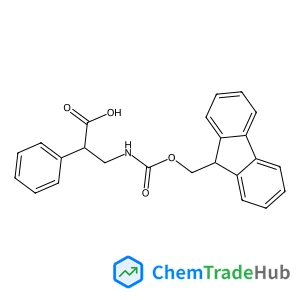
(S)-3-((((9H-Fluoren-9-yl)methoxy)carbonyl)amino)-2-phenylpropanoic acid
CAS Number:
1217663-60-9
Molecular Formula:
C24H21NO4
Recommended Suppliers







Disclaimer
This page provides academic journal information for reference and research purposes only. We are not affiliated with any journal publishers and do not handle publication submissions. For publication-related inquiries, please contact the respective journal publishers directly.
If you notice any inaccuracies in the information displayed, please contact us at support@chemtradehub.com. We will promptly review and address your concerns.