












A highly efficient Mn4+ activated Nb-based oxyfluoride red fluorescent material with excellent water stability: preparation and performance analysis
Literature Information
Publication Date
2023-11-14
DOI
10.1039/D3CP04631A
Impact Factor
3.676
Authors
Wenjie Shi
View Original
Abstract
In this study, an efficient non-rare earth Mn4+-doped K3(NbOF5)(HF2) red fluorescent material was synthesized by using the coprecipitation method. Replacing KF with K2CO3 effectively solved the problem that KF was difficult to stir due to its strong water absorption. The sample was composed of rods. The excitation spectra consisted of two strong excitation peaks at 366 nm and 468 nm. The emission spectra consisted of a series of narrow-band emissions between 580 nm and 680 nm. Besides, the luminescence quantum efficiency (QE) reached 84.3% under the excitation of 468 nm. The fluorescent lifetime of K3(NbOF5)(HF2):Mn4+ was less than 4 ms, which can achieve fast response display in backlight display applications. The WLED was fabricated with K3(NbOF5)(HF2):Mn4+ and commercial YAG:Ce3+ and the commercial InGaN blue chip. At a 30 mA drive current, the WLED device exhibited excellent luminescence properties. The correlated color temperature (CCT) was 3853 K, the Ra was 90.1 and the luminous efficiency was 310.432 lm W−1. Therefore, K3(NbOF5)(HF2):Mn4+ has very broad prospects in WLED lighting and backlight display applications.
Related Literature
Hysteresis and its impact on characterization of mechanical properties of suspended monolayer molybdenum-disulfide sheets
Haosheng Pang, Peng Huang, Weirong Zhuo, Chenghui Gao, Dan Guo
2019-03-01
Paper
DOI: 10.1039/C8CP07158F
Electric field-responsive photoluminescence color switching and reversible properties via Tb/Eu co-doped ergodic relaxor ferroelectrics
Hailing Sun, Yi Lok Chan, K. W. Kwok
2019-03-14
Paper
DOI: 10.1039/C9CP00324J
Vibronic interaction in CO3− photo-detachment: Jahn–Teller effects beyond structural distortion and general formalisms for vibronic Hamiltonians in trigonal symmetries
Prateek Goel, Xiao-Gang Wang, Bo Chen, Xue-Bin Wang, Tao Zeng
2019-04-05
Paper
DOI: 10.1039/C9CP01352K
Theoretical insight into the photophysical properties of long-lifetime Ir(iii) and Rh(iii) complexes for two-photon photodynamic therapy
Xue Yin, Xiao-Yong Lai, Xin Wang, Ying-Tao Liu
2019-03-20
Paper
DOI: 10.1039/C9CP00512A
On the involvement of d-electrons in superatomic shells: the group 3 and 4 transition metals
J. T. A. Gilmour, N. Gaston
2019-03-25
Paper
DOI: 10.1039/C9CP00323A
Metal doped armchair graphene nanoribbons: electronic structure, carrier mobility and device properties
J. N. Han, X. He, Z. Q. Fan, Z. H. Zhang
2018-12-20
Paper
DOI: 10.1039/C8CP06471G
Activation of CO2 at the electrode–electrolyte interface by a co-adsorbed cation and an electric field
Sathish Ponnurangam
2019-04-01
Paper
DOI: 10.1039/C8CP07807F
A unified theory of weak-field coherent control of the behavior of a resonance state
2019-03-13
Paper
DOI: 10.1039/C9CP01014A
Electrochemical tuning of Pd100−xAux bimetallics towards ethanol oxidation: effect of an induced d-band center shift and oxophilicity
Sreejith P. Babu, Perumal Elumalai
2019-03-21
Paper
DOI: 10.1039/C8CP07500J
CO2 condensation onto alkanes: unconventional cases of heterogeneous nucleation
Yensil Park
2019-03-28
Paper
DOI: 10.1039/C9CP00967A
You might also like
Compound Q&A
Are there alternatives to 1-(4-Chlorophenyl)-N-hydroxymethanimine (CAS: 3848-36-0) in synthesis?
When considering alternatives to 1-(4-Chlorophenyl)-N-hydroxymethanimine (CAS: 3...
3848-36-01-(4-Chlorophenyl)-N...
Compound Q&A
How should (1R,9S,10S,12S,14E,16S,19R,20R,21S,22R)-3,9,21-Trihydroxy-5,10,12,14,16,20,22-heptamethyl-23,24-dioxatetracyclo[17.3.1.1~6,9~.0~2,7~]tetracosa-2,5,7,14-tetraen-4-one (CAS: 183202-73-5) be stored?
This compound should be stored in a cool, dry place away from direct sunlight. I...
183202-73-5(1R,9S,10S,12S,14E,1...
Compound Q&A
How is 3-(4-Bromophenyl)-5-(2-fluorophenyl)-1,2,4-oxadiazole (CAS: 419553-16-5) typically synthesized?
3-(4-Bromophenyl)-5-(2-fluorophenyl)-1,2,4-oxadiazole is synthesized through a m...
419553-16-53-(4-Bromophenyl)-5-...
Compound Q&A
How is 5-Chloro-2-(4-chlorophenyl)-4-methyl-6-[3-(1-piperidinyl)propoxy]pyrimidine (CAS: 1639220-19-1) typically synthesized?
5-Chloro-2-(4-chlorophenyl)-4-methyl-6-[3-(1-piperidinyl)propoxy]pyrimidine (CAS...
1639220-19-15-Chloro-2-(4-chloro...
Compound Q&A
What industries use 2-Chloro-4-(difluoromethoxy)pyridine (CAS: 1206978-15-5)?
2-Chloro-4-(difluoromethoxy)pyridine is used in the pharmaceutical industry for ...
1206978-15-52-Chloro-4-(difluoro...
Compound Q&A
What regulatory guidelines apply to 3-Chloro-6-methylpyridazine (CAS: 1121-79-5)?
3-Chloro-6-methylpyridazine (CAS: 1121-79-5) is classified under the Globally Ha...
1121-79-53-Chloro-6-methylpyr...
Compound Q&A
Are there alternatives to Methyl 4,5-dimethyl-2-nitrobenzoate in synthesis?
Several alternatives can be used in the synthesis of Methyl 4,5-dimethyl-2-nitro...
90922-74-0Methyl 4,5-dimethyl-...
Compound Q&A
Are there alternatives to (2E,2'E)-3,3'-(1,4-Phenylene)bisacrylaldehyde in synthesis?
Alternatives to (2E,2'E)-3,3'-(1,4-Phenylene)bisacrylaldehyde include other acry...
63405-68-5(2E,2'E)-3,3'-(1,4-P...
Compound Q&A
What is 3-Amino-5-chloropyridin-2-ol hydrochloride (CAS: 1261906-29-9)?
3-Amino-5-chloropyridin-2-ol hydrochloride is an organic compound with the CAS n...
1261906-29-93-Amino-5-chloropyri...
Compound Q&A
What precautions should be taken when handling 6,7-Difluoro-2,3-dihydro-4H-chromen-4-one (CAS: 1092349-93-3)?
When handling 6,7-Difluoro-2,3-dihydro-4H-chromen-4-one, it is essential to wear...
1092349-93-36,7-Difluoro-2,3-dih...
Source Journal
Physical Chemistry Chemical Physics

CiteScore:
5.5
Self-citation Rate:
10.3%
Articles per Year:
3036
Physical Chemistry Chemical Physics (PCCP) is an international journal co-owned by 19 physical chemistry and physics societies from around the world. This journal publishes original, cutting-edge research in physical chemistry, chemical physics and biophysical chemistry. To be suitable for publication in PCCP, articles must include significant innovation and/or insight into physical chemistry; this is the most important criterion that reviewers and Editors will judge against when evaluating submissions. The journal has a broad scope and welcomes contributions spanning experiment, theory, computation and data science. Topical coverage includes spectroscopy, dynamics, kinetics, statistical mechanics, thermodynamics, electrochemistry, catalysis, surface science, quantum mechanics, quantum computing and machine learning. Interdisciplinary research areas such as polymers and soft matter, materials, nanoscience, energy, surfaces/interfaces, and biophysical chemistry are welcomed if they demonstrate significant innovation and/or insight into physical chemistry. Joined experimental/theoretical studies are particularly appreciated when complementary and based on up-to-date approaches.
Recommended Compounds
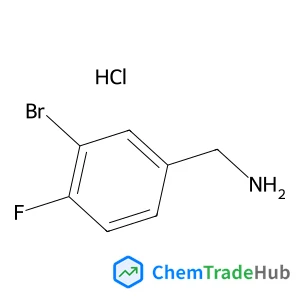
1-(3-Bromo-4-fluorophenyl)methanamine hydrochloride (1:1)
CAS Number:
202865-68-7
Molecular Formula:
C7H8BrClFN
![(2S)-2-{[(9H-Fluoren-9-ylmethoxy)carbonyl]amino}-4-(methylselanyl)butanoic acid structure](https://static.chemtradehub.com/structs/121/1217852-49-7-f252.webp "(2S)-2-{[(9H-Fluoren-9-ylmethoxy)carbonyl]amino}-4-(methylselanyl)butanoic acid structure")
(2S)-2-{[(9H-Fluoren-9-ylmethoxy)carbonyl]amino}-4-(methylselanyl)butanoic acid
CAS Number:
1217852-49-7
Molecular Formula:
C20H21NO4Se

Recommended Suppliers







Disclaimer
This page provides academic journal information for reference and research purposes only. We are not affiliated with any journal publishers and do not handle publication submissions. For publication-related inquiries, please contact the respective journal publishers directly.
If you notice any inaccuracies in the information displayed, please contact us at support@chemtradehub.com. We will promptly review and address your concerns.