













Prediction of superconductivity in metallic boron–carbon compounds from 0 to 100 GPa by high-throughput screening
Literature Information
Publication Date
2023-11-14
DOI
10.1039/D3CP03844K
Impact Factor
3.676
Authors
Yang Sun, Renhai Wang, Yimei Fang, Shunqing Wu, Qiubao Lin, Kai-Ming Ho
View Original
Abstract
Boron–carbon compounds have been shown to have feasible superconductivity. In our earlier paper [Zheng et al., Phys. Rev. B, 2023, 107, 014508], we identified a new conventional superconductor of LiB3C at 100 GPa. Here, we aim to extend the investigation of possible superconductivity in this structural framework by replacing Li atoms with 27 different cations from periods 3, 4, and 5 under pressures ranging from 0 to 100 GPa. Using the high-throughput screening method of zone-center electron–phonon interaction, we found that ternary compounds like CaB3C, SrB3C, TiB3C, and VB3C are promising candidates for superconductivity. The consecutive calculations using the full Brillouin zone confirm that they have a Tc of <31 K at moderate pressures. Our study demonstrates that fast screening of superconductivity by calculating zone-center electron–phonon coupling strength is an effective strategy for high-throughput identification of new superconductors.
Recommended Journals
Related Literature
Destructive role of oxygen in growth of molybdenum disulfide determined by secondary ion mass spectrometry
Paweł Piotr Michałowski, Piotr Knyps, Paweł Ciepielewski, Piotr Caban, Ewa Dumiszewska, Jacek Baranowski
2019-04-03
Paper
DOI: 10.1039/C9CP00613C
Towards capturing cellular complexity: combining encapsulation and macromolecular crowding in a reverse micelle
Philipp Honegger, Othmar Steinhauser
2019-03-25
Paper
DOI: 10.1039/C9CP00053D
A molecular dynamics study on glucose molecular recognition by a non-enzymatic selective sensor based on a conducting polymer
David Zanuy, Carlos A. Ferreira
2019-03-25
Paper
DOI: 10.1039/C9CP00567F
Interactions between cyclic nucleotides and common cations: an ab initio molecular dynamics study
Giuseppe Cassone, Holger Kruse, Jiri Sponer
2019-03-25
Paper
DOI: 10.1039/C8CP07492E
Hydrogen storage mechanism and diffusion in metal–organic frameworks
Mauro Boero
2019-01-03
Paper
DOI: 10.1039/C8CP07467D
Dynamics of electronically excited states in the eumelanin building block 5,6-dihydroxyindole
Stuart W. Crane, Omair Ghafur, Thomas Y. Cowie, Anita G. Lindsay, James O. F. Thompson, Jason B. Greenwood
2019-04-01
Paper
DOI: 10.1039/C9CP00620F
Effect of electron correlation in the decomposition of core level binding energy shifts into initial and final state contributions
Marc Figueras, Carmen Sousa, Francesc Illas
2019-04-12
Paper
DOI: 10.1039/C9CP01569H
Uncovering the role of the stationary points in the dynamics of the F− + CH3I reaction
Balázs Olasz, Gábor Czakó
2018-12-21
Paper
DOI: 10.1039/C8CP06207B
Dissociative photodetachment vs. photodissociation of aromatic carboxylates: the benzoate and naphthoate anions
Juan P. Aranguren-Abrate, Claude Dedonder-Lardeux, Christophe Jouvet
2018-12-26
Paper
DOI: 10.1039/C8CP07162D
Theoretical insight into the photophysical properties of long-lifetime Ir(iii) and Rh(iii) complexes for two-photon photodynamic therapy
Xue Yin, Xiao-Yong Lai, Xin Wang, Ying-Tao Liu
2019-03-20
Paper
DOI: 10.1039/C9CP00512A
You might also like
Compound Q&A
Are there alternatives to 1-(4-Chlorophenyl)-N-hydroxymethanimine (CAS: 3848-36-0) in synthesis?
When considering alternatives to 1-(4-Chlorophenyl)-N-hydroxymethanimine (CAS: 3...
3848-36-01-(4-Chlorophenyl)-N...
Compound Q&A
How should (1R,9S,10S,12S,14E,16S,19R,20R,21S,22R)-3,9,21-Trihydroxy-5,10,12,14,16,20,22-heptamethyl-23,24-dioxatetracyclo[17.3.1.1~6,9~.0~2,7~]tetracosa-2,5,7,14-tetraen-4-one (CAS: 183202-73-5) be stored?
This compound should be stored in a cool, dry place away from direct sunlight. I...
183202-73-5(1R,9S,10S,12S,14E,1...
Compound Q&A
How is 3-(4-Bromophenyl)-5-(2-fluorophenyl)-1,2,4-oxadiazole (CAS: 419553-16-5) typically synthesized?
3-(4-Bromophenyl)-5-(2-fluorophenyl)-1,2,4-oxadiazole is synthesized through a m...
419553-16-53-(4-Bromophenyl)-5-...
Compound Q&A
How is 5-Chloro-2-(4-chlorophenyl)-4-methyl-6-[3-(1-piperidinyl)propoxy]pyrimidine (CAS: 1639220-19-1) typically synthesized?
5-Chloro-2-(4-chlorophenyl)-4-methyl-6-[3-(1-piperidinyl)propoxy]pyrimidine (CAS...
1639220-19-15-Chloro-2-(4-chloro...
Compound Q&A
What industries use 2-Chloro-4-(difluoromethoxy)pyridine (CAS: 1206978-15-5)?
2-Chloro-4-(difluoromethoxy)pyridine is used in the pharmaceutical industry for ...
1206978-15-52-Chloro-4-(difluoro...
Compound Q&A
What regulatory guidelines apply to 3-Chloro-6-methylpyridazine (CAS: 1121-79-5)?
3-Chloro-6-methylpyridazine (CAS: 1121-79-5) is classified under the Globally Ha...
1121-79-53-Chloro-6-methylpyr...
Compound Q&A
Are there alternatives to Methyl 4,5-dimethyl-2-nitrobenzoate in synthesis?
Several alternatives can be used in the synthesis of Methyl 4,5-dimethyl-2-nitro...
90922-74-0Methyl 4,5-dimethyl-...
Compound Q&A
Are there alternatives to (2E,2'E)-3,3'-(1,4-Phenylene)bisacrylaldehyde in synthesis?
Alternatives to (2E,2'E)-3,3'-(1,4-Phenylene)bisacrylaldehyde include other acry...
63405-68-5(2E,2'E)-3,3'-(1,4-P...
Compound Q&A
What is 3-Amino-5-chloropyridin-2-ol hydrochloride (CAS: 1261906-29-9)?
3-Amino-5-chloropyridin-2-ol hydrochloride is an organic compound with the CAS n...
1261906-29-93-Amino-5-chloropyri...
Compound Q&A
What precautions should be taken when handling 6,7-Difluoro-2,3-dihydro-4H-chromen-4-one (CAS: 1092349-93-3)?
When handling 6,7-Difluoro-2,3-dihydro-4H-chromen-4-one, it is essential to wear...
1092349-93-36,7-Difluoro-2,3-dih...
Source Journal
Physical Chemistry Chemical Physics

CiteScore:
5.5
Self-citation Rate:
10.3%
Articles per Year:
3036
Physical Chemistry Chemical Physics (PCCP) is an international journal co-owned by 19 physical chemistry and physics societies from around the world. This journal publishes original, cutting-edge research in physical chemistry, chemical physics and biophysical chemistry. To be suitable for publication in PCCP, articles must include significant innovation and/or insight into physical chemistry; this is the most important criterion that reviewers and Editors will judge against when evaluating submissions. The journal has a broad scope and welcomes contributions spanning experiment, theory, computation and data science. Topical coverage includes spectroscopy, dynamics, kinetics, statistical mechanics, thermodynamics, electrochemistry, catalysis, surface science, quantum mechanics, quantum computing and machine learning. Interdisciplinary research areas such as polymers and soft matter, materials, nanoscience, energy, surfaces/interfaces, and biophysical chemistry are welcomed if they demonstrate significant innovation and/or insight into physical chemistry. Joined experimental/theoretical studies are particularly appreciated when complementary and based on up-to-date approaches.
Recommended Compounds
![6-Bromo-2,3-dihydro-1H-pyrido[2,3-b][1,4]oxazine structure](https://static.chemtradehub.com/structs/120/1203499-17-5-b4d1.webp "6-Bromo-2,3-dihydro-1H-pyrido[2,3-b][1,4]oxazine structure")
6-Bromo-2,3-dihydro-1H-pyrido[2,3-b][1,4]oxazine
CAS Number:
1203499-17-5
Molecular Formula:
C7H7BrN2O
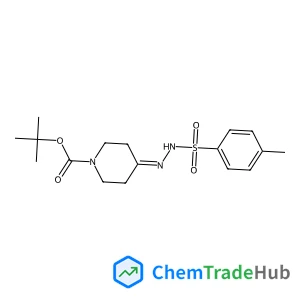
tert-Butyl 4-(2-(p-Tolylsulfonyl)hydrazono)piperidine-1-carboxylate
CAS Number:
1046478-89-0
Molecular Formula:
C17H25N3O4S
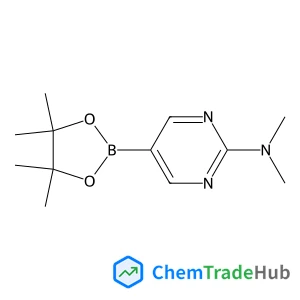
N,N-Dimethyl-5-(4,4,5,5-tetramethyl-1,3,2-dioxaborolan-2-yl)-2-pyrimidinamine
CAS Number:
1032759-30-0
Molecular Formula:
C12H20BN3O2
Recommended Suppliers





Disclaimer
This page provides academic journal information for reference and research purposes only. We are not affiliated with any journal publishers and do not handle publication submissions. For publication-related inquiries, please contact the respective journal publishers directly.
If you notice any inaccuracies in the information displayed, please contact us at support@chemtradehub.com. We will promptly review and address your concerns.