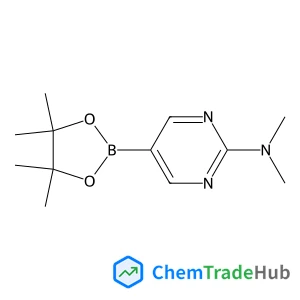
N,N-Dimethyl-5-(4,4,5,5-tetramethyl-1,3,2-dioxaborolan-2-yl)-2-pyrimidinamine
CAS Number:
1032759-30-0
Molecular Formula:
C12H20BN3O2
Heng Sun, Yichen Tian, Yuna Fu, Yongrong Lei, Yani Wang, Xinrui Yan, Jianhua Wang
Protein–protein interactions (PPIs) between the B-cell lymphoma 2 (Bcl-2) family are considered a major driving force in cell cycle regulation and signaling. However, how this interfacial noncovalent interaction is achieved molecularly remains poorly understood. Herein, anti-apoptotic protein (Bcl-2) and pro-apoptotic protein (BAX) were used as models and their PPIs were explored for the first time using atomic force microscopy-based single-molecule force spectroscopy (SMFS) and in silico approaches. In addition, we used advanced analytical models, including multiple kinetic models, thermodynamic models, Poisson distributions, and contact angle molecular recognition to fully reveal the complexity of the BAX/Bcl-2 interaction interfaces. We propose that the binding kinetics between BAX/Bcl-2 are mainly mediated by specific (hydrogen bonding) and non-specific forces (hydrophobic interactions and electrostatic interactions) and show that the complicated multivalent binding interaction induces stable BAX/Bcl-2 complexes. This study enriches our understanding of the molecular mechanisms by which BAX interacts with Bcl-2. It provides valuable insights into the physical factors that need to be considered when designing PPI inhibitors.
Amelia W. Ray, Jay Agarwal, Ben B. Shen, H. F. Schaefer, III, Robert E. Continetti
DOI: 10.1039/C6CP06409D
Weifu Sun, Zihan Chen, Qin Zhang, Junli Zhou, Feng Li, Xiao Jin, Dongyu Li, Qinghua Li
DOI: 10.1039/C6CP04963J
Yi-Jung Tu, Matthew J. Allen, G. Andrés Cisneros
DOI: 10.1039/C6CP90231F
Youliang Wang, Mingzhu Xia, Kebin Li, Xinlin Shen, Tahir Muhmood, Fengyun Wang
DOI: 10.1039/C6CP90250B
Andrej Junginger, Galen T. Craven, Thomas Bartsch, R. M. Benito, Rigoberto Hernandez
DOI: 10.1039/C6CP02519F
Chao Wang, Panlai Li, Zhijun Wang, Yuansheng Sun, Jinge Cheng, Zhenling Li, Miaomiao Tian, Zhiping Yang
DOI: 10.1039/C6CP05490K
Pushpendra Kumar, Suman Kalyan Pal
DOI: 10.1039/C6CP04610J
Yi-Jung Tu, Matthew J. Allen, G. Andrés Cisneros
DOI: 10.1039/C6CP04957E
Yuri Alexandre Aoto, Andreas Köhn
DOI: 10.1039/C6CP05782A
Michiel J. T. Raaijmakers, Nieck E. Benes
DOI: 10.1039/C6CP06184B
When considering alternatives to 1-(4-Chlorophenyl)-N-hydroxymethanimine (CAS: 3...
This compound should be stored in a cool, dry place away from direct sunlight. I...
3-(4-Bromophenyl)-5-(2-fluorophenyl)-1,2,4-oxadiazole is synthesized through a m...
5-Chloro-2-(4-chlorophenyl)-4-methyl-6-[3-(1-piperidinyl)propoxy]pyrimidine (CAS...
2-Chloro-4-(difluoromethoxy)pyridine is used in the pharmaceutical industry for ...
3-Chloro-6-methylpyridazine (CAS: 1121-79-5) is classified under the Globally Ha...
Several alternatives can be used in the synthesis of Methyl 4,5-dimethyl-2-nitro...
Alternatives to (2E,2'E)-3,3'-(1,4-Phenylene)bisacrylaldehyde include other acry...
3-Amino-5-chloropyridin-2-ol hydrochloride is an organic compound with the CAS n...
When handling 6,7-Difluoro-2,3-dihydro-4H-chromen-4-one, it is essential to wear...

Physical Chemistry Chemical Physics (PCCP) is an international journal co-owned by 19 physical chemistry and physics societies from around the world. This journal publishes original, cutting-edge research in physical chemistry, chemical physics and biophysical chemistry. To be suitable for publication in PCCP, articles must include significant innovation and/or insight into physical chemistry; this is the most important criterion that reviewers and Editors will judge against when evaluating submissions. The journal has a broad scope and welcomes contributions spanning experiment, theory, computation and data science. Topical coverage includes spectroscopy, dynamics, kinetics, statistical mechanics, thermodynamics, electrochemistry, catalysis, surface science, quantum mechanics, quantum computing and machine learning. Interdisciplinary research areas such as polymers and soft matter, materials, nanoscience, energy, surfaces/interfaces, and biophysical chemistry are welcomed if they demonstrate significant innovation and/or insight into physical chemistry. Joined experimental/theoretical studies are particularly appreciated when complementary and based on up-to-date approaches.