


[60]Fullerene-based monolayers as neuroprotective biocompatible hybrid materials‡
Literature Information
Publication Date
2011-08-24
DOI
10.1039/C1CC13971A
Impact Factor
6.222
Authors
Davide Giust, José Luis Albasanz, Mairena Martín, Riccardo Marega, Arnaud Delforge
View Original
Abstract
Here we report on the surface immobilization of redox-active [60]fullerene derivatives and the consequent neuroprotective effects toward L-glutamate induced excitotoxicity in human derived undifferentiated neuroblastoma cells.
Recommended Journals

Chemical Communications

Russian Journal of General Chemistry

Journal of Saudi Chemical Society

Current Opinion in Colloid & Interface Science

Journal of Natural Medicines

Crystallography Reports

Saudi Pharmaceutical Journal

Russian Journal of Organic Chemistry

Acta Materialia

Russian Journal of Bioorganic Chemistry
Related Literature
Production, isolation and structural characterization of [92]fullerene isomers
Denis Arcon, Maurizio Prato, Hisanori Shinohara
2002-11-11
Communication
DOI: 10.1039/B208820G
Chemoselective transfer hydrodechlorination of aryl chlorides catalyzed by Cp*Rh complexes
Ken-ichi Fujita, Maki Owaki, Ryohei Yamaguchi
2002-11-08
Communication
DOI: 10.1039/B209855E
[NC4H12]2[(UO2)6(H2O)2(SO4)7]: the first organically templated actinide sulfate with a three-dimensional framework structure
Michael Doran, Alexander J. Norquist, Dermot O’Hare
2002-11-15
Communication
DOI: 10.1039/B210272B
Cationic arylation through photo(sensitised) decomposition of diazonium salts. Chemoselectivity of triplet phenylcations
Silvia Milanesi, Maurizio Fagnoni, Angelo Albini
2002-12-11
Communication
DOI: 10.1039/B210243A
Reactions of phenyldimethylsilyllithium with β-N,N-dimethylaminoenones
Ian Fleming, Elena Marangon, Chiara Roni, Matthew G. Russell, Sandra Taliansky Chamudis
2002-12-17
Communication
DOI: 10.1039/B210444J
The contrasting behaviour of bridged amido-cyclopentadienyl (constrained geometry) group 15 chlorides and cations derived therefrom
Robert J. Wiacek, Charles L. B. Macdonald, Jamie N. Jones, Jeffrey M. Pietryga, Alan H. Cowley
2003-01-13
Communication
DOI: 10.1039/B211591C
Direct organocatalytic aldol reactions in buffered aqueous media
Armando Córdova, Wolfgang Notz, Carlos F. Barbas III
2002-11-13
Communication
DOI: 10.1039/B207664K
Self-assembled oligonucleotide-polyester dendrimers
Sarah L. Goh, Matthew B. Francis, Jean M. J. Fréchet
2002-11-12
Communication
DOI: 10.1039/B209029E
Electrochemical synthesis of novel polypyrrole microstructures
Liangti Qu, Gaoquan Shi
2002-12-06
Communication
DOI: 10.1039/B209245J
Hybrids of silver nanoparticles with amphiphilic hyperbranched macromolecules exhibiting antimicrobial properties
Cyril Aymonier, Ulf Schlotterbeck, Lydie Antonietti, Philipp Zacharias, Ralf Thomann, Joerg C. Tiller, Stefan Mecking
2002-11-19
Communication
DOI: 10.1039/B208575E
You might also like
Compound Q&A
What industries use (1R,3S)-1,3-Cyclopentanediol (CAS: 16326-97-9)?
(1R,3S)-1,3-Cyclopentanediol finds applications in various industries. In the ph...
16326-97-9(1R,3S)-1,3-Cyclopen...
Compound Q&A
What precautions should be taken when handling N'-[4-(Dimethylamino)phenyl]-N,N-dimethyl-1,4-benzenediamine (CAS: 637-31-0)?
When handling N'-[4-(Dimethylamino)phenyl]-N,N-dimethyl-1,4-benzenediamine, it i...
637-31-0N'-[4-(Dimethylamino...
Compound Q&A
Are there alternatives to 5-(2,4-Difluorophenyl)-2-methoxypyrimidine (CAS: 1352318-16-1) in synthesis?
There are several alternatives to 5-(2,4-Difluorophenyl)-2-methoxypyrimidine in ...
1352318-16-15-(2,4-Difluoropheny...
Compound Q&A
What regulatory guidelines apply to 1-(3-Methoxyphenoxy)propan-2-ol (CAS: 382141-68-6)?
1-(3-Methoxyphenoxy)propan-2-ol (CAS: 382141-68-6) must comply with the Globally...
382141-68-61-(3-Methoxyphenoxy)...
Compound Q&A
Is Tetrodotoxin Citrate (CAS: 18660-81-6) safe?
Tetrodotoxin Citrate is extremely dangerous and should be handled with extreme c...
18660-81-6Tetrodotoxin Citrate
Compound Q&A
What are the main uses of 2-Methyl-2-propanyl [(1R,3S)-3-hydroxycyclopentyl]carbamate (CAS: 225641-84-9)?
2-Methyl-2-propanyl [(1R,3S)-3-hydroxycyclopentyl]carbamate (CAS: 225641-84-9) i...
225641-84-92-Methyl-2-propanyl ...
Compound Q&A
How should waste containing 4-(2-Hydroxyhexafluoroisopropyl)Benzoic Acid (CAS: 16261-80-6) be handled?
Waste containing 4-(2-Hydroxyhexafluoroisopropyl)Benzoic Acid (CAS: 16261-80-6) ...
16261-80-64-(2-Hydroxyhexafluo...
Compound Q&A
How is 2-Methyl-2-proanyl {(2S)-1-[(benzyloxy)amino]-3-hydroxy-3-methyl-1-oxo-2-butanyl}carbamate (CAS: 102507-19-7) typically synthesized?
2-Methyl-2-proanyl {(2S)-1-[(benzyloxy)amino]-3-hydroxy-3-methyl-1-oxo-2-butanyl...
102507-19-72-Methyl-2-propanyl ...
Compound Q&A
What is Benzeneethanamine, α-ethyl-, hydrochloride (1:1) (CAS: 20735-15-3)?
Benzeneethanamine, α-ethyl-, hydrochloride (1:1) is an organic compound with the...
20735-15-3Benzeneethanamine, α...
Compound Q&A
Are there alternatives to 3-{(E)-[4-(Dimethylamino)phenyl]diazenyl}benzoic acid (CAS: 20691-84-3) in synthesis?
In the synthesis of compounds similar to 3-{(E)-[4-(Dimethylamino)phenyl]diazeny...
20691-84-33-{(E)-[4-(Dimethyla...
Source Journal
Chemical Communications
CiteScore:
8.6
Self-citation Rate:
4.7%
Articles per Year:
2458
ChemComm publishes urgent research which is of outstanding significance and interest to experts in the field, while also appealing to the journal’s broad chemistry readership. Our communication format is ideally suited to short, urgent studies that are of such importance that they require accelerated publication. Our scope covers all topics in chemistry, and research at the interface of chemistry and other disciplines (such as materials science, nanoscience, physics, engineering and biology) where there is a significant novelty in the chemistry aspects. Major topic areas covered include: Analytical Chemistry Catalysis Chemical Biology and medicinal chemistry Computational Chemistry and Machine Learning Energy and sustainable chemistry Environmental Chemistry Green Chemistry Inorganic Chemistry Materials Chemistry Nanoscience Organic Chemistry Physical Chemistry Polymer Chemistry Supramolecular Chemistry
Recommended Compounds
![N-[(1S,2R,4S)-2-Amino-4-(dimethylcarbamoyl)cyclohexyl]-N'-(5-chloro-2-pyridinyl)ethanediamide structure](https://static.chemtradehub.com/structs/480/480452-37-7-0898.webp "N-[(1S,2R,4S)-2-Amino-4-(dimethylcarbamoyl)cyclohexyl]-N'-(5-chloro-2-pyridinyl)ethanediamide structure")
N-[(1S,2R,4S)-2-Amino-4-(dimethylcarbamoyl)cyclohexyl]-N'-(5-chloro-2-pyridinyl)ethanediamide
CAS Number:
480452-37-7
Molecular Formula:
C16H22ClN5O3
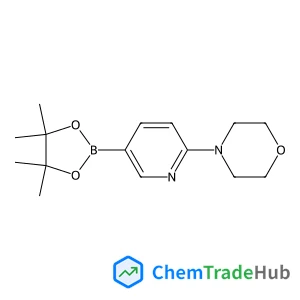
4-(5-(4,4,5,5-tetramethyl-1,3,2-dioxaborolan-2-yl)pyridin-2-yl)morpholine
CAS Number:
485799-04-0
Molecular Formula:
C15H23BN2O3
Recommended Suppliers






Disclaimer
This page provides academic journal information for reference and research purposes only. We are not affiliated with any journal publishers and do not handle publication submissions. For publication-related inquiries, please contact the respective journal publishers directly.
If you notice any inaccuracies in the information displayed, please contact us at support@chemtradehub.com. We will promptly review and address your concerns.