













Anharmonic contribution to the stabilization of Mg(OH)2 from first principles
Literature Information
Publication Date
2018-06-05
DOI
10.1039/C8CP02490A
Impact Factor
3.676
Authors
P. Treviño, S. López-Moreno, A. Bautista-Hernández, E. Bobocioiu, B. Reynard, R. Caracas
View Original
Abstract
Geometrical and vibrational characterization of magnesium hydroxide was performed using density functional theory. Four possible crystal symmetries were explored: P (No. 147, point group −3), C2/m (No. 12, point group 2), P3m1 (No. 156, point group 3m) and Pm1 (No. 164, point group −3m) which are the currently accepted geometries found in the literature. While a lot of work has been performed on Mg(OH)2, in particular for the Pm1 phase, there is still a debate on the observed ground state crystal structure and the anharmonic effects of the OH vibrations on the stabilization of the crystal structure. In particular, the stable positions of hydrogen are not yet defined precisely, which have implications in the crystal symmetry, the vibrational excitations, and the thermal stability. Previous work has assigned the Pm1 polymorph as the low energy phase, but it has also proposed that hydrogens are disordered and they could move from their symmetric position in the Pm1 structure towards P. In this paper, we examine the stability of the proposed phases by using different descriptors. We compare the XRD patterns with reported experimental results, and a fair agreement is found. While harmonic vibrational analysis shows that most phases have imaginary modes at 0 K, anharmonic vibrational analysis indicates that at room temperature only the C2/m phase is stabilized, whereas at higher temperatures, other phases become thermally competitive.
Related Literature
pulSED: pulsed sonoelectrodeposition of fractal nanoplatinum for enhancing amperometric biosensor performance
M. Taguchi, N. Schwalb, Y. Rong, N. Garland, M. Tan, H. Yamaguchi, J. C. Claussen, E. S. McLamore
2016-04-20
Paper
DOI: 10.1039/C6AN00069J
Cooperative hydrogen-bonding of the adenine–thymine pair as a strategy for lowering the limit of detection of thymine by surface-enhanced Raman spectroscopy
Mónica B. Mamián-López, Paola Corio, Marcia L. A. Temperini
2016-04-20
Paper
DOI: 10.1039/C6AN00222F
A one-step colorimetric acid–base titration sensor using a complementary color changing coordination system
Hui Hun Cho, Si Hyun Kim, Jun Hyuk Heo, Young Eel Moon, Young Hun Choi, Dong Cheol Lim, Kwon-Hoon Han
2016-04-21
Paper
DOI: 10.1039/C6AN00744A
A fluorescent turn-on probe for visualizing lysosomes in hypoxic tumor cells
Yingchao Liu, Feiyi Wang, Qiang Fei, Ben Shi, Jiancai An, Chunchang Zhao, Chen-Ho Tung
2016-04-15
Communication
DOI: 10.1039/C6AN00369A
Sensitive detection of polycyclic aromatic hydrocarbons with gold colloid coupled chloride ion SERS sensor
Xiaoyong Liao, You Li, Hongying Cao, Yishu Zhao, Daniel P. Cassidy
2019-10-04
Paper
DOI: 10.1039/C9AN01540J
The origin of the band at around 730 cm−1 in the SERS spectra of bacteria: a stable isotope approach
Patrick Kubryk, Reinhard Niessner, Natalia P. Ivleva
2016-04-20
Communication
DOI: 10.1039/C6AN00306K
SERS-based immunoassay using gold-patterned array chips for rapid and sensitive detection of dual cardiac biomarkers
Ziyi Cheng, Rui Wang, Yanlong Xing, Linlu Zhao, Jaebum Choo, Fabiao Yu
2019-09-20
Paper
DOI: 10.1039/C9AN01260E
Raman spectroscopy for rapid intra-operative margin analysis of surgically excised tumour specimens
Angela Shore
2019-10-08
Critical Review
DOI: 10.1039/C9AN01163C
Surface-enhanced Raman spectroscopy (SERS) characterisation of abasic sites in DNA duplexes
Luca Guerrini
2019-11-05
Communication
DOI: 10.1039/C9AN02040C
You might also like
Compound Q&A
What precautions should be taken when handling 4-(2-Furylmethyl)thiomorpholine 1,1-dioxide (CAS: 79206-94-3)?
When handling 4-(2-Furylmethyl)thiomorpholine 1,1-dioxide (CAS: 79206-94-3), it ...
79206-94-34-(2-Furylmethyl)thi...
Compound Q&A
What precautions should be taken when handling 4-Chloro-N-[2-(4-morpholinyl)ethyl]benzamide (CAS: 71320-77-9)?
When handling 4-Chloro-N-[2-(4-morpholinyl)ethyl]benzamide (CAS: 71320-77-9), it...
71320-77-94-Chloro-N-[2-(4-mor...
Compound Q&A
How should waste containing 2-[2-(2-Methoxyethoxy)ethoxy]ethyl 4-methylbenzenesulfonate (CAS: 62921-74-8) be handled?
Waste containing this compound (CAS: 62921-74-8) should be handled according to ...
62921-74-82-[2-(2-Methoxyethox...
Compound Q&A
How should waste containing (S)-Methyl 2-amino-3-cyclohexylpropanoate be handled?
Waste containing (S)-Methyl 2-amino-3-cyclohexylpropanoate should be collected i...
40056-18-6(S)-Methyl 2-amino-3...
Compound Q&A
How is 5-({4-[(2S,4R)-4-Hydroxy-2-methyltetrahydro-2H-pyran-4-yl]-2-thienyl}sulfanyl)-1-methyl-1,3-dihydro-2H-indol-2-one (CAS: 166882-70-8) typically synthesized?
This compound can be synthesized using a multi-step process involving the conjug...
166882-70-85-({4-[(2S,4R)-4-Hyd...
Compound Q&A
Are there alternatives to (2E)-3-(3,4-Dichlorophenyl)acrylic acid (CAS: 7312-27-8) in synthesis?
There are several alternatives to (2E)-3-(3,4-Dichlorophenyl)acrylic acid in syn...
7312-27-8(2E)-3-(3,4-Dichloro...
Compound Q&A
How should Ethyl 6-(2-nitrophenyl)imidazo[2,1-b][1,3]thiazole-3-carboxylate (CAS: 925437-84-9) be stored?
Ethyl 6-(2-nitrophenyl)imidazo[2,1-b][1,3]thiazole-3-carboxylate (CAS: 925437-84...
925437-84-9Ethyl 6-(2-nitrophen...
Compound Q&A
How should waste containing 2-(1,3-Thiazol-2-yl)ethanamine (CAS: 18453-07-1) be handled?
Waste containing 2-(1,3-Thiazol-2-yl)ethanamine (CAS: 18453-07-1) should be coll...
18453-07-12-(1,3-Thiazol-2-yl)...
Compound Q&A
How is Methyl 5-iodo-2-methylbenzoate (CAS: 103440-54-6) typically synthesized?
Methyl 5-iodo-2-methylbenzoate can be synthesized through the iodination of meth...
103440-54-6Methyl 5-iodo-2-meth...
Compound Q&A
How is 5-Chloro[1,2,4]triazolo[1,5-a]pyridine (CAS: 1427399-34-5) typically synthesized?
5-Chloro[1,2,4]triazolo[1,5-a]pyridine is commonly synthesized via the condensat...
1427399-34-55-Chloro[1,2,4]triaz...
Source Journal
Physical Chemistry Chemical Physics

CiteScore:
5.5
Self-citation Rate:
10.3%
Articles per Year:
3036
Physical Chemistry Chemical Physics (PCCP) is an international journal co-owned by 19 physical chemistry and physics societies from around the world. This journal publishes original, cutting-edge research in physical chemistry, chemical physics and biophysical chemistry. To be suitable for publication in PCCP, articles must include significant innovation and/or insight into physical chemistry; this is the most important criterion that reviewers and Editors will judge against when evaluating submissions. The journal has a broad scope and welcomes contributions spanning experiment, theory, computation and data science. Topical coverage includes spectroscopy, dynamics, kinetics, statistical mechanics, thermodynamics, electrochemistry, catalysis, surface science, quantum mechanics, quantum computing and machine learning. Interdisciplinary research areas such as polymers and soft matter, materials, nanoscience, energy, surfaces/interfaces, and biophysical chemistry are welcomed if they demonstrate significant innovation and/or insight into physical chemistry. Joined experimental/theoretical studies are particularly appreciated when complementary and based on up-to-date approaches.
Recommended Compounds
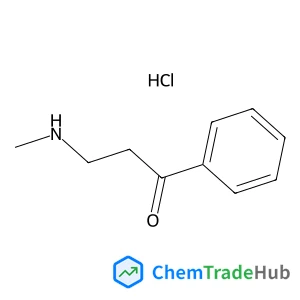
3-(Methylamino)-1-phenyl-1-propanone hydrochloride (1:1)
CAS Number:
2538-50-3
Molecular Formula:
C10H14ClNO


Recommended Suppliers






Disclaimer
This page provides academic journal information for reference and research purposes only. We are not affiliated with any journal publishers and do not handle publication submissions. For publication-related inquiries, please contact the respective journal publishers directly.
If you notice any inaccuracies in the information displayed, please contact us at support@chemtradehub.com. We will promptly review and address your concerns.