












Nature of proton transport in a water-filled carbon nanotube and in liquid water
Literature Information
Publication Date
2013-03-07
DOI
10.1039/C3CP50218J
Impact Factor
3.676
Authors
Ji Chen, Qianfan Zhang, Angelos Michaelides, Enge Wang
View Original
Abstract
Proton transport (PT) in bulk liquid water and within a thin water-filled carbon nanotube has been examined using ab initio path-integral molecular dynamics (PIMD). Barrierless proton transfer is observed in each case when quantum nuclear effects (QNEs) are accounted for. The key difference between the two systems is that in the nanotube facile PT is facilitated by a favorable pre-alignment of water molecules, whereas in bulk liquid water solvent reorganization is required prior to PT. Configurations where the quantum excess proton is delocalized over several adjacent water molecules along with continuous interconversion between different hydration states reveals that, as in liquid water, the hydrated proton under confinement is best described as a fluxional defect, rather than any individual idealized hydration state such as Zundel, Eigen, or the so-called linear H7O3+ complex along the water chain. These findings highlight the importance of QNEs in intermediate strength hydrogen bonds (HBs) and explain why H+ diffusion through nanochannels is impeded much less than other cations.
Related Literature
Synergetic effects of a poly-tartrazine/CTAB modified carbon paste electrode sensor towards simultaneous and interference-free determination of benzenediol isomers
Amit B. Teradale, Kailash S. Chadchan, Pattan-Siddappa Ganesh, Swastika N. Das
2023-08-24
Paper
DOI: 10.1039/D3RE00318C
From RAFT emulsion polymerization to RAFT dispersion polymerization: a facile approach to tuning dispersities and behaviors of self-assembled block copolymers
Junpeng Cao, Yanling Li, Yingxin Tan
2023-11-30
Paper
DOI: 10.1039/D3PY01006F
CO2 hydrogenation to olefins in a microwave-thermal hybrid heating reactor
Sonit Balyan, Kshitij Tewari, Brandon Robinson, Changle Jiang, Yuxin Wang, Jianli Hu
2023-12-26
Communication
DOI: 10.1039/D3RE00636K
Multi-responsive nanogels with tunable orthogonal reversible covalent (TORC) core-crosslinks for AND-gate controlled release
Shayesteh Tafazoli, Ali Shahrokhinia, Sahaj Rijal, Jaelese Garay, Randall A. Scanga, James F. Reuther
2023-10-02
Paper
DOI: 10.1039/D3PY00922J
Thermoresponsive property of poly(N,N-bis(2-ethoxyethyl)acrylamide) and its multiblock copolymers with poly(N,N-dimethylacrylamide) prepared by hydrosilylation-promoted group transfer polymerization
Xiangming Fu, Yanqiu Wang, Liang Xu, Atsushi Narumi, Shin-ichiro Sato, Xiaoran Yang
2023-10-30
Paper
DOI: 10.1039/D3PY01032E
Facile synthesis of N-phenoxycarbonyl amino acids by a two-phase reaction for direct polymerization
2023-12-06
Paper
DOI: 10.1039/D3PY01031G
Efficient and labor-saving Ru/C catalysts for the transformation of levulinic acid into γ-valerolactone under mild reaction conditions
Zaira Ruiz-Bernal, M. Ángeles Lillo-Ródenas, M. Carmen Román-Martínez
2023-11-08
Paper
DOI: 10.1039/D3RE00497J
PEGMAs with short and long side chains: what is the effect in the formation of stars and brushes by RAFT polymerization?
Hortensia Maldonado-Textle, Ángel Licea-Claveríe, Enrique Saldívar-Guerra
2023-08-11
Paper
DOI: 10.1039/D3RE00315A
You might also like
Compound Q&A
What is the market or research trend for N-(4-Methoxybenzyl)-2-pyridinamine (CAS: 52818-63-0)?
N-(4-Methoxybenzyl)-2-pyridinamine (CAS: 52818-63-0) is increasingly being used ...
52818-63-0N-(4-Methoxybenzyl)-...
Compound Q&A
What precautions should be taken when handling Ethyl 4-(2-chlorophenyl)-1,3-thiazole-2-carboxylate (CAS: 1050507-06-6)?
When handling Ethyl 4-(2-chlorophenyl)-1,3-thiazole-2-carboxylate, appropriate p...
1050507-06-6Ethyl 4-(2-chlorophe...
Compound Q&A
What regulatory guidelines apply to diethyldiselane (CAS: 628-39-7)?
Diethyldiselane (CAS: 628-39-7) is classified under the Globally Harmonized Syst...
628-39-7Diethyldiselane
Compound Q&A
What is the market or research trend for oxocopper (CAS: 12053-18-8)?
The market for oxocopper (CAS: 12053-18-8) is primarily driven by its use in cat...
12053-18-8oxocopper; oxo-(oxoc...
Compound Q&A
What is the market or research trend for 5-{[(2-Methyl-2-propanyl)oxy]carbonyl}-5-azaspiro[2.4]heptane-7-carboxylic acid?
The market for 5-{[(2-Methyl-2-propanyl)oxy]carbonyl}-5-azaspiro[2.4]heptane-7-c...
1268519-54-55-{[(2-Methyl-2-prop...
Compound Q&A
What is 2-(1-Pyrrolidinyl)-4-pyridinamine (CAS: 35981-63-6)?
2-(1-Pyrrolidinyl)-4-pyridinamine is a chemical compound with the CAS number 359...
35981-63-62-(1-Pyrrolidinyl)-4...
Compound Q&A
What are the physical and chemical properties of 2-(3-Pyridinyl)-1-azabicyclo[2.2.2]octane (CAS: 91556-75-1)?
2-(3-Pyridinyl)-1-azabicyclo[2.2.2]octane (CAS: 91556-75-1) is a crystalline sol...
91556-75-12-(3-Pyridinyl)-1-az...
Compound Q&A
How is (S)-Alpha-allyl-proline hydrochloride (CAS: 129704-91-2) typically synthesized?
(S)-Alpha-allyl-proline hydrochloride is usually synthesized via a Wittig reacti...
129704-91-2(S)-Alpha-allyl-prol...
Compound Q&A
What is 3-Methyl-1,2-oxazole-5-carboxylic acid (CAS: 4857-42-5)?
3-Methyl-1,2-oxazole-5-carboxylic acid (CAS: 4857-42-5) is an organic compound w...
4857-42-53-Methyl-1,2-oxazole...
Compound Q&A
How is Lys-SMCC-DM1 (CAS: 1281816-04-3) typically synthesized?
Lys-SMCC-DM1 is synthesized via a multi-step process involving the coupling of S...
1281816-04-3Lys-SMCC-DM1
Source Journal
Physical Chemistry Chemical Physics

CiteScore:
5.5
Self-citation Rate:
10.3%
Articles per Year:
3036
Physical Chemistry Chemical Physics (PCCP) is an international journal co-owned by 19 physical chemistry and physics societies from around the world. This journal publishes original, cutting-edge research in physical chemistry, chemical physics and biophysical chemistry. To be suitable for publication in PCCP, articles must include significant innovation and/or insight into physical chemistry; this is the most important criterion that reviewers and Editors will judge against when evaluating submissions. The journal has a broad scope and welcomes contributions spanning experiment, theory, computation and data science. Topical coverage includes spectroscopy, dynamics, kinetics, statistical mechanics, thermodynamics, electrochemistry, catalysis, surface science, quantum mechanics, quantum computing and machine learning. Interdisciplinary research areas such as polymers and soft matter, materials, nanoscience, energy, surfaces/interfaces, and biophysical chemistry are welcomed if they demonstrate significant innovation and/or insight into physical chemistry. Joined experimental/theoretical studies are particularly appreciated when complementary and based on up-to-date approaches.
Recommended Compounds
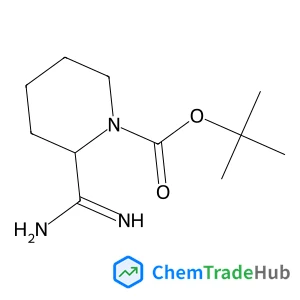
2-Methyl-2-propanyl 2-carbamimidoyl-1-piperidinecarboxylate
CAS Number:
1258640-98-0
Molecular Formula:
C11H21N3O2
Recommended Suppliers





Disclaimer
This page provides academic journal information for reference and research purposes only. We are not affiliated with any journal publishers and do not handle publication submissions. For publication-related inquiries, please contact the respective journal publishers directly.
If you notice any inaccuracies in the information displayed, please contact us at support@chemtradehub.com. We will promptly review and address your concerns.