












Modeling environment effects on spectroscopies through QM/classical models
Literature Information
Publication Date
2013-01-08
DOI
10.1039/C3CP44417A
Impact Factor
3.676
Authors
Benedetta Mennucci
View Original
Abstract
In this perspective, an overview of the recent progress in the combination of quantum mechanical (QM) simulations of spectroscopies with classical models to include environment effects is presented. Both atomistic and continuum formulations of the classical models are reviewed together with a critical analysis of their respective pros and cons. In particular, the different strategies developed within the two families of methods to include mutual polarization effects between the QM and the classical part or to properly treat the statistical sampling are presented and discussed. Examples of applications to different types of environment are also presented to show how these hybrid approaches can be used to obtain an accurate description of electronic, vibrational and magnetic spectroscopies even when nonequilibrium, heterogeneities, and/or specific and bulk effects are in play.
Related Literature
Photofragmentation at 263 nm of small peptides containing tyrosine: the role of the charge transfer on CO
Christophe Dehon, Satchin Soorkia, Mélanie Pedrazzani, Christophe Jouvet, Michel Barat, Jacqueline A. Fayeton, Bruno Lucas
2013-04-05
Paper
DOI: 10.1039/C3CP50720C
K-edge XANES investigation of octakis(DMSO)lanthanoid(iii) complexes in DMSO solution and solid iodides
Paola D'Angelo, Valentina Migliorati, Riccardo Spezia, Simone De Panfilis, Ingmar Persson, Andrea Zitolo
2013-04-17
Paper
DOI: 10.1039/C3CP50842K
Electronic structure analysis of multistate reactivity in transition metal catalyzed reactions: the case of C–H bond activation by non-heme iron(iv)–oxo cores
Shengfa Ye, Cai-Yun Geng, Sason Shaik, Frank Neese
2013-05-01
Perspective
DOI: 10.1039/C3CP00080J
An all-cotton-derived, arbitrarily foldable, high-rate, electrochemical supercapacitor
Jiangli Xue, Yang Zhao, Huhu Cheng, Chuangang Hu, Yue Hu, Yuning Meng, Huibo Shao, Zhipan Zhang, Liangti Qu
2013-04-15
Communication
DOI: 10.1039/C3CP51571K
Intrinsic fluorescence properties of rhodamine cations in gas-phase: triplet lifetimes and dispersed fluorescence spectra
Jean-François Greisch, Michael E. Harding, Mattias Kordel
2013-03-27
Paper
DOI: 10.1039/C3CP44362K
NMR self-diffusion study of a phosphonium bis(mandelato)borate ionic liquid
Faiz Ullah Shah, Mamoun Taher
2013-04-19
Paper
DOI: 10.1039/C3CP51132D
Mechanisms behind sulfur promoted oxidation of methane
Johan Gustafson, Marco Di Michiel, Mark A. Newton
2013-02-11
Paper
DOI: 10.1039/C3CP44289F
From solvated ions to ion-pairing: a THz study of lanthanum(iii) hydration
Vinay Sharma, Fabian Böhm, Michael Seitz, Gerhard Schwaab, Martina Havenith
2013-04-10
Paper
DOI: 10.1039/C3CP50865J
Model of the photoexcitation processes of a two-level molecule coherently coupled to an optical antenna
Masatoshi Nakatani, Atsushi Nobuhiro, Nobuhiko Yokoshi, Hajime Ishihara
2013-03-18
Paper
DOI: 10.1039/C3CP43834A
You might also like
Compound Q&A
What is the market or research trend for N-(4-Methoxybenzyl)-2-pyridinamine (CAS: 52818-63-0)?
N-(4-Methoxybenzyl)-2-pyridinamine (CAS: 52818-63-0) is increasingly being used ...
52818-63-0N-(4-Methoxybenzyl)-...
Compound Q&A
What precautions should be taken when handling Ethyl 4-(2-chlorophenyl)-1,3-thiazole-2-carboxylate (CAS: 1050507-06-6)?
When handling Ethyl 4-(2-chlorophenyl)-1,3-thiazole-2-carboxylate, appropriate p...
1050507-06-6Ethyl 4-(2-chlorophe...
Compound Q&A
What regulatory guidelines apply to diethyldiselane (CAS: 628-39-7)?
Diethyldiselane (CAS: 628-39-7) is classified under the Globally Harmonized Syst...
628-39-7Diethyldiselane
Compound Q&A
What is the market or research trend for oxocopper (CAS: 12053-18-8)?
The market for oxocopper (CAS: 12053-18-8) is primarily driven by its use in cat...
12053-18-8oxocopper; oxo-(oxoc...
Compound Q&A
What is the market or research trend for 5-{[(2-Methyl-2-propanyl)oxy]carbonyl}-5-azaspiro[2.4]heptane-7-carboxylic acid?
The market for 5-{[(2-Methyl-2-propanyl)oxy]carbonyl}-5-azaspiro[2.4]heptane-7-c...
1268519-54-55-{[(2-Methyl-2-prop...
Compound Q&A
What is 2-(1-Pyrrolidinyl)-4-pyridinamine (CAS: 35981-63-6)?
2-(1-Pyrrolidinyl)-4-pyridinamine is a chemical compound with the CAS number 359...
35981-63-62-(1-Pyrrolidinyl)-4...
Compound Q&A
What are the physical and chemical properties of 2-(3-Pyridinyl)-1-azabicyclo[2.2.2]octane (CAS: 91556-75-1)?
2-(3-Pyridinyl)-1-azabicyclo[2.2.2]octane (CAS: 91556-75-1) is a crystalline sol...
91556-75-12-(3-Pyridinyl)-1-az...
Compound Q&A
How is (S)-Alpha-allyl-proline hydrochloride (CAS: 129704-91-2) typically synthesized?
(S)-Alpha-allyl-proline hydrochloride is usually synthesized via a Wittig reacti...
129704-91-2(S)-Alpha-allyl-prol...
Compound Q&A
What is 3-Methyl-1,2-oxazole-5-carboxylic acid (CAS: 4857-42-5)?
3-Methyl-1,2-oxazole-5-carboxylic acid (CAS: 4857-42-5) is an organic compound w...
4857-42-53-Methyl-1,2-oxazole...
Compound Q&A
How is Lys-SMCC-DM1 (CAS: 1281816-04-3) typically synthesized?
Lys-SMCC-DM1 is synthesized via a multi-step process involving the coupling of S...
1281816-04-3Lys-SMCC-DM1
Source Journal
Physical Chemistry Chemical Physics

CiteScore:
5.5
Self-citation Rate:
10.3%
Articles per Year:
3036
Physical Chemistry Chemical Physics (PCCP) is an international journal co-owned by 19 physical chemistry and physics societies from around the world. This journal publishes original, cutting-edge research in physical chemistry, chemical physics and biophysical chemistry. To be suitable for publication in PCCP, articles must include significant innovation and/or insight into physical chemistry; this is the most important criterion that reviewers and Editors will judge against when evaluating submissions. The journal has a broad scope and welcomes contributions spanning experiment, theory, computation and data science. Topical coverage includes spectroscopy, dynamics, kinetics, statistical mechanics, thermodynamics, electrochemistry, catalysis, surface science, quantum mechanics, quantum computing and machine learning. Interdisciplinary research areas such as polymers and soft matter, materials, nanoscience, energy, surfaces/interfaces, and biophysical chemistry are welcomed if they demonstrate significant innovation and/or insight into physical chemistry. Joined experimental/theoretical studies are particularly appreciated when complementary and based on up-to-date approaches.
Recommended Compounds

![1,10-bis(3,5-dimethylphenyl)-12-hydroxy-4,5,6,7-tetrahydroiindeno[7,1-de:1',7'-fg][1,3,2]dioxaphosphocine 12-oxide structure](https://static.chemtradehub.com/structs/141/1412439-82-7-b9a9.webp "1,10-bis(3,5-dimethylphenyl)-12-hydroxy-4,5,6,7-tetrahydroiindeno[7,1-de:1',7'-fg][1,3,2]dioxaphosphocine 12-oxide structure")
1,10-bis(3,5-dimethylphenyl)-12-hydroxy-4,5,6,7-tetrahydroiindeno[7,1-de:1',7'-fg][1,3,2]dioxaphosphocine 12-oxide
CAS Number:
1412439-82-7
Molecular Formula:
C33H31O4P
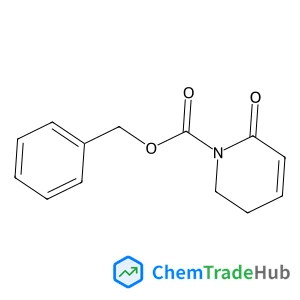
Benzyl 6-oxo-3,6-dihydro-1(2H)-pyridinecarboxylate
CAS Number:
725746-35-0
Molecular Formula:
C13H13NO3
Recommended Suppliers



Disclaimer
This page provides academic journal information for reference and research purposes only. We are not affiliated with any journal publishers and do not handle publication submissions. For publication-related inquiries, please contact the respective journal publishers directly.
If you notice any inaccuracies in the information displayed, please contact us at support@chemtradehub.com. We will promptly review and address your concerns.