![1-{3-[4-Amino-3-(4-phenoxyphenyl)-1H-pyrazolo[3,4-d]pyrimidin-1-yl]-1-piperidinyl}-2,3-dihydroxy-1-propanone structure](https://static.chemtradehub.com/structs/122/1226872-27-0-e037.webp "1-{3-[4-Amino-3-(4-phenoxyphenyl)-1H-pyrazolo[3,4-d]pyrimidin-1-yl]-1-piperidinyl}-2,3-dihydroxy-1-propanone structure")
1-{3-[4-Amino-3-(4-phenoxyphenyl)-1H-pyrazolo[3,4-d]pyrimidin-1-yl]-1-piperidinyl}-2,3-dihydroxy-1-propanone
CAS Number:
1226872-27-0
Molecular Formula:
C25H26N6O4
Joseph W. DePalma, Andrew J. Horan, Wiley A. Hall IV, Murray V. Johnston
Dimers and higher order oligomers, whether in the gas or particle phase, can affect important atmospheric processes such as new particle formation, and gas-particle partitioning. In this study, the thermodynamics of dimer formation from various oxidation products of α-pinene ozonolysis are investigated using a combination of Monte Carlo configuration sampling, semi-empirical and density functional theory (DFT) quantum mechanics, and continuum solvent modeling. Favorable dimer formation pathways are found to exist in both gas and condensed phases. The free energies of dimer formation are used to calculate equilibrium constants and expected dimer concentrations under a variety of conditions. In the gas phase, favorable pathways studied include formation of non-covalent dimers of terpenylic acid and/or cis-pinic acid and a covalently-bound peroxyhemiacetal. Under atmospherically relevant conditions, only terpenylic acid forms a dimer in sufficient quantities to contribute to new particle formation. Under conditions typically used in laboratory experiments, several dimer formation pathways may contribute to particle formation. In the condensed phase, non-covalent dimers of terpenylic acid and/or cis-pinic acid and covalently-bound dimers representing a peroxyhemiacetal and a hydrated aldol are favorably formed. Dimer formation is both solution and temperature dependent. A water-like solution appears to promote dimer formation over methanol- or acetonitrile-like solutions. Heating from 298 K to 373 K causes extensive decomposition back to monomers. Dimers that are not favorably formed in either the gas or condensed phase include hemi-acetal, ester, anhydride, and the di(α-hydroxy) ether.
Christophe Dehon, Satchin Soorkia, Mélanie Pedrazzani, Christophe Jouvet, Michel Barat, Jacqueline A. Fayeton, Bruno Lucas
DOI: 10.1039/C3CP50720C
Jaehyun Moon, Jin-Ah Park, Su-Jae Lee, Jeong-Ik Lee, Taehyong Zyung, Eui-Chol Shin, Jong-Sook Lee
DOI: 10.1039/C3CP44684K
Gianluca Di Profio, Mika T. Reijonen, Rocco Caliandro, Antonietta Guagliardi, Efrem Curcio, Enrico Drioli
DOI: 10.1039/C3CP50664A
Olaf J. Borkiewicz, Karena W. Chapman, Peter J. Chupas
DOI: 10.1039/C3CP50590A
DOI: 10.1039/C3CP44283G
Johan Gustafson, Marco Di Michiel, Mark A. Newton
DOI: 10.1039/C3CP44289F
Sirous Asgari, Doretta Capsoni, Piercarlo Mustarelli
DOI: 10.1039/C3CP51481A
V. Petkov, Y. Ren, S. Kabekkodu, D. Murphy
DOI: 10.1039/C2CP43378H
Ting Liao, Ziqi Sun, Aijun Du, Sean Smith
DOI: 10.1039/C3CP50654A
Bing Liu, Xinyu Zhao, Yuan Tian, Di Zhao, Changwen Hu, Minhua Cao
DOI: 10.1039/C3CP44707C
N-(4-Methoxybenzyl)-2-pyridinamine (CAS: 52818-63-0) is increasingly being used ...
When handling Ethyl 4-(2-chlorophenyl)-1,3-thiazole-2-carboxylate, appropriate p...
Diethyldiselane (CAS: 628-39-7) is classified under the Globally Harmonized Syst...
The market for oxocopper (CAS: 12053-18-8) is primarily driven by its use in cat...
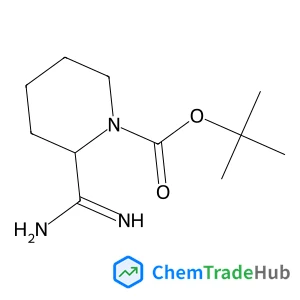
The market for 5-{[(2-Methyl-2-propanyl)oxy]carbonyl}-5-azaspiro[2.4]heptane-7-c...
2-(1-Pyrrolidinyl)-4-pyridinamine is a chemical compound with the CAS number 359...
2-(3-Pyridinyl)-1-azabicyclo[2.2.2]octane (CAS: 91556-75-1) is a crystalline sol...
(S)-Alpha-allyl-proline hydrochloride is usually synthesized via a Wittig reacti...
3-Methyl-1,2-oxazole-5-carboxylic acid (CAS: 4857-42-5) is an organic compound w...
Lys-SMCC-DM1 is synthesized via a multi-step process involving the coupling of S...

Physical Chemistry Chemical Physics (PCCP) is an international journal co-owned by 19 physical chemistry and physics societies from around the world. This journal publishes original, cutting-edge research in physical chemistry, chemical physics and biophysical chemistry. To be suitable for publication in PCCP, articles must include significant innovation and/or insight into physical chemistry; this is the most important criterion that reviewers and Editors will judge against when evaluating submissions. The journal has a broad scope and welcomes contributions spanning experiment, theory, computation and data science. Topical coverage includes spectroscopy, dynamics, kinetics, statistical mechanics, thermodynamics, electrochemistry, catalysis, surface science, quantum mechanics, quantum computing and machine learning. Interdisciplinary research areas such as polymers and soft matter, materials, nanoscience, energy, surfaces/interfaces, and biophysical chemistry are welcomed if they demonstrate significant innovation and/or insight into physical chemistry. Joined experimental/theoretical studies are particularly appreciated when complementary and based on up-to-date approaches.