


Spectroscopic and theoretical investigations of adenosine 5′-diphosphate and adenosine 5′-triphosphate dianions in the gas phase
Literature Information
Publication Date
2012-12-05
DOI
10.1039/C2CP43808A
Impact Factor
3.676
Authors
Paul E. Crider, Matthias Vonderach, Patrick Weis
View Original
Abstract
Doubly deprotonated adenosine 5′-diphosphate ([ADP–2H]2−) and adenosine 5′-triphosphate ([ATP–2H]2−) dianions were investigated using infrared multiple photon dissociation (IR-MPD) and photoelectron spectroscopy. Vibrational spectra acquired in the X–H stretch region (X = C, N, O) and augmented by isotope-labelling were compared to density functional theory (DFT) calculations at the B3LYP/TZVPP level. This suggests that in [ATP–2H]2− the two phosphate groups adjacent to the ribose ring are preferentially deprotonated. Photoelectron spectra recorded at 4.66 and 6.42 eV photon energies revealed adiabatic detachment energies of 1.35 eV for [ADP–2H]2− and 3.35 eV for [ATP–2H]2−. Repulsive Coulomb barriers were estimated at ∼2.2 eV for [ADP–2H]2− and ∼1.9 eV for [ATP–2H]2−. Time-dependent DFT calculations have been used to simulate the photoelectron spectra. Photodetachment occurs primarily from lone pair orbitals on oxygen atoms within the phosphate chain.
Recommended Journals

Science Progress

Journal of Medicinal Chemistry

European Journal of Wood and Wood Products

Proceedings of the National Academy of Sciences of the United States of America

Journal of Organometallic Chemistry

Israel Journal of Chemistry

Russian Chemical Reviews

Helvetica Chimica Acta

Pharmacological Reviews

Planta Medica
Related Literature
A dual action coumarin-camptothecin polymer for light responsive drug release and photodynamic therapy
Paige A. Shaw
2023-12-05
Communication
DOI: 10.1039/D3PY01137B
Influence of Mo modification on coaromatization coupling methanol with n-hexane over [Zn,Mo]/HZSM-5 catalysts
Bing Zhu, Haibo Li, Xue Wang, Subing Fan, Junmin Lv, Tian-sheng Zhao
2023-07-05
Paper
DOI: 10.1039/D3RE00133D
Responsive CO2 capture: predictive multi-objective optimisation for managing intermittent flue gas and renewable energy supply
Oliver J. Fisher, Lei Xing, Xingjian Tian, Xin Yee Tai, Jin Xuan
2023-12-22
Paper
DOI: 10.1039/D3RE00544E
Tailoring molecular weight distribution via polymer degradability
Yeonsu Kim, Cheoljae Kim
2023-12-15
Paper
DOI: 10.1039/D3PY01153D
Batch and continuous flow mechanochemical synthesis of organic compounds including APIs
2023-09-05
Review Article
DOI: 10.1039/D2RE00521B
Efficient all polymer active layers with long-range ordered 1D p–n nanoheterojunctions confirmed by TEM tomography
Seon-Mi Jin, Jun Ho Hwang, Jaehyeong Park, Du Hyeon Ryu, BongSoo Kim, Chang Eun Song, Eunji Lee
2023-10-25
Paper
DOI: 10.1039/D3PY00718A
Characterising flow with continuous aeration in an oscillatory baffle flow reactor using residence time distribution
Rylan Cox, Konstantinos Salonitis, Susan A. Impey
2023-08-30
Paper
DOI: 10.1039/D3RE00065F
Multi-tunable thermoresponsive behaviors of poly(amido thioether)s
Lu Lian, Qingqing Wang, Fujin Duan, Youliang Zhao
2023-12-06
Paper
DOI: 10.1039/D3PY01101A
Optimized synthesis of functional organosilicon monomers and polymers exploiting new types of CuAAC recoverable heterogeneous catalysts
Kseniia S. Klokova, Alexander Yu Pereyaslavtsev, Dmitry A. Migulin
2023-10-27
Paper
DOI: 10.1039/D3RE00532A
You might also like
Compound Q&A
What is the market or research trend for N-(4-Methoxybenzyl)-2-pyridinamine (CAS: 52818-63-0)?
N-(4-Methoxybenzyl)-2-pyridinamine (CAS: 52818-63-0) is increasingly being used ...
52818-63-0N-(4-Methoxybenzyl)-...
Compound Q&A
What precautions should be taken when handling Ethyl 4-(2-chlorophenyl)-1,3-thiazole-2-carboxylate (CAS: 1050507-06-6)?
When handling Ethyl 4-(2-chlorophenyl)-1,3-thiazole-2-carboxylate, appropriate p...
1050507-06-6Ethyl 4-(2-chlorophe...
Compound Q&A
What regulatory guidelines apply to diethyldiselane (CAS: 628-39-7)?
Diethyldiselane (CAS: 628-39-7) is classified under the Globally Harmonized Syst...
628-39-7Diethyldiselane
Compound Q&A
What is the market or research trend for oxocopper (CAS: 12053-18-8)?
The market for oxocopper (CAS: 12053-18-8) is primarily driven by its use in cat...
12053-18-8oxocopper; oxo-(oxoc...
Compound Q&A
What is the market or research trend for 5-{[(2-Methyl-2-propanyl)oxy]carbonyl}-5-azaspiro[2.4]heptane-7-carboxylic acid?
The market for 5-{[(2-Methyl-2-propanyl)oxy]carbonyl}-5-azaspiro[2.4]heptane-7-c...
1268519-54-55-{[(2-Methyl-2-prop...
Compound Q&A
What is 2-(1-Pyrrolidinyl)-4-pyridinamine (CAS: 35981-63-6)?
2-(1-Pyrrolidinyl)-4-pyridinamine is a chemical compound with the CAS number 359...
35981-63-62-(1-Pyrrolidinyl)-4...
Compound Q&A
What are the physical and chemical properties of 2-(3-Pyridinyl)-1-azabicyclo[2.2.2]octane (CAS: 91556-75-1)?
2-(3-Pyridinyl)-1-azabicyclo[2.2.2]octane (CAS: 91556-75-1) is a crystalline sol...
91556-75-12-(3-Pyridinyl)-1-az...
Compound Q&A
How is (S)-Alpha-allyl-proline hydrochloride (CAS: 129704-91-2) typically synthesized?
(S)-Alpha-allyl-proline hydrochloride is usually synthesized via a Wittig reacti...
129704-91-2(S)-Alpha-allyl-prol...
Compound Q&A
What is 3-Methyl-1,2-oxazole-5-carboxylic acid (CAS: 4857-42-5)?
3-Methyl-1,2-oxazole-5-carboxylic acid (CAS: 4857-42-5) is an organic compound w...
4857-42-53-Methyl-1,2-oxazole...
Compound Q&A
How is Lys-SMCC-DM1 (CAS: 1281816-04-3) typically synthesized?
Lys-SMCC-DM1 is synthesized via a multi-step process involving the coupling of S...
1281816-04-3Lys-SMCC-DM1
Source Journal
Physical Chemistry Chemical Physics

CiteScore:
5.5
Self-citation Rate:
10.3%
Articles per Year:
3036
Physical Chemistry Chemical Physics (PCCP) is an international journal co-owned by 19 physical chemistry and physics societies from around the world. This journal publishes original, cutting-edge research in physical chemistry, chemical physics and biophysical chemistry. To be suitable for publication in PCCP, articles must include significant innovation and/or insight into physical chemistry; this is the most important criterion that reviewers and Editors will judge against when evaluating submissions. The journal has a broad scope and welcomes contributions spanning experiment, theory, computation and data science. Topical coverage includes spectroscopy, dynamics, kinetics, statistical mechanics, thermodynamics, electrochemistry, catalysis, surface science, quantum mechanics, quantum computing and machine learning. Interdisciplinary research areas such as polymers and soft matter, materials, nanoscience, energy, surfaces/interfaces, and biophysical chemistry are welcomed if they demonstrate significant innovation and/or insight into physical chemistry. Joined experimental/theoretical studies are particularly appreciated when complementary and based on up-to-date approaches.
Recommended Compounds
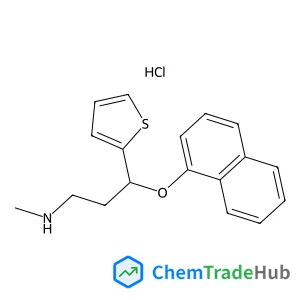
N-Methyl-3-(1-naphthyloxy)-3-(2-thienyl)-1-propanamine hydrochloride (1:1)
CAS Number:
1188266-11-6
Molecular Formula:
C18H20ClNOS
![5'-Fluoro-[2,3'-biindolinylidene]-2',3-dione structure](https://static.chemtradehub.com/structs/251/251903-00-1-9cb1.webp "5'-Fluoro-[2,3'-biindolinylidene]-2',3-dione structure")

![1-oxaspiro[4.4]nonan-6-one structure](https://static.chemtradehub.com/structs/134/134179-01-4-e051.webp "1-oxaspiro[4.4]nonan-6-one structure")
Recommended Suppliers



Disclaimer
This page provides academic journal information for reference and research purposes only. We are not affiliated with any journal publishers and do not handle publication submissions. For publication-related inquiries, please contact the respective journal publishers directly.
If you notice any inaccuracies in the information displayed, please contact us at support@chemtradehub.com. We will promptly review and address your concerns.