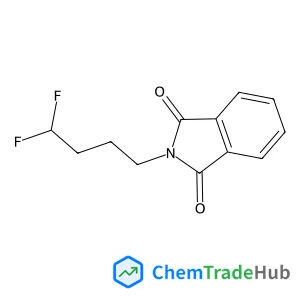
2-(4,4-Difluorobutyl)-1H-isoindole-1,3(2H)-dione
CAS Number:
1265341-14-7
Molecular Formula:
C12H11F2NO2
Sofia Moriam, Muhammad Umer, Nam-Trung Nguyen
DNA methylation is one of the significant epigenetic modifications involved in mammalian development as well as in the initiation and progression of various diseases like cancer. Over the past few decades, an enormous amount of research has been carried out for the quantification of DNA methylation in the mammalian genome. Earlier, most of these methodologies used bisulfite treatment. However, the low conversion, false reading, longer assay time and complex chemical reaction are the common limitations of this method that hinder their application in routine clinical screening. Thus, as an alternative to bisulfite conversion-based DNA methylation detection, numerous bisulfite-free methods have been proposed. In this regard, electrochemical biosensors have gained much attention in recent years for being highly sensitive yet cost-effective, portable, and simple to operate. On the other hand, biosensors with optical readouts enable direct real time detection of biological molecules and are easily adaptable to multiplexing. Incorporation of electrochemical and optical readouts into bisulfite free DNA methylation analysis is paving the way for the translation of this important biomarker into standard patient care. In this review, we provide a critical overview of recent advances in the development of electrochemical and optical readout based bisulfite free DNA methylation assays.
Peter Sebald, Rainer Oswald, Peter Botschwina, Kentarou Kawaguchi
DOI: 10.1039/C3CP44236E
Dominik Oschetzki, Xiaoqing Zeng, Helmut Beckers, Klaus Banert, Guntram Rauhut
DOI: 10.1039/C3CP50268F
Irina V. Chernyshova, Sathish Ponnurangam, Ponisseril Somasundaran
DOI: 10.1039/C3CP44264K
Xiaowei Li, Shunhong Zhang, Qian Wang
DOI: 10.1039/C3CP44660C
Joseph W. DePalma, Andrew J. Horan, Wiley A. Hall IV, Murray V. Johnston
DOI: 10.1039/C3CP44586K
Lijia Liu, Tsun-Kong Sham, Weiqiang Han
DOI: 10.1039/C3CP50498K
T. J. A. Wolf, R. Radloff, P. Lang, A. Stolow, A.-N. Unterreiner
DOI: 10.1039/C3CP44295K
Chuan Shi, Christopher P. O'Grady, Andrew A. Peterson, Heine A. Hansen
DOI: 10.1039/C3CP50645B
ZhenHua Zeng, Mårten E. Björketun, Sune Ebbesen, Mogens B. Mogensen, Jan Rossmeisl
DOI: 10.1039/C3CP51099A
N-(4-Methoxybenzyl)-2-pyridinamine (CAS: 52818-63-0) is increasingly being used ...
When handling Ethyl 4-(2-chlorophenyl)-1,3-thiazole-2-carboxylate, appropriate p...
Diethyldiselane (CAS: 628-39-7) is classified under the Globally Harmonized Syst...
The market for oxocopper (CAS: 12053-18-8) is primarily driven by its use in cat...
The market for 5-{[(2-Methyl-2-propanyl)oxy]carbonyl}-5-azaspiro[2.4]heptane-7-c...
2-(1-Pyrrolidinyl)-4-pyridinamine is a chemical compound with the CAS number 359...
2-(3-Pyridinyl)-1-azabicyclo[2.2.2]octane (CAS: 91556-75-1) is a crystalline sol...
(S)-Alpha-allyl-proline hydrochloride is usually synthesized via a Wittig reacti...
3-Methyl-1,2-oxazole-5-carboxylic acid (CAS: 4857-42-5) is an organic compound w...
Lys-SMCC-DM1 is synthesized via a multi-step process involving the coupling of S...

Analyst publishes analytical and bioanalytical research that reports premier fundamental discoveries and inventions, and the applications of those discoveries, unconfined by traditional discipline barriers.

![N-{15-[(2,5-Dioxo-1-pyrrolidinyl)oxy]-15-oxo-3,6,9,12-tetraoxapentadec-1-yl}-2-(2-propyn-1-yloxy)acetamide structure](https://static.chemtradehub.com/structs/210/2101206-92-0-2eb5.webp "N-{15-[(2,5-Dioxo-1-pyrrolidinyl)oxy]-15-oxo-3,6,9,12-tetraoxapentadec-1-yl}-2-(2-propyn-1-yloxy)acetamide structure")