













Rovibrational states of ClHCl− isotopologues up to high J: a joint theoretical and spectroscopic investigation
Literature Information
Publication Date
2013-03-14
DOI
10.1039/C3CP44236E
Impact Factor
3.676
Authors
Peter Sebald, Rainer Oswald, Peter Botschwina, Kentarou Kawaguchi
View Original
Abstract
Explicitly correlated coupled cluster theory at the CCSD(T*)-F12b level (T. B. Adler, G. Knizia, and H.-J. Werner, J. Chem. Phys., 2007, 127, 221106) and two precise spectroscopic parameters (K. Kawaguchi, J. Chem. Phys., 1988, 88, 4186) were used to construct an accurate near-equilibrium analytical potential energy function (PEF) for the highly anharmonic centrosymmetric hydrogen-bonded complex ClHCl− (Re = 3.1153 Å). From variational calculations with that PEF, a large number of rovibrational energies of different isotopologues up to high values of the rotational quantum number J was obtained. Theory helped with the assignment of lines observed by IR diode laser spectroscopy in the ν1 + ν3 combination band of 35ClH35Cl− and 37ClH35Cl− and enabled us to elucidate rather subtle patterns of rovibrational interactions. Furthermore, transition dipole moments were predicted and analysed as well as unusual isotopic effects.
Related Literature
Autonomous kinetic model identification using optimal experimental design and retrospective data analysis: methane complete oxidation as a case study
Arun Pankajakshan, Solomon Gajere Bawa, Asterios Gavriilidis, Federico Galvanin
2023-06-30
Paper
DOI: 10.1039/D3RE00156C
Exploring effects of polymeric stabiliser molecular weight and concentration on emulsion production via stirred cell membrane emulsification
Mohamed S. Manga, Lucy Higgins, Akshai A. Kumar, Benjamin T. Lobel, David W. York, Olivier J. Cayre
2023-11-07
Paper
DOI: 10.1039/D3PY00948C
Efficient photocatalytic degradation of ultra-high concentration printing and dyeing wastewater using a SiO2/GCN nanocomposite
Jinyuan Zhu, Yingying Zhu, Yifan Zhou, Chaoran Li, Geng Chen, Xinbao Li
2023-08-22
Paper
DOI: 10.1039/D3RE00325F
Orthogonal polymerization of aziridine with cyclic carbonates for constructing amphiphilic block copolymers
Xiao-Hui Guo, Ge-Ge Gu, Tian-Jun Yue, Wei-Min Ren
2023-10-31
Communication
DOI: 10.1039/D3PY01045G
A combined computational and experimental study of metathesis and nucleophile-mediated exchange mechanisms in boronic ester-containing vitrimers
Jacopo Teotonico, Laura Ballester-Bayarri, Marta Ximenis
2023-12-18
Paper
DOI: 10.1039/D3PY01047C
PEGMAs with short and long side chains: what is the effect in the formation of stars and brushes by RAFT polymerization?
Hortensia Maldonado-Textle, Ángel Licea-Claveríe, Enrique Saldívar-Guerra
2023-08-11
Paper
DOI: 10.1039/D3RE00315A
Tailoring molecular weight distribution via polymer degradability
Yeonsu Kim, Cheoljae Kim
2023-12-15
Paper
DOI: 10.1039/D3PY01153D
Enhanced photocatalytic performance of Ag nanoparticle–TiO2−X nanotube arrays obtained by a predischarge–deposition method and calcination in H2/N2
Qihang Liu, Junjun Chen, Lang Zhang, Olim Ruzimuradov, Yichun Liu, Fengxian Li, Caiju Li, Mingjun Wang, Dong Fang, Jianhong Yi
2023-10-27
Paper
DOI: 10.1039/D3RE00344B
You might also like
Compound Q&A
What is the market or research trend for N-(4-Methoxybenzyl)-2-pyridinamine (CAS: 52818-63-0)?
N-(4-Methoxybenzyl)-2-pyridinamine (CAS: 52818-63-0) is increasingly being used ...
52818-63-0N-(4-Methoxybenzyl)-...
Compound Q&A
What precautions should be taken when handling Ethyl 4-(2-chlorophenyl)-1,3-thiazole-2-carboxylate (CAS: 1050507-06-6)?
When handling Ethyl 4-(2-chlorophenyl)-1,3-thiazole-2-carboxylate, appropriate p...
1050507-06-6Ethyl 4-(2-chlorophe...
Compound Q&A
What regulatory guidelines apply to diethyldiselane (CAS: 628-39-7)?
Diethyldiselane (CAS: 628-39-7) is classified under the Globally Harmonized Syst...
628-39-7Diethyldiselane
Compound Q&A
What is the market or research trend for oxocopper (CAS: 12053-18-8)?
The market for oxocopper (CAS: 12053-18-8) is primarily driven by its use in cat...
12053-18-8oxocopper; oxo-(oxoc...
Compound Q&A
What is the market or research trend for 5-{[(2-Methyl-2-propanyl)oxy]carbonyl}-5-azaspiro[2.4]heptane-7-carboxylic acid?
The market for 5-{[(2-Methyl-2-propanyl)oxy]carbonyl}-5-azaspiro[2.4]heptane-7-c...
1268519-54-55-{[(2-Methyl-2-prop...
Compound Q&A
What is 2-(1-Pyrrolidinyl)-4-pyridinamine (CAS: 35981-63-6)?
2-(1-Pyrrolidinyl)-4-pyridinamine is a chemical compound with the CAS number 359...
35981-63-62-(1-Pyrrolidinyl)-4...
Compound Q&A
What are the physical and chemical properties of 2-(3-Pyridinyl)-1-azabicyclo[2.2.2]octane (CAS: 91556-75-1)?
2-(3-Pyridinyl)-1-azabicyclo[2.2.2]octane (CAS: 91556-75-1) is a crystalline sol...
91556-75-12-(3-Pyridinyl)-1-az...
Compound Q&A
How is (S)-Alpha-allyl-proline hydrochloride (CAS: 129704-91-2) typically synthesized?
(S)-Alpha-allyl-proline hydrochloride is usually synthesized via a Wittig reacti...
129704-91-2(S)-Alpha-allyl-prol...
Compound Q&A
What is 3-Methyl-1,2-oxazole-5-carboxylic acid (CAS: 4857-42-5)?
3-Methyl-1,2-oxazole-5-carboxylic acid (CAS: 4857-42-5) is an organic compound w...
4857-42-53-Methyl-1,2-oxazole...
Compound Q&A
How is Lys-SMCC-DM1 (CAS: 1281816-04-3) typically synthesized?
Lys-SMCC-DM1 is synthesized via a multi-step process involving the coupling of S...
1281816-04-3Lys-SMCC-DM1
Source Journal
Physical Chemistry Chemical Physics

CiteScore:
5.5
Self-citation Rate:
10.3%
Articles per Year:
3036
Physical Chemistry Chemical Physics (PCCP) is an international journal co-owned by 19 physical chemistry and physics societies from around the world. This journal publishes original, cutting-edge research in physical chemistry, chemical physics and biophysical chemistry. To be suitable for publication in PCCP, articles must include significant innovation and/or insight into physical chemistry; this is the most important criterion that reviewers and Editors will judge against when evaluating submissions. The journal has a broad scope and welcomes contributions spanning experiment, theory, computation and data science. Topical coverage includes spectroscopy, dynamics, kinetics, statistical mechanics, thermodynamics, electrochemistry, catalysis, surface science, quantum mechanics, quantum computing and machine learning. Interdisciplinary research areas such as polymers and soft matter, materials, nanoscience, energy, surfaces/interfaces, and biophysical chemistry are welcomed if they demonstrate significant innovation and/or insight into physical chemistry. Joined experimental/theoretical studies are particularly appreciated when complementary and based on up-to-date approaches.
Recommended Compounds
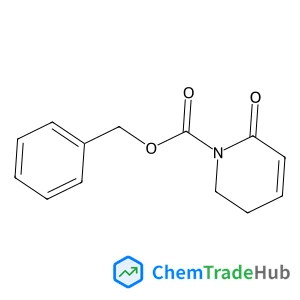
Benzyl 6-oxo-3,6-dihydro-1(2H)-pyridinecarboxylate
CAS Number:
725746-35-0
Molecular Formula:
C13H13NO3
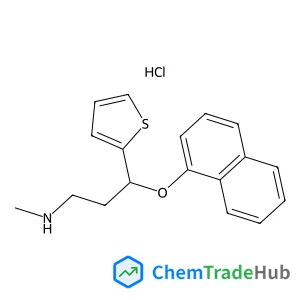
N-Methyl-3-(1-naphthyloxy)-3-(2-thienyl)-1-propanamine hydrochloride (1:1)
CAS Number:
1188266-11-6
Molecular Formula:
C18H20ClNOS
Recommended Suppliers




Disclaimer
This page provides academic journal information for reference and research purposes only. We are not affiliated with any journal publishers and do not handle publication submissions. For publication-related inquiries, please contact the respective journal publishers directly.
If you notice any inaccuracies in the information displayed, please contact us at support@chemtradehub.com. We will promptly review and address your concerns.