













Azidoacetylene – interpretation of gas phase infrared spectra based on high-level vibrational configuration interaction calculations
Literature Information
Publication Date
2013-03-14
DOI
10.1039/C3CP50268F
Impact Factor
3.676
Authors
Dominik Oschetzki, Xiaoqing Zeng, Helmut Beckers, Klaus Banert, Guntram Rauhut
View Original
Abstract
Azidoacetylene is a highly explosive substance, which has been synthesized and characterized for the first time quite recently [Banert et al., Angew. Chem., Int. Ed., 2012, 51, 7515]. As outlined in this work, the vibrational spectrum of azidoacetylene is dominated by strong couplings. For that reason, we have studied the vibrational spectrum of the title compound by gas phase measurements and high-level vibrational structure calculations beyond the harmonic approximation. Based on the interplay of theory and experiment, we were able to identify all fundamentals, strong Fermi resonances and intense overtones, which contribute to the spectrum.
Recommended Journals
Related Literature
Comment on “Lewis acid-surfactant complex catalysed polymerisation in aqueous dispersed media: cationic or radical polymerisation?” by A. Destephen, L. Lezama and N. Ballard, Polym. Chem., 2020, 11, 5757
François Ganachaud
2024-01-03
Comment
DOI: 10.1039/D3PY00661A
PEGMAs with short and long side chains: what is the effect in the formation of stars and brushes by RAFT polymerization?
Hortensia Maldonado-Textle, Ángel Licea-Claveríe, Enrique Saldívar-Guerra
2023-08-11
Paper
DOI: 10.1039/D3RE00315A
Responsive CO2 capture: predictive multi-objective optimisation for managing intermittent flue gas and renewable energy supply
Oliver J. Fisher, Lei Xing, Xingjian Tian, Xin Yee Tai, Jin Xuan
2023-12-22
Paper
DOI: 10.1039/D3RE00544E
Batch and continuous flow mechanochemical synthesis of organic compounds including APIs
2023-09-05
Review Article
DOI: 10.1039/D2RE00521B
Tracking sodium cobaltate formation pathways and its CO2 capture dynamics in real time with synchrotron X-ray diffraction
Federico Hector Cova, Maria Valeria Blanco
2023-11-02
Paper
DOI: 10.1039/D3RE00459G
Oxygen-doped Sn17Sb6S29 bimetal oxysulfide catalysts for efficient reduction of organic pollutants and hexavalent chromium in the dark
Ting Huang, Ping Li, Qinhan Wu, Adugna Boke Abdeta, Dong-Hau Kuo, Hanya Zhang, Binghong Wu, Mengistu Tadesse Mosisa, Jinguo Lin, Xiaoyun Chen, Xueshen Liu
2023-11-03
Paper
DOI: 10.1039/D3RE00339F
Flow synthesis of conjugated polymers: exploring the effects of solvent and catalyst on molecular weight
Jin Woo Jeon, Ye-Jin Hwang
2023-11-08
Paper
DOI: 10.1039/D3PY00917C
A fast and efficient way of obtaining the average molecular weight of block copolymers via DOSY
Manfred Wagner, Christine Rosenauer, Jinhuo Dai, Priya Subramanian, Alasdair McKay, Jasper J. Michels, Tanja Junkers
2023-10-23
Paper
DOI: 10.1039/D3PY01075A
Selective dye adsorption by pH modulation on chemically modified nanopolyaniline by N-grafting of maleic acid
Sai Sushree Rath, Nehapadma Mohanty, Braja N. Patra
2023-11-07
Paper
DOI: 10.1039/D3PY00968H
Synthesis and charge-transport properties of novel π-conjugated polymers incorporating core-extended naphtho[2,1-b:3,4-b′]dithiophene diimides
Lingli Zhao, Yanyan Cao, Hanwen Qin, Xi He, Zhiyuan Zhao, Yunlong Guo, Huajie Chen
2023-11-28
Paper
DOI: 10.1039/D3PY01186K
You might also like
Compound Q&A
What is the market or research trend for N-(4-Methoxybenzyl)-2-pyridinamine (CAS: 52818-63-0)?
N-(4-Methoxybenzyl)-2-pyridinamine (CAS: 52818-63-0) is increasingly being used ...
52818-63-0N-(4-Methoxybenzyl)-...
Compound Q&A
What precautions should be taken when handling Ethyl 4-(2-chlorophenyl)-1,3-thiazole-2-carboxylate (CAS: 1050507-06-6)?
When handling Ethyl 4-(2-chlorophenyl)-1,3-thiazole-2-carboxylate, appropriate p...
1050507-06-6Ethyl 4-(2-chlorophe...
Compound Q&A
What regulatory guidelines apply to diethyldiselane (CAS: 628-39-7)?
Diethyldiselane (CAS: 628-39-7) is classified under the Globally Harmonized Syst...
628-39-7Diethyldiselane
Compound Q&A
What is the market or research trend for oxocopper (CAS: 12053-18-8)?
The market for oxocopper (CAS: 12053-18-8) is primarily driven by its use in cat...
12053-18-8oxocopper; oxo-(oxoc...
Compound Q&A
What is the market or research trend for 5-{[(2-Methyl-2-propanyl)oxy]carbonyl}-5-azaspiro[2.4]heptane-7-carboxylic acid?
The market for 5-{[(2-Methyl-2-propanyl)oxy]carbonyl}-5-azaspiro[2.4]heptane-7-c...
1268519-54-55-{[(2-Methyl-2-prop...
Compound Q&A
What is 2-(1-Pyrrolidinyl)-4-pyridinamine (CAS: 35981-63-6)?
2-(1-Pyrrolidinyl)-4-pyridinamine is a chemical compound with the CAS number 359...
35981-63-62-(1-Pyrrolidinyl)-4...
Compound Q&A
What are the physical and chemical properties of 2-(3-Pyridinyl)-1-azabicyclo[2.2.2]octane (CAS: 91556-75-1)?
2-(3-Pyridinyl)-1-azabicyclo[2.2.2]octane (CAS: 91556-75-1) is a crystalline sol...
91556-75-12-(3-Pyridinyl)-1-az...
Compound Q&A
How is (S)-Alpha-allyl-proline hydrochloride (CAS: 129704-91-2) typically synthesized?
(S)-Alpha-allyl-proline hydrochloride is usually synthesized via a Wittig reacti...
129704-91-2(S)-Alpha-allyl-prol...
Compound Q&A
What is 3-Methyl-1,2-oxazole-5-carboxylic acid (CAS: 4857-42-5)?
3-Methyl-1,2-oxazole-5-carboxylic acid (CAS: 4857-42-5) is an organic compound w...
4857-42-53-Methyl-1,2-oxazole...
Compound Q&A
How is Lys-SMCC-DM1 (CAS: 1281816-04-3) typically synthesized?
Lys-SMCC-DM1 is synthesized via a multi-step process involving the coupling of S...
1281816-04-3Lys-SMCC-DM1
Source Journal
Physical Chemistry Chemical Physics

CiteScore:
5.5
Self-citation Rate:
10.3%
Articles per Year:
3036
Physical Chemistry Chemical Physics (PCCP) is an international journal co-owned by 19 physical chemistry and physics societies from around the world. This journal publishes original, cutting-edge research in physical chemistry, chemical physics and biophysical chemistry. To be suitable for publication in PCCP, articles must include significant innovation and/or insight into physical chemistry; this is the most important criterion that reviewers and Editors will judge against when evaluating submissions. The journal has a broad scope and welcomes contributions spanning experiment, theory, computation and data science. Topical coverage includes spectroscopy, dynamics, kinetics, statistical mechanics, thermodynamics, electrochemistry, catalysis, surface science, quantum mechanics, quantum computing and machine learning. Interdisciplinary research areas such as polymers and soft matter, materials, nanoscience, energy, surfaces/interfaces, and biophysical chemistry are welcomed if they demonstrate significant innovation and/or insight into physical chemistry. Joined experimental/theoretical studies are particularly appreciated when complementary and based on up-to-date approaches.
Recommended Compounds
![1-oxaspiro[4.4]nonan-6-one structure](https://static.chemtradehub.com/structs/134/134179-01-4-e051.webp "1-oxaspiro[4.4]nonan-6-one structure")
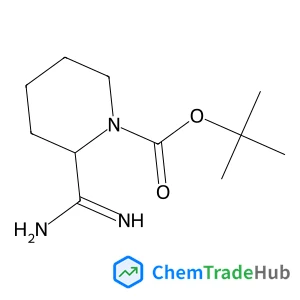
2-Methyl-2-propanyl 2-carbamimidoyl-1-piperidinecarboxylate
CAS Number:
1258640-98-0
Molecular Formula:
C11H21N3O2

Recommended Suppliers






Disclaimer
This page provides academic journal information for reference and research purposes only. We are not affiliated with any journal publishers and do not handle publication submissions. For publication-related inquiries, please contact the respective journal publishers directly.
If you notice any inaccuracies in the information displayed, please contact us at support@chemtradehub.com. We will promptly review and address your concerns.