


Sequence-selective recognition of cationic amphipathic tripeptides with similar structures in aqueous solutions by cucurbit[7]uril
Literature Information
Publication Date
2021-05-28
DOI
10.1039/D1CP01326B
Impact Factor
3.676
Authors
Fenfen Ma, Xiaoyan Zheng, Zesheng Li
View Original
Abstract
Sequence-selective recognition of cationic amphipathic peptides by synthetic receptors is significant to biological applications, but it is still a great challenging task. Here we first study the binding characteristics of receptor cucurbit[7]uril (CB[7]) to the smallest aromatic tripeptides X1GG (X1 = tryptophan (W), phenylalanine (F), and tyrosine (Y)) and basic tripeptides X2GG (X2 = arginine (R), lysine (K), and histidine (H)) by molecular dynamics simulations. The study indicates that the sidechains of aromatic X1 residues can be encapsulated into the CB[7] cavity, while the sidechains of basic X2 residues prefer to locate at the CB[7] portal. Based on that, we consider hydrophobic aromatic residues as the N-terminus, the smallest glycine (G) as the 2nd-residue and basic residues as the C-terminus, and design nine tripeptides X1GX2 (X1 = F, Y, W and X2 = H, K, R). We found that there is a great influence of the C-terminal basic residue of X1GX2 on binding with CB[7] due to the introduction of a new binding site between CB[7] and the sidechain of the C-terminal residue. Interestingly, CB[7] can differentiate WGR and WGK with similar structures efficiently because of their eight orders of magnitude difference in the association constant (Ka). Besides, for WGR, YGR, and YGK with a nanomolar binding affinity (Ka > 109 M−1), on reversing the sequence order of the 2nd-residue and 3rd-residue, their Ka reduces by about at least 1000-fold, implying the sequence dependence of CB[7] on recognizing these tripeptides. These results predict the potential applications of CB[7] in recognizing cationic amphipathic peptides.
Recommended Journals

Science Progress

Proceedings of the National Academy of Sciences of the United States of America

Planta Medica

European Journal of Wood and Wood Products

Journal of Heterocyclic Chemistry

Russian Chemical Reviews

Organic Preparations and Procedures International

Molecular Pharmacology

Helvetica Chimica Acta

Kinetics and Catalysis
Related Literature
A computational study of H2 dissociation on silver surfaces: The effect of oxygen in the added row structure of Ag(110)‡
Amjad B. Mohammad, Kok Hwa Lim, Konstantin M. Neyman, Notker Rösch
2007-01-19
Paper
DOI: 10.1039/B616675J
Consequences of chain networks on thermodynamic, dielectric and structural properties for liquid water
Steven W. Rick
2006-11-28
Paper
DOI: 10.1039/B614742A
Dissociative electron attachment to abasic DNA
Sylwia Ptasińska, Léon Sanche
2007-02-12
Paper
DOI: 10.1039/B616619A
Theoretical and experimental determination of the electronic structure of V2O5, reduced V2O5−x and sodium intercalated NaV2O5
Stefan Laubach, Peter C. Schmidt, Andreas Thißen, Francisco Javier Fernandez-Madrigal, Qi-Hui Wu, Wolfram Jaegermann, Matthias Klemm, Siegfried Horn
2007-03-21
Paper
DOI: 10.1039/B612489E
Rotational spectrum of a chiral α-hydroxyester: conformation stability and internal rotation barrier heights of methyl lactate‡
Nicole Borho, Yunjie Xu
2007-02-02
Paper
DOI: 10.1039/B608561J
Isothermal crystallization kinetics of in situ photo and thermo aged poly(ethylene oxide) using photoDSC
Frédéric Fraïsse, Jean-Marie Nedelec, Jean Pierre E. Grolier
2007-02-16
Paper
DOI: 10.1039/B618701C
Determination of the chiral indices (n,m) of carbon nanotubes by electron diffraction
2006-11-22
Invited Article
DOI: 10.1039/B614121H
You might also like
Compound Q&A
What is the market or research trend for N-(4-Methoxybenzyl)-2-pyridinamine (CAS: 52818-63-0)?
N-(4-Methoxybenzyl)-2-pyridinamine (CAS: 52818-63-0) is increasingly being used ...
52818-63-0N-(4-Methoxybenzyl)-...
Compound Q&A
What precautions should be taken when handling Ethyl 4-(2-chlorophenyl)-1,3-thiazole-2-carboxylate (CAS: 1050507-06-6)?
When handling Ethyl 4-(2-chlorophenyl)-1,3-thiazole-2-carboxylate, appropriate p...
1050507-06-6Ethyl 4-(2-chlorophe...
Compound Q&A
What regulatory guidelines apply to diethyldiselane (CAS: 628-39-7)?
Diethyldiselane (CAS: 628-39-7) is classified under the Globally Harmonized Syst...
628-39-7Diethyldiselane
Compound Q&A
What is the market or research trend for oxocopper (CAS: 12053-18-8)?
The market for oxocopper (CAS: 12053-18-8) is primarily driven by its use in cat...
12053-18-8oxocopper; oxo-(oxoc...
Compound Q&A
What is the market or research trend for 5-{[(2-Methyl-2-propanyl)oxy]carbonyl}-5-azaspiro[2.4]heptane-7-carboxylic acid?
The market for 5-{[(2-Methyl-2-propanyl)oxy]carbonyl}-5-azaspiro[2.4]heptane-7-c...
1268519-54-55-{[(2-Methyl-2-prop...
Compound Q&A
What is 2-(1-Pyrrolidinyl)-4-pyridinamine (CAS: 35981-63-6)?
2-(1-Pyrrolidinyl)-4-pyridinamine is a chemical compound with the CAS number 359...
35981-63-62-(1-Pyrrolidinyl)-4...
Compound Q&A
What are the physical and chemical properties of 2-(3-Pyridinyl)-1-azabicyclo[2.2.2]octane (CAS: 91556-75-1)?
2-(3-Pyridinyl)-1-azabicyclo[2.2.2]octane (CAS: 91556-75-1) is a crystalline sol...
91556-75-12-(3-Pyridinyl)-1-az...
Compound Q&A
How is (S)-Alpha-allyl-proline hydrochloride (CAS: 129704-91-2) typically synthesized?
(S)-Alpha-allyl-proline hydrochloride is usually synthesized via a Wittig reacti...
129704-91-2(S)-Alpha-allyl-prol...
Compound Q&A
What is 3-Methyl-1,2-oxazole-5-carboxylic acid (CAS: 4857-42-5)?
3-Methyl-1,2-oxazole-5-carboxylic acid (CAS: 4857-42-5) is an organic compound w...
4857-42-53-Methyl-1,2-oxazole...
Compound Q&A
How is Lys-SMCC-DM1 (CAS: 1281816-04-3) typically synthesized?
Lys-SMCC-DM1 is synthesized via a multi-step process involving the coupling of S...
1281816-04-3Lys-SMCC-DM1
Source Journal
Physical Chemistry Chemical Physics

CiteScore:
5.5
Self-citation Rate:
10.3%
Articles per Year:
3036
Physical Chemistry Chemical Physics (PCCP) is an international journal co-owned by 19 physical chemistry and physics societies from around the world. This journal publishes original, cutting-edge research in physical chemistry, chemical physics and biophysical chemistry. To be suitable for publication in PCCP, articles must include significant innovation and/or insight into physical chemistry; this is the most important criterion that reviewers and Editors will judge against when evaluating submissions. The journal has a broad scope and welcomes contributions spanning experiment, theory, computation and data science. Topical coverage includes spectroscopy, dynamics, kinetics, statistical mechanics, thermodynamics, electrochemistry, catalysis, surface science, quantum mechanics, quantum computing and machine learning. Interdisciplinary research areas such as polymers and soft matter, materials, nanoscience, energy, surfaces/interfaces, and biophysical chemistry are welcomed if they demonstrate significant innovation and/or insight into physical chemistry. Joined experimental/theoretical studies are particularly appreciated when complementary and based on up-to-date approaches.
Recommended Compounds
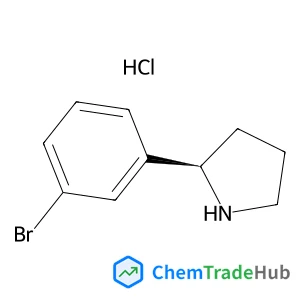
(2R)-2-(3-Bromophenyl)pyrrolidine hydrochloride (1:1)
CAS Number:
1391550-13-2
Molecular Formula:
C10H13BrClN
![1-(1-Benzyl-1,2,3,6-tetrahydropyridin-4-yl)-1H-benzo[d]imidazol-2(3H)-one structure](https://static.chemtradehub.com/structs/603/60373-71-9-7dfb.webp "1-(1-Benzyl-1,2,3,6-tetrahydropyridin-4-yl)-1H-benzo[d]imidazol-2(3H)-one structure")
1-(1-Benzyl-1,2,3,6-tetrahydropyridin-4-yl)-1H-benzo[d]imidazol-2(3H)-one
CAS Number:
60373-71-9
Molecular Formula:
C19H19N3O
Recommended Suppliers






Disclaimer
This page provides academic journal information for reference and research purposes only. We are not affiliated with any journal publishers and do not handle publication submissions. For publication-related inquiries, please contact the respective journal publishers directly.
If you notice any inaccuracies in the information displayed, please contact us at support@chemtradehub.com. We will promptly review and address your concerns.