












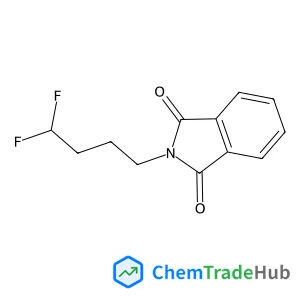
2-(4,4-Difluorobutyl)-1H-isoindole-1,3(2H)-dione
CAS Number:
1265341-14-7
Molecular Formula:
C12H11F2NO2
Huixue Li, Xiaofeng Wang, Kun Yuan, Lingling Lv, Zhifeng Li
In this paper, we employed first-principles methods and the QM/MM technique to study the thermally activated delayed fluorescence (TADF) phenomenon of a near-infrared molecule (PIPAQ) in vacuum, solution, and the aggregation state. Our calculated results show that (1) the cluster can decrease the energy gap between the first singlet excited state (S1) and the first triplet state (T1) compared with the monomer, furthermore, the T1 state and S1 state in the cluster are energetically closer to each other, which implies that the energy gap is smaller in comparison with that in solution and can promote the intersystem crossing (ISC) process due to the surrounding effect; (2) the optimally tuned range-separated functional is applicable to simulation of excited states and the outcomes are in good agreement with experimental values; (3) the reorganization energies associated with ISC and the reverse intersystem crossing (RISC) processes between the S1 and T1 states are sensitive to the calculated methods and the environments, and thus the following calculated ISC and RISC rates vary dramatically according to different reorganization energies; (4) all radiative and nonradiative rates are insensitive to temperature, but sensitive to environments, all the radiative rates increase in the cluster while the nonradiative rates decrease, which enhances the fluorescence quantum efficiency and agrees with the observed value. The above results demonstrate that the surrounding effects are very important for modulating the photophysical properties of the PIPAQ compound. Finally, this studied conclusion can give a helpful insight into the TADF mechanism for the title compounds, by which novel TADF materials with excellent performance could be rationally designed.
Sylvian Cadars, Anne Lesage, Michel Trierweiler, Laurent Heux, Lyndon Emsley
DOI: 10.1039/B611096G
Anita Dawes, Adam Hunniford, Philip D. Holtom, Robin J. Mukerji, Robert W. McCullough, Nigel J. Mason
DOI: 10.1039/B618026D
Daniel Friebel, Christian Schlaup, Peter Broekmann, Klaus Wandelt
DOI: 10.1039/B616586A
Ying-Zhong Ma, Sergei M. Bachilo, Graham R. Fleming
DOI: 10.1039/B612207H
Mathieu Digne, Pascal Raybaud, Philippe Sautet, Denis Guillaume, Hervé Toulhoat
DOI: 10.1039/B700541E
Amjad B. Mohammad, Kok Hwa Lim, Konstantin M. Neyman, Notker Rösch
DOI: 10.1039/B616675J
Steven W. Rick
DOI: 10.1039/B614742A
N-(4-Methoxybenzyl)-2-pyridinamine (CAS: 52818-63-0) is increasingly being used ...
When handling Ethyl 4-(2-chlorophenyl)-1,3-thiazole-2-carboxylate, appropriate p...
Diethyldiselane (CAS: 628-39-7) is classified under the Globally Harmonized Syst...
The market for oxocopper (CAS: 12053-18-8) is primarily driven by its use in cat...
The market for 5-{[(2-Methyl-2-propanyl)oxy]carbonyl}-5-azaspiro[2.4]heptane-7-c...
2-(1-Pyrrolidinyl)-4-pyridinamine is a chemical compound with the CAS number 359...
2-(3-Pyridinyl)-1-azabicyclo[2.2.2]octane (CAS: 91556-75-1) is a crystalline sol...
(S)-Alpha-allyl-proline hydrochloride is usually synthesized via a Wittig reacti...
3-Methyl-1,2-oxazole-5-carboxylic acid (CAS: 4857-42-5) is an organic compound w...
Lys-SMCC-DM1 is synthesized via a multi-step process involving the coupling of S...

Physical Chemistry Chemical Physics (PCCP) is an international journal co-owned by 19 physical chemistry and physics societies from around the world. This journal publishes original, cutting-edge research in physical chemistry, chemical physics and biophysical chemistry. To be suitable for publication in PCCP, articles must include significant innovation and/or insight into physical chemistry; this is the most important criterion that reviewers and Editors will judge against when evaluating submissions. The journal has a broad scope and welcomes contributions spanning experiment, theory, computation and data science. Topical coverage includes spectroscopy, dynamics, kinetics, statistical mechanics, thermodynamics, electrochemistry, catalysis, surface science, quantum mechanics, quantum computing and machine learning. Interdisciplinary research areas such as polymers and soft matter, materials, nanoscience, energy, surfaces/interfaces, and biophysical chemistry are welcomed if they demonstrate significant innovation and/or insight into physical chemistry. Joined experimental/theoretical studies are particularly appreciated when complementary and based on up-to-date approaches.

![1,10-bis(3,5-dimethylphenyl)-12-hydroxy-4,5,6,7-tetrahydroiindeno[7,1-de:1',7'-fg][1,3,2]dioxaphosphocine 12-oxide structure](https://static.chemtradehub.com/structs/141/1412439-82-7-b9a9.webp "1,10-bis(3,5-dimethylphenyl)-12-hydroxy-4,5,6,7-tetrahydroiindeno[7,1-de:1',7'-fg][1,3,2]dioxaphosphocine 12-oxide structure")
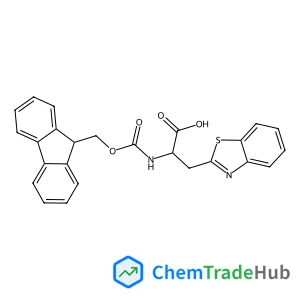
![1-(1-Benzyl-1,2,3,6-tetrahydropyridin-4-yl)-1H-benzo[d]imidazol-2(3H)-one structure](https://static.chemtradehub.com/structs/603/60373-71-9-7dfb.webp "1-(1-Benzyl-1,2,3,6-tetrahydropyridin-4-yl)-1H-benzo[d]imidazol-2(3H)-one structure")






