













Imaging intramolecular hydrogen migration with time- and momentum-resolved photoelectron diffraction
Literature Information
Publication Date
2021-07-30
DOI
10.1039/D1CP02055B
Impact Factor
3.676
Authors
Fukiko Ota, Shigeru Abe, Keisuke Hatada, Kiyoshi Ueda
View Original
Abstract
Imaging ultrafast hydrogen migration with few- or sub-femtosecond time resolution is a challenge for ultrafast spectroscopy due to the lightness and small scattering cross-section of the moving hydrogen atom. Here we propose time- and momentum-resolved photoelectron diffraction (TMR-PED) as a way to overcome limitations of existing methodologies and illustrate its performance in the ethanol molecule. By combining different theoretical methods, namely molecular dynamics and electron scattering methods, we show that TMR-PED, along with a judicious choice of the reference frame for multi-coincidence detection, allows for direct imaging of single and double hydrogen migration in doubly-charged ethanol with both few-fs and Å resolutions, all the way from its birth to the very end. It also provides hints of proton extraction following H2 roaming. The signature of hydrogen dynamics shows up in polarization-averaged molecular-frame photoelectron angular distributions (PA-MFPADs) as moving features that allow for a straightforward visualization in space.
Related Literature
Modelling of morphology and proton transport in PFSA membranes
James A. Elliott, Stephen J. Paddison
2007-03-30
Invited Article
DOI: 10.1039/B701234A
Effects of surface site distribution and dielectric discontinuity on the charging behavior of nanoparticles. A grand canonical Monte Carlo study
Marianne Seijo, Serge Ulrich, Montserrat Filella, Jacques Buffle, Serge Stoll
2006-11-14
Paper
DOI: 10.1039/B612118G
Density functional theory calculations for the hydrogen evolution reaction in an electrochemical double layer on the Pt(111) electrode
Gustav S. Karlberg, Jan Rossmeisl, Jeff Greeley, Hannes Jónsson, Jens K. Nørskov
2007-05-30
Paper
DOI: 10.1039/B700099E
Prospects of transition interface sampling simulations for the theoretical study of zeolite synthesis
Titus S. Van Erp, Tom P. Caremans, Christine E. A. Kirschhock, Johan A. Martens
2007-01-25
Invited Article
DOI: 10.1039/B614980D
Charge distribution in metal organic framework materials: transferability to a preliminary molecular simulation study of the CO2 adsorption in the MIL-53 (Al) system
N. A. Ramsahye, G. Maurin, S. Bourrelly, P. Llewellyn, T Loiseau, G. Ferey
2006-11-15
Paper
DOI: 10.1039/B613378A
Theoretical analysis of the potential distribution and transportation behavior of the ordered alkyl monolayer–silicon junction
Jianwei Zhao, Zhuangqun Huang, Xing Yin, Dongxu Wang, Kohei Uosaki
2006-11-14
Paper
DOI: 10.1039/B612818A
You might also like
Compound Q&A
What is the market or research trend for N-(4-Methoxybenzyl)-2-pyridinamine (CAS: 52818-63-0)?
N-(4-Methoxybenzyl)-2-pyridinamine (CAS: 52818-63-0) is increasingly being used ...
52818-63-0N-(4-Methoxybenzyl)-...
Compound Q&A
What precautions should be taken when handling Ethyl 4-(2-chlorophenyl)-1,3-thiazole-2-carboxylate (CAS: 1050507-06-6)?
When handling Ethyl 4-(2-chlorophenyl)-1,3-thiazole-2-carboxylate, appropriate p...
1050507-06-6Ethyl 4-(2-chlorophe...
Compound Q&A
What regulatory guidelines apply to diethyldiselane (CAS: 628-39-7)?
Diethyldiselane (CAS: 628-39-7) is classified under the Globally Harmonized Syst...
628-39-7Diethyldiselane
Compound Q&A
What is the market or research trend for oxocopper (CAS: 12053-18-8)?
The market for oxocopper (CAS: 12053-18-8) is primarily driven by its use in cat...
12053-18-8oxocopper; oxo-(oxoc...
Compound Q&A
What is the market or research trend for 5-{[(2-Methyl-2-propanyl)oxy]carbonyl}-5-azaspiro[2.4]heptane-7-carboxylic acid?
The market for 5-{[(2-Methyl-2-propanyl)oxy]carbonyl}-5-azaspiro[2.4]heptane-7-c...
1268519-54-55-{[(2-Methyl-2-prop...
Compound Q&A
What is 2-(1-Pyrrolidinyl)-4-pyridinamine (CAS: 35981-63-6)?
2-(1-Pyrrolidinyl)-4-pyridinamine is a chemical compound with the CAS number 359...
35981-63-62-(1-Pyrrolidinyl)-4...
Compound Q&A
What are the physical and chemical properties of 2-(3-Pyridinyl)-1-azabicyclo[2.2.2]octane (CAS: 91556-75-1)?
2-(3-Pyridinyl)-1-azabicyclo[2.2.2]octane (CAS: 91556-75-1) is a crystalline sol...
91556-75-12-(3-Pyridinyl)-1-az...
Compound Q&A
How is (S)-Alpha-allyl-proline hydrochloride (CAS: 129704-91-2) typically synthesized?
(S)-Alpha-allyl-proline hydrochloride is usually synthesized via a Wittig reacti...
129704-91-2(S)-Alpha-allyl-prol...
Compound Q&A
What is 3-Methyl-1,2-oxazole-5-carboxylic acid (CAS: 4857-42-5)?
3-Methyl-1,2-oxazole-5-carboxylic acid (CAS: 4857-42-5) is an organic compound w...
4857-42-53-Methyl-1,2-oxazole...
Compound Q&A
How is Lys-SMCC-DM1 (CAS: 1281816-04-3) typically synthesized?
Lys-SMCC-DM1 is synthesized via a multi-step process involving the coupling of S...
1281816-04-3Lys-SMCC-DM1
Source Journal
Physical Chemistry Chemical Physics

CiteScore:
5.5
Self-citation Rate:
10.3%
Articles per Year:
3036
Physical Chemistry Chemical Physics (PCCP) is an international journal co-owned by 19 physical chemistry and physics societies from around the world. This journal publishes original, cutting-edge research in physical chemistry, chemical physics and biophysical chemistry. To be suitable for publication in PCCP, articles must include significant innovation and/or insight into physical chemistry; this is the most important criterion that reviewers and Editors will judge against when evaluating submissions. The journal has a broad scope and welcomes contributions spanning experiment, theory, computation and data science. Topical coverage includes spectroscopy, dynamics, kinetics, statistical mechanics, thermodynamics, electrochemistry, catalysis, surface science, quantum mechanics, quantum computing and machine learning. Interdisciplinary research areas such as polymers and soft matter, materials, nanoscience, energy, surfaces/interfaces, and biophysical chemistry are welcomed if they demonstrate significant innovation and/or insight into physical chemistry. Joined experimental/theoretical studies are particularly appreciated when complementary and based on up-to-date approaches.
Recommended Compounds
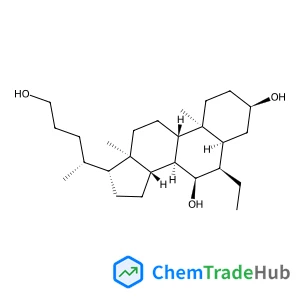
(3alpha,5beta,6alpha,7alpha)-6-Ethylcholane-3,7,24-triol
CAS Number:
1537866-49-1
Molecular Formula:
C26H46O3
![1-{3-[4-Amino-3-(4-phenoxyphenyl)-1H-pyrazolo[3,4-d]pyrimidin-1-yl]-1-piperidinyl}-2,3-dihydroxy-1-propanone structure](https://static.chemtradehub.com/structs/122/1226872-27-0-e037.webp "1-{3-[4-Amino-3-(4-phenoxyphenyl)-1H-pyrazolo[3,4-d]pyrimidin-1-yl]-1-piperidinyl}-2,3-dihydroxy-1-propanone structure")
1-{3-[4-Amino-3-(4-phenoxyphenyl)-1H-pyrazolo[3,4-d]pyrimidin-1-yl]-1-piperidinyl}-2,3-dihydroxy-1-propanone
CAS Number:
1226872-27-0
Molecular Formula:
C25H26N6O4
![1-[6-(1H-Imidazol-1-yl)-3-pyridinyl]methanamine structure](https://static.chemtradehub.com/structs/914/914637-08-4-8825.webp "1-[6-(1H-Imidazol-1-yl)-3-pyridinyl]methanamine structure")
Recommended Suppliers






Disclaimer
This page provides academic journal information for reference and research purposes only. We are not affiliated with any journal publishers and do not handle publication submissions. For publication-related inquiries, please contact the respective journal publishers directly.
If you notice any inaccuracies in the information displayed, please contact us at support@chemtradehub.com. We will promptly review and address your concerns.