












![1-oxaspiro[4.4]nonan-6-one structure](https://static.chemtradehub.com/structs/134/134179-01-4-e051.webp "1-oxaspiro[4.4]nonan-6-one structure")
Rapid and sensitive detection of viral nucleic acids using silicon microchips
Literature Information
Publication Date
2018-05-01
DOI
10.1039/C8AN00552D
Impact Factor
4.616
Authors
Laura Powell, Rodrigo Sergio Wiederkehr, Paige Damascus, Maarten Fauvart, Federico Buja, Tim Stakenborg, Stuart C. Ray, Paolo Fiorini, William O. Osburn
View Original
Abstract
Clinical laboratory-based nucleic acid amplification tests (NAT) play an important role in diagnosing viral infections. However, laboratory infrastructure requirements and their failure to diagnose at the point-of-need (PON) limit their clinical utility in both resource-rich and -limited clinical settings. The development of fast and sensitive PON viral NAT may overcome these limitations. The scalability of silicon microchip manufacturing combined with advances in silicon microfluidics present an opportunity for development of rapid and sensitive PON NAT on silicon microchips. In the present study, we present rapid and sensitive NAT for a number of RNA and DNA viruses on the same silicon microchip platform. We first developed sensitive (4 copies per reaction) one-step RT-qPCR and qPCR assays detecting HCV, HIV, Zika, HPV 16, and HPV 18 on a benchtop real-time PCR instrument. A silicon microchip was designed with an etched 1.3 μL meandering microreactor, integrated aluminum heaters, thermal insulation trenches and microfluidic channels; this chip was used in all on-chip experiments. Melting curve analysis confirmed precise and localized heating of the microreactor. Following minimal optimization of reaction conditions, the bench-scale assays were successfully transferred to 1.3 μL silicon microreactors with reaction times of 25 min with no reduction in sensitivity, reproducibility, or reaction efficiencies. Taken together, these results demonstrate that rapid and sensitive detection of multiple viruses on the same silicon microchip platform is feasible. Further development of this technology, coupled with silicon microchip-based nucleic acid extraction solutions, could potentially shift viral nucleic acid detection and diagnosis from centralized clinical laboratories to the PON.
Related Literature
Gaseous cyclodextrin-closo-dodecaborate complexes χCD·B12X122− (χ = α, β, and γ; X = F, Cl, Br, and I): electronic structures and intramolecular interactions
Yanrong Jiang, Qinqin Yuan, Wenjin Cao, Marc C. Nierstenhöfer, Zhipeng Li, Yan Yang, Cheng Zhong, Carsten Jenne, Xue-Bin Wang
2021-04-26
Paper
DOI: 10.1039/D1CP01131F
QM calculations predict the energetics and infrared spectra of transient glutamine isomers in LOV photoreceptors
Prokopis C. Andrikopoulos, Aditya S. Chaudhari, Yingliang Liu, Patrick E. Konold, John T. M. Kennis, Bohdan Schneider, Gustavo Fuertes
2021-06-18
Paper
DOI: 10.1039/D1CP00447F
Experimental and DFT studies on oxygen release and migration mechanisms of LaAl-type perovskites as catalyst supports in biomass-to-H2 conversion
Tao Deng, Yujie Zheng, Changlei Qin, Zhiliang Ou, Hongqiang Xia, Zhonghui Zhang
2021-05-19
Paper
DOI: 10.1039/D1CP01372F
Prediction of the standard potentials for one-electron oxidation of N,N,N′,N′ tetrasubstituted p-phenylenediamines by calculation
Cecilie L. Andersen, Evanildo G. Lacerda, Jr, Jørn B. Christensen, Stephan P. A. Sauer, Ole Hammerich
2021-09-02
Paper
DOI: 10.1039/D1CP02315B
Mode-specific dynamics in multichannel reaction NH+ + H2
Weiliang Shi, Kun Wang, Ping Zhang, Le Yu, Anyang Li
2021-08-20
Paper
DOI: 10.1039/D1CP02603H
The energy level alignment of the ferrocene–EGaIn interface studied with photoelectron spectroscopy
Senthil Kumar Karuppannan, Ayelet Vilan
2021-05-26
Paper
DOI: 10.1039/D1CP01690C
Fabrication of high quality electrochemical SERS (EC-SERS) substrates using physical vapour deposition
Carolyn G. Farling, Mary C. Stackaruk, Cory C. Pye, Christa L. Brosseau
2021-07-14
Paper
DOI: 10.1039/D1CP02416G
Bayesian phase difference estimation: a general quantum algorithm for the direct calculation of energy gaps
Chikako Sakai, Kazuo Toyota, Kazunobu Sato, Daisuke Shiomi
2021-09-02
Paper
DOI: 10.1039/D1CP03156B
You might also like
Compound Q&A
What is the market or research trend for N-(4-Methoxybenzyl)-2-pyridinamine (CAS: 52818-63-0)?
N-(4-Methoxybenzyl)-2-pyridinamine (CAS: 52818-63-0) is increasingly being used ...
52818-63-0N-(4-Methoxybenzyl)-...
Compound Q&A
What precautions should be taken when handling Ethyl 4-(2-chlorophenyl)-1,3-thiazole-2-carboxylate (CAS: 1050507-06-6)?
When handling Ethyl 4-(2-chlorophenyl)-1,3-thiazole-2-carboxylate, appropriate p...
1050507-06-6Ethyl 4-(2-chlorophe...
Compound Q&A
What regulatory guidelines apply to diethyldiselane (CAS: 628-39-7)?
Diethyldiselane (CAS: 628-39-7) is classified under the Globally Harmonized Syst...
628-39-7Diethyldiselane
Compound Q&A
What is the market or research trend for oxocopper (CAS: 12053-18-8)?
The market for oxocopper (CAS: 12053-18-8) is primarily driven by its use in cat...
12053-18-8oxocopper; oxo-(oxoc...
Compound Q&A
What is the market or research trend for 5-{[(2-Methyl-2-propanyl)oxy]carbonyl}-5-azaspiro[2.4]heptane-7-carboxylic acid?
The market for 5-{[(2-Methyl-2-propanyl)oxy]carbonyl}-5-azaspiro[2.4]heptane-7-c...
1268519-54-55-{[(2-Methyl-2-prop...
Compound Q&A
What is 2-(1-Pyrrolidinyl)-4-pyridinamine (CAS: 35981-63-6)?
2-(1-Pyrrolidinyl)-4-pyridinamine is a chemical compound with the CAS number 359...
35981-63-62-(1-Pyrrolidinyl)-4...
Compound Q&A
What are the physical and chemical properties of 2-(3-Pyridinyl)-1-azabicyclo[2.2.2]octane (CAS: 91556-75-1)?
2-(3-Pyridinyl)-1-azabicyclo[2.2.2]octane (CAS: 91556-75-1) is a crystalline sol...
91556-75-12-(3-Pyridinyl)-1-az...
Compound Q&A
How is (S)-Alpha-allyl-proline hydrochloride (CAS: 129704-91-2) typically synthesized?
(S)-Alpha-allyl-proline hydrochloride is usually synthesized via a Wittig reacti...
129704-91-2(S)-Alpha-allyl-prol...
Compound Q&A
What is 3-Methyl-1,2-oxazole-5-carboxylic acid (CAS: 4857-42-5)?
3-Methyl-1,2-oxazole-5-carboxylic acid (CAS: 4857-42-5) is an organic compound w...
4857-42-53-Methyl-1,2-oxazole...
Compound Q&A
How is Lys-SMCC-DM1 (CAS: 1281816-04-3) typically synthesized?
Lys-SMCC-DM1 is synthesized via a multi-step process involving the coupling of S...
1281816-04-3Lys-SMCC-DM1
Source Journal
Analyst

CiteScore:
7.8
Self-citation Rate:
5.6%
Articles per Year:
653
Analyst publishes analytical and bioanalytical research that reports premier fundamental discoveries and inventions, and the applications of those discoveries, unconfined by traditional discipline barriers.
Recommended Compounds
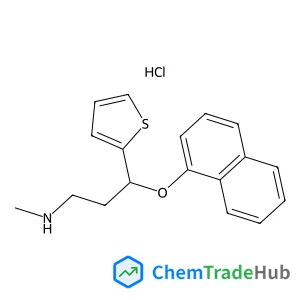
N-Methyl-3-(1-naphthyloxy)-3-(2-thienyl)-1-propanamine hydrochloride (1:1)
CAS Number:
1188266-11-6
Molecular Formula:
C18H20ClNOS
Recommended Suppliers






Disclaimer
This page provides academic journal information for reference and research purposes only. We are not affiliated with any journal publishers and do not handle publication submissions. For publication-related inquiries, please contact the respective journal publishers directly.
If you notice any inaccuracies in the information displayed, please contact us at support@chemtradehub.com. We will promptly review and address your concerns.