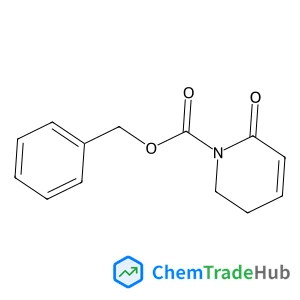
Benzyl 6-oxo-3,6-dihydro-1(2H)-pyridinecarboxylate
CAS Number:
725746-35-0
Molecular Formula:
C13H13NO3
Carolyn G. Farling, Mary C. Stackaruk, Cory C. Pye, Christa L. Brosseau
Screen-printed electrodes (SPEs) are an efficient and inexpensive substrate for electrochemical surface-enhanced Raman spectroscopy (EC-SERS) studies. Traditionally, the working electrode of the SPE is modified with either a colloidal paste of metal nanoparticles or an electrodeposited metallic film. These methods can be time-consuming and often produce non-uniform nanostructured films. Physical vapour deposition (PVD) is presented in this work as an efficient and effective alternative method for the production of SERS-active SPEs. SPEs coated with silver thin films via PVD show consistent and strong EC-SERS enhancement for the detection of two probe molecules, 4-aminothiophenol (p-ATP) and 5-(pyridine-4-yl)-1,3,4-oxadiazole-2-thiol (PYOT). The EC-SERS signal intensity for p-ATP and PYOT had coefficients of variation of 8.2% and 5.5%, respectively. More generally, these substrates show promise for reliable enhancement of molecules spanning diverse analytical applications.

Science

Journal of Medicinal Chemistry

Proceedings of the National Academy of Sciences of the United States of America

Pharmacological Reviews

Journal of Catalysis

Pure and Applied Chemistry

Science Progress

Kinetics and Catalysis

Organic Preparations and Procedures International

European Journal of Wood and Wood Products
Steven W. Rick
DOI: 10.1039/B614742A
Frédéric Fraïsse, Jean-Marie Nedelec, Jean Pierre E. Grolier
DOI: 10.1039/B618701C
James A. Elliott, Stephen J. Paddison
DOI: 10.1039/B701234A
Ester Livshits, Roi Baer
DOI: 10.1039/B617919C
Fabio Ramondo, Luigi Bencivenni, Ruggero Caminiti, Andrea Pieretti, Lorenzo Gontrani
DOI: 10.1039/B617837E
Daniel Friebel, Christian Schlaup, Peter Broekmann, Klaus Wandelt
DOI: 10.1039/B616586A
Alexey Ponomaryov, Galina Gumenchuk, Elena Savchenko
DOI: 10.1039/B616441B
Gustav S. Karlberg, Jan Rossmeisl, Jeff Greeley, Hannes Jónsson, Jens K. Nørskov
DOI: 10.1039/B700099E
N-(4-Methoxybenzyl)-2-pyridinamine (CAS: 52818-63-0) is increasingly being used ...
When handling Ethyl 4-(2-chlorophenyl)-1,3-thiazole-2-carboxylate, appropriate p...
Diethyldiselane (CAS: 628-39-7) is classified under the Globally Harmonized Syst...
The market for oxocopper (CAS: 12053-18-8) is primarily driven by its use in cat...
The market for 5-{[(2-Methyl-2-propanyl)oxy]carbonyl}-5-azaspiro[2.4]heptane-7-c...
2-(1-Pyrrolidinyl)-4-pyridinamine is a chemical compound with the CAS number 359...
2-(3-Pyridinyl)-1-azabicyclo[2.2.2]octane (CAS: 91556-75-1) is a crystalline sol...
(S)-Alpha-allyl-proline hydrochloride is usually synthesized via a Wittig reacti...
3-Methyl-1,2-oxazole-5-carboxylic acid (CAS: 4857-42-5) is an organic compound w...
Lys-SMCC-DM1 is synthesized via a multi-step process involving the coupling of S...

Physical Chemistry Chemical Physics (PCCP) is an international journal co-owned by 19 physical chemistry and physics societies from around the world. This journal publishes original, cutting-edge research in physical chemistry, chemical physics and biophysical chemistry. To be suitable for publication in PCCP, articles must include significant innovation and/or insight into physical chemistry; this is the most important criterion that reviewers and Editors will judge against when evaluating submissions. The journal has a broad scope and welcomes contributions spanning experiment, theory, computation and data science. Topical coverage includes spectroscopy, dynamics, kinetics, statistical mechanics, thermodynamics, electrochemistry, catalysis, surface science, quantum mechanics, quantum computing and machine learning. Interdisciplinary research areas such as polymers and soft matter, materials, nanoscience, energy, surfaces/interfaces, and biophysical chemistry are welcomed if they demonstrate significant innovation and/or insight into physical chemistry. Joined experimental/theoretical studies are particularly appreciated when complementary and based on up-to-date approaches.