













Umbrella inversion of ammonia redux
Literature Information
Publication Date
2021-09-10
DOI
10.1039/D1CP01991K
Impact Factor
3.676
Authors
View Original
Abstract
Umbrella inversion of ammonia is a prototypical example of large-amplitude vibrational motion, described with a symmetric double-well potential. The transition state of the latter corresponds to a planar (D3h) molecular geometry, whereas the two equilibrium configurations are equivalent (C3v) pyramidal structures, with the nitrogen atom being either ‘above’ or ‘below’ the plane of the hydrogen atoms. As commonly understood, inversion motion of ammonia corresponds to the coherent, anharmonic, vibrational motion of the molecule, which shuttles back and forth between the two potential wells; that is, oscillation of the nitrogen atom from one side of the H3 plane to the other, via coherent tunneling. However, this intuitively appealing view of umbrella inversion results from a reduced description of the dynamics, which includes only the inversion vibrational coordinate and fully neglects all the other molecular degrees of freedom. As such, this textbook picture of inversion motion ignores the fact that the two equilibrium structures of ammonia are superimposable, and can only be distinguished by labelling the identical hydrogen nuclei. A correct description of umbrella inversion, which incorporates nuclear permutations, requires the inclusion of other molecular modes. Indeed, it is well known that the quantum symmetrization postulate engenders entanglement between ammonia's nuclear-spin, inversion, and rotation. Using the explicit expressions of the corresponding zeroth-order eigenstates, we clearly show that the inversion density of any multilevel wavepacket of ammonia, including the case of perfectly aligned molecules, is symmetrically distributed between the two potential wells, at all times. This follows from a rigorous demonstration based on the evaluation of the expectation values of the inversion coordinate or equivalent projection operators. However, provided that these wavepackets involve inversion–rotation levels with opposite parity, the inversion density may exhibit dynamical spatial localization. In the latter case, the space-fixed inversion density or, equivalently, the expectation values of the projections of the inversion coordinate on the space-fixed axes, may oscillate between opposite directions in the space-fixed frame. Nevertheless, in all cases, localization of ammonia in a single potential well is impossible, even partially or transiently. This is equivalent to saying that the nitrogen atom has the same probability (one-half) to be on either side of the H3 plane, for any wavepacket of the molecule and at all times—a conclusion which is in perfect accord with the principle of the indistinguishability of identical particles (nuclei).
Related Literature
Layer-by-layer assembly as a versatile bottom-up nanofabrication technique for exploratory research and realistic application
Katsuhiko Ariga, Jonathan P. Hill, Qingmin Ji
2007-03-01
Invited Article
DOI: 10.1039/B700410A
Photocatalytic properties of titania nanostructured films fabricated from titania nanosheets
Tatsuo Shibata, Nobuyuki Sakai, Katsutoshi Fukuda, Yasuo Ebina, Takayoshi Sasaki
2007-03-12
Paper
DOI: 10.1039/B618448K
New theoretical investigations of the photodissociation of ozone in the Hartley, Huggins, Chappuis, and Wulf bands
S. Yu. Grebenshchikov, Z.-W. Qu, H. Zhu, R. Schinke
2007-03-15
Invited Article
DOI: 10.1039/B701020F
NMR measurements of scalar-coupling distributions in disordered solids
Sylvian Cadars, Anne Lesage, Michel Trierweiler, Laurent Heux, Lyndon Emsley
2006-10-24
Paper
DOI: 10.1039/B611096G
Protein–cofactor interactions in bacterial reaction centers from Rhodobacter sphaeroides R-26: Effect of hydrogen bonding on the electronic and geometric structure of the primary quinone. A density functional theory study
Sebastian Sinnecker, Marco Flores, Wolfgang Lubitz
2006-11-24
Paper
DOI: 10.1039/B612568A
A well-tempered density functional theory of electrons in molecules
Ester Livshits, Roi Baer
2007-03-01
Invited Article
DOI: 10.1039/B617919C
A novel approach to the micropatterning of proteins using dewetting of polymer bilayers
2006-11-20
Paper
DOI: 10.1039/B614085H
You might also like
Compound Q&A
What is the market or research trend for N-(4-Methoxybenzyl)-2-pyridinamine (CAS: 52818-63-0)?
N-(4-Methoxybenzyl)-2-pyridinamine (CAS: 52818-63-0) is increasingly being used ...
52818-63-0N-(4-Methoxybenzyl)-...
Compound Q&A
What precautions should be taken when handling Ethyl 4-(2-chlorophenyl)-1,3-thiazole-2-carboxylate (CAS: 1050507-06-6)?
When handling Ethyl 4-(2-chlorophenyl)-1,3-thiazole-2-carboxylate, appropriate p...
1050507-06-6Ethyl 4-(2-chlorophe...
Compound Q&A
What regulatory guidelines apply to diethyldiselane (CAS: 628-39-7)?
Diethyldiselane (CAS: 628-39-7) is classified under the Globally Harmonized Syst...
628-39-7Diethyldiselane
Compound Q&A
What is the market or research trend for oxocopper (CAS: 12053-18-8)?
The market for oxocopper (CAS: 12053-18-8) is primarily driven by its use in cat...
12053-18-8oxocopper; oxo-(oxoc...
Compound Q&A
What is the market or research trend for 5-{[(2-Methyl-2-propanyl)oxy]carbonyl}-5-azaspiro[2.4]heptane-7-carboxylic acid?
The market for 5-{[(2-Methyl-2-propanyl)oxy]carbonyl}-5-azaspiro[2.4]heptane-7-c...
1268519-54-55-{[(2-Methyl-2-prop...
Compound Q&A
What is 2-(1-Pyrrolidinyl)-4-pyridinamine (CAS: 35981-63-6)?
2-(1-Pyrrolidinyl)-4-pyridinamine is a chemical compound with the CAS number 359...
35981-63-62-(1-Pyrrolidinyl)-4...
Compound Q&A
What are the physical and chemical properties of 2-(3-Pyridinyl)-1-azabicyclo[2.2.2]octane (CAS: 91556-75-1)?
2-(3-Pyridinyl)-1-azabicyclo[2.2.2]octane (CAS: 91556-75-1) is a crystalline sol...
91556-75-12-(3-Pyridinyl)-1-az...
Compound Q&A
How is (S)-Alpha-allyl-proline hydrochloride (CAS: 129704-91-2) typically synthesized?
(S)-Alpha-allyl-proline hydrochloride is usually synthesized via a Wittig reacti...
129704-91-2(S)-Alpha-allyl-prol...
Compound Q&A
What is 3-Methyl-1,2-oxazole-5-carboxylic acid (CAS: 4857-42-5)?
3-Methyl-1,2-oxazole-5-carboxylic acid (CAS: 4857-42-5) is an organic compound w...
4857-42-53-Methyl-1,2-oxazole...
Compound Q&A
How is Lys-SMCC-DM1 (CAS: 1281816-04-3) typically synthesized?
Lys-SMCC-DM1 is synthesized via a multi-step process involving the coupling of S...
1281816-04-3Lys-SMCC-DM1
Source Journal
Physical Chemistry Chemical Physics

CiteScore:
5.5
Self-citation Rate:
10.3%
Articles per Year:
3036
Physical Chemistry Chemical Physics (PCCP) is an international journal co-owned by 19 physical chemistry and physics societies from around the world. This journal publishes original, cutting-edge research in physical chemistry, chemical physics and biophysical chemistry. To be suitable for publication in PCCP, articles must include significant innovation and/or insight into physical chemistry; this is the most important criterion that reviewers and Editors will judge against when evaluating submissions. The journal has a broad scope and welcomes contributions spanning experiment, theory, computation and data science. Topical coverage includes spectroscopy, dynamics, kinetics, statistical mechanics, thermodynamics, electrochemistry, catalysis, surface science, quantum mechanics, quantum computing and machine learning. Interdisciplinary research areas such as polymers and soft matter, materials, nanoscience, energy, surfaces/interfaces, and biophysical chemistry are welcomed if they demonstrate significant innovation and/or insight into physical chemistry. Joined experimental/theoretical studies are particularly appreciated when complementary and based on up-to-date approaches.
Recommended Compounds


![1-{3-[4-Amino-3-(4-phenoxyphenyl)-1H-pyrazolo[3,4-d]pyrimidin-1-yl]-1-piperidinyl}-2,3-dihydroxy-1-propanone structure](https://static.chemtradehub.com/structs/122/1226872-27-0-e037.webp "1-{3-[4-Amino-3-(4-phenoxyphenyl)-1H-pyrazolo[3,4-d]pyrimidin-1-yl]-1-piperidinyl}-2,3-dihydroxy-1-propanone structure")
1-{3-[4-Amino-3-(4-phenoxyphenyl)-1H-pyrazolo[3,4-d]pyrimidin-1-yl]-1-piperidinyl}-2,3-dihydroxy-1-propanone
CAS Number:
1226872-27-0
Molecular Formula:
C25H26N6O4
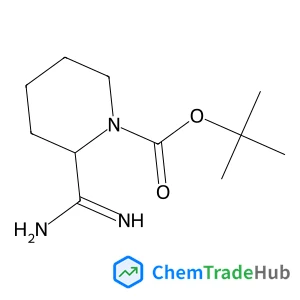
2-Methyl-2-propanyl 2-carbamimidoyl-1-piperidinecarboxylate
CAS Number:
1258640-98-0
Molecular Formula:
C11H21N3O2
Recommended Suppliers







Disclaimer
This page provides academic journal information for reference and research purposes only. We are not affiliated with any journal publishers and do not handle publication submissions. For publication-related inquiries, please contact the respective journal publishers directly.
If you notice any inaccuracies in the information displayed, please contact us at support@chemtradehub.com. We will promptly review and address your concerns.