












Mode-specific dynamics in multichannel reaction NH+ + H2
Literature Information
Publication Date
2021-08-20
DOI
10.1039/D1CP02603H
Impact Factor
3.676
Authors
Weiliang Shi, Kun Wang, Ping Zhang, Le Yu, Anyang Li
View Original
Abstract
The vibrational- and rotational-mode specificity of the multichannel NH+ + H2 reaction is studied on a recently constructed ab initio-based global potential energy surface using an initial state selected quasi-classical trajectory method, and the trajectories are analyzed using an isometric feature mapping and k-means approach. All excitation modes promote two reactions (R1: NH′+ + H2 → NH+ + HH′ and R4: NH′+ + H2 → NH2+ + H′) where both NH and HH bonds are broken, but reduce the reactivity of the proton-transfer reaction R2 (NH′+ + H2 → N + H′H2+) at low collision energies. For the hydrogen-transfer reaction R3 (NH′+ + H2 → HNH′+ + H), the rotational excitation of NH+ enhances the reactivity remarkably, while its vibrational excitation has an inhibiting effect on the reaction. The trajectory analyses show that the vibrational and rotational excitations of NH+ make R3 tend to go over a submerged saddle point instead of extracting hydrogen atoms directly. On the other hand, the motions of the H2 reactant facilitate the enhancement of the reactivity but they do not affect the mechanism of R3. In addition, the results suggest that the coupling of the isometric feature mapping and the k-means approach in the trajectory analysis is an appropriate tool for reaction-dynamics studies.
Related Literature
On the σ,π-energy separation of the aromatic stabilization energy of cyclobutadiene
Georg Hohlneicher, Lars Packschies, Johannes Weber
2007-03-23
Paper
DOI: 10.1039/B700914N
Gas-phase electronic spectrum of the C14 ring
A. E. Boguslavskiy, J. P. Maier
2006-11-13
Paper
DOI: 10.1039/B613109C
Short-range interactions between non-ionic surfactant layers
Orlando J. Rojas, Cosima Stubenrauch
2006-10-19
Invited Article
DOI: 10.1039/B610295F
Direct observation of the solvent reorientation dynamics in the “twisted” intramolecular charge-transfer process of cyanophenyldisilane–water cluster by transient infrared spectroscopy‡
Haruki Ishikawa, Masuyuki Sugiyama, Wataru Setaka, Mitsuo Kira, Naohiko Mikami
2006-11-17
Paper
DOI: 10.1039/B612758D
Dimerisation of urea in water solution: a quantum mechanical investigation
Fabio Ramondo, Luigi Bencivenni, Ruggero Caminiti, Andrea Pieretti, Lorenzo Gontrani
2007-03-01
Paper
DOI: 10.1039/B617837E
Quantum chemical and vibrational investigation of sodium exchanged γ-alumina surfaces
Mathieu Digne, Pascal Raybaud, Philippe Sautet, Denis Guillaume, Hervé Toulhoat
2007-03-07
Paper
DOI: 10.1039/B700541E
Gold catalysts for pure hydrogen production in the water–gas shift reaction: activity, structure and reaction mechanism
2006-10-02
Invited Article
DOI: 10.1039/B607837K
You might also like
Compound Q&A
What is the market or research trend for N-(4-Methoxybenzyl)-2-pyridinamine (CAS: 52818-63-0)?
N-(4-Methoxybenzyl)-2-pyridinamine (CAS: 52818-63-0) is increasingly being used ...
52818-63-0N-(4-Methoxybenzyl)-...
Compound Q&A
What precautions should be taken when handling Ethyl 4-(2-chlorophenyl)-1,3-thiazole-2-carboxylate (CAS: 1050507-06-6)?
When handling Ethyl 4-(2-chlorophenyl)-1,3-thiazole-2-carboxylate, appropriate p...
1050507-06-6Ethyl 4-(2-chlorophe...
Compound Q&A
What regulatory guidelines apply to diethyldiselane (CAS: 628-39-7)?
Diethyldiselane (CAS: 628-39-7) is classified under the Globally Harmonized Syst...
628-39-7Diethyldiselane
Compound Q&A
What is the market or research trend for oxocopper (CAS: 12053-18-8)?
The market for oxocopper (CAS: 12053-18-8) is primarily driven by its use in cat...
12053-18-8oxocopper; oxo-(oxoc...
Compound Q&A
What is the market or research trend for 5-{[(2-Methyl-2-propanyl)oxy]carbonyl}-5-azaspiro[2.4]heptane-7-carboxylic acid?
The market for 5-{[(2-Methyl-2-propanyl)oxy]carbonyl}-5-azaspiro[2.4]heptane-7-c...
1268519-54-55-{[(2-Methyl-2-prop...
Compound Q&A
What is 2-(1-Pyrrolidinyl)-4-pyridinamine (CAS: 35981-63-6)?
2-(1-Pyrrolidinyl)-4-pyridinamine is a chemical compound with the CAS number 359...
35981-63-62-(1-Pyrrolidinyl)-4...
Compound Q&A
What are the physical and chemical properties of 2-(3-Pyridinyl)-1-azabicyclo[2.2.2]octane (CAS: 91556-75-1)?
2-(3-Pyridinyl)-1-azabicyclo[2.2.2]octane (CAS: 91556-75-1) is a crystalline sol...
91556-75-12-(3-Pyridinyl)-1-az...
Compound Q&A
How is (S)-Alpha-allyl-proline hydrochloride (CAS: 129704-91-2) typically synthesized?
(S)-Alpha-allyl-proline hydrochloride is usually synthesized via a Wittig reacti...
129704-91-2(S)-Alpha-allyl-prol...
Compound Q&A
What is 3-Methyl-1,2-oxazole-5-carboxylic acid (CAS: 4857-42-5)?
3-Methyl-1,2-oxazole-5-carboxylic acid (CAS: 4857-42-5) is an organic compound w...
4857-42-53-Methyl-1,2-oxazole...
Compound Q&A
How is Lys-SMCC-DM1 (CAS: 1281816-04-3) typically synthesized?
Lys-SMCC-DM1 is synthesized via a multi-step process involving the coupling of S...
1281816-04-3Lys-SMCC-DM1
Source Journal
Physical Chemistry Chemical Physics

CiteScore:
5.5
Self-citation Rate:
10.3%
Articles per Year:
3036
Physical Chemistry Chemical Physics (PCCP) is an international journal co-owned by 19 physical chemistry and physics societies from around the world. This journal publishes original, cutting-edge research in physical chemistry, chemical physics and biophysical chemistry. To be suitable for publication in PCCP, articles must include significant innovation and/or insight into physical chemistry; this is the most important criterion that reviewers and Editors will judge against when evaluating submissions. The journal has a broad scope and welcomes contributions spanning experiment, theory, computation and data science. Topical coverage includes spectroscopy, dynamics, kinetics, statistical mechanics, thermodynamics, electrochemistry, catalysis, surface science, quantum mechanics, quantum computing and machine learning. Interdisciplinary research areas such as polymers and soft matter, materials, nanoscience, energy, surfaces/interfaces, and biophysical chemistry are welcomed if they demonstrate significant innovation and/or insight into physical chemistry. Joined experimental/theoretical studies are particularly appreciated when complementary and based on up-to-date approaches.
Recommended Compounds
![(2R,6S)-6-[(Benzyloxy)methyl]-4-{[(2-methyl-2-propanyl)oxy]carbonyl}-2-morpholinecarboxylic acid structure](https://static.chemtradehub.com/structs/109/1093085-91-6-3382.webp "(2R,6S)-6-[(Benzyloxy)methyl]-4-{[(2-methyl-2-propanyl)oxy]carbonyl}-2-morpholinecarboxylic acid structure")
(2R,6S)-6-[(Benzyloxy)methyl]-4-{[(2-methyl-2-propanyl)oxy]carbonyl}-2-morpholinecarboxylic acid
CAS Number:
1093085-91-6
Molecular Formula:
C18H25NO6

(3alpha,5beta,6alpha,7alpha)-6-Ethylcholane-3,7,24-triol
CAS Number:
1537866-49-1
Molecular Formula:
C26H46O3
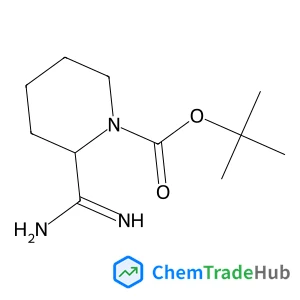
2-Methyl-2-propanyl 2-carbamimidoyl-1-piperidinecarboxylate
CAS Number:
1258640-98-0
Molecular Formula:
C11H21N3O2
Recommended Suppliers






Disclaimer
This page provides academic journal information for reference and research purposes only. We are not affiliated with any journal publishers and do not handle publication submissions. For publication-related inquiries, please contact the respective journal publishers directly.
If you notice any inaccuracies in the information displayed, please contact us at support@chemtradehub.com. We will promptly review and address your concerns.