












Prediction of the standard potentials for one-electron oxidation of N,N,N′,N′ tetrasubstituted p-phenylenediamines by calculation
Literature Information
Publication Date
2021-09-02
DOI
10.1039/D1CP02315B
Impact Factor
3.676
Authors
Cecilie L. Andersen, Evanildo G. Lacerda, Jr, Jørn B. Christensen, Stephan P. A. Sauer, Ole Hammerich
View Original
Abstract
The formal potentials for the reversible one-electron oxidation of N,N,N′,N′ tetrasubstituted p-phenylenediamines in acetonitrile have been applied as a test set for benchmarking computational methods for a series of compounds with only small structural differences. The aim of the study is to propose a simple method for calculating the standard oxidation potentials, and therefore, the protocol is progressively developed by adding more terms in the energy expression. In addition, the effect of including implicit solvation models (IEFPCM, CPCM, and SMD), larger basis sets, and correlation methods are investigated. The oxidation potentials calculated using the G3MP2B3 approach with IEFPCM resulted in the best fit (R2 = 0.9624), but the slope of the correlation line, 0.74, is far from the optimal value, 1.00. B3LYP/6-311++G(d,p) and TPSSh/6-311++G(2d,p) yielded only slightly less consistent data (R2 = 0.9388 and R2 = 0.9425), but with much better slopes, 1.00 and 0.94, respectively. We conclude that it is important to investigate the basis set size and treatment of electron correlation when calculating oxidation potentials for N,N,N′,N′ tetrasubstituted p-phenylenediamines.
Related Literature
Long-lived coherent oscillations of the femtosecond transients in cyanobacterial photosystem I
Oleg M. Sarkisov, Fedor E. Gostev, Vladimir I. Novoderezhkin, Oxana A. Gopta, Mahir D. Mamedov, Alexey Yu. Semenov
2006-11-13
Paper
DOI: 10.1039/B605660A
Weak distance dependence of through-bond interactions in tetrahydro-4H-thiopyran-4-ylidene end-capped oligo(cyclohexylidenes); a computational survey
Cornelis A. van Walree, Alwin W. Marsman, Joop H. van Lenthe, Leonardus W. Jenneskens
2007-01-26
Paper
DOI: 10.1039/B616893K
Infrared spectroscopy and structure of photochemically protonated biomolecules in the gas phase: a noradrenaline analogue, lysine and alanyl alanine
Timothy D. Vaden, Tjalling S. J. A. de Boer, Neil A. MacLeod, Elaine M. Marzluff, John P. Simons, Lavina C. Snoek
2007-03-27
Paper
DOI: 10.1039/B700805H
Inelastic insights for molecular tunneling pathways: Bypassing the terminal groups
Alessandro Troisi, Mark A. Ratner
2007-03-21
Paper
DOI: 10.1039/B702377D
pH-responsive self-assembly of carboxyl-terminated hyperbranched polymers
Wenyong Dong, Yongfeng Zhou, Deyue Yan, Huiqin Li, Yu Liu
2007-01-23
Paper
DOI: 10.1039/B615525C
Structural and redox properties of VOx and Pd/VOx thin film model catalysts studied by TEM and SAED
Simon Penner, Bernhard Klötzer, Bernd Jenewein
2007-03-19
Paper
DOI: 10.1039/B700650K
Formation of mesoscopic water networks in aqueous systems
Lívia B. Pártay, Pál Jedlovszky, Ivan Brovchenko, Alla Oleinikova
2007-01-25
Paper
DOI: 10.1039/B617042K
Rotational spectrum of a chiral α-hydroxyester: conformation stability and internal rotation barrier heights of methyl lactate‡
Nicole Borho, Yunjie Xu
2007-02-02
Paper
DOI: 10.1039/B608561J
Protein–cofactor interactions in bacterial reaction centers from Rhodobacter sphaeroides R-26: Effect of hydrogen bonding on the electronic and geometric structure of the primary quinone. A density functional theory study
Sebastian Sinnecker, Marco Flores, Wolfgang Lubitz
2006-11-24
Paper
DOI: 10.1039/B612568A
You might also like
Compound Q&A
What is the market or research trend for N-(4-Methoxybenzyl)-2-pyridinamine (CAS: 52818-63-0)?
N-(4-Methoxybenzyl)-2-pyridinamine (CAS: 52818-63-0) is increasingly being used ...
52818-63-0N-(4-Methoxybenzyl)-...
Compound Q&A
What precautions should be taken when handling Ethyl 4-(2-chlorophenyl)-1,3-thiazole-2-carboxylate (CAS: 1050507-06-6)?
When handling Ethyl 4-(2-chlorophenyl)-1,3-thiazole-2-carboxylate, appropriate p...
1050507-06-6Ethyl 4-(2-chlorophe...
Compound Q&A
What regulatory guidelines apply to diethyldiselane (CAS: 628-39-7)?
Diethyldiselane (CAS: 628-39-7) is classified under the Globally Harmonized Syst...
628-39-7Diethyldiselane
Compound Q&A
What is the market or research trend for oxocopper (CAS: 12053-18-8)?
The market for oxocopper (CAS: 12053-18-8) is primarily driven by its use in cat...
12053-18-8oxocopper; oxo-(oxoc...
Compound Q&A
What is the market or research trend for 5-{[(2-Methyl-2-propanyl)oxy]carbonyl}-5-azaspiro[2.4]heptane-7-carboxylic acid?
The market for 5-{[(2-Methyl-2-propanyl)oxy]carbonyl}-5-azaspiro[2.4]heptane-7-c...
1268519-54-55-{[(2-Methyl-2-prop...
Compound Q&A
What is 2-(1-Pyrrolidinyl)-4-pyridinamine (CAS: 35981-63-6)?
2-(1-Pyrrolidinyl)-4-pyridinamine is a chemical compound with the CAS number 359...
35981-63-62-(1-Pyrrolidinyl)-4...
Compound Q&A
What are the physical and chemical properties of 2-(3-Pyridinyl)-1-azabicyclo[2.2.2]octane (CAS: 91556-75-1)?
2-(3-Pyridinyl)-1-azabicyclo[2.2.2]octane (CAS: 91556-75-1) is a crystalline sol...
91556-75-12-(3-Pyridinyl)-1-az...
Compound Q&A
How is (S)-Alpha-allyl-proline hydrochloride (CAS: 129704-91-2) typically synthesized?
(S)-Alpha-allyl-proline hydrochloride is usually synthesized via a Wittig reacti...
129704-91-2(S)-Alpha-allyl-prol...
Compound Q&A
What is 3-Methyl-1,2-oxazole-5-carboxylic acid (CAS: 4857-42-5)?
3-Methyl-1,2-oxazole-5-carboxylic acid (CAS: 4857-42-5) is an organic compound w...
4857-42-53-Methyl-1,2-oxazole...
Compound Q&A
How is Lys-SMCC-DM1 (CAS: 1281816-04-3) typically synthesized?
Lys-SMCC-DM1 is synthesized via a multi-step process involving the coupling of S...
1281816-04-3Lys-SMCC-DM1
Source Journal
Physical Chemistry Chemical Physics

CiteScore:
5.5
Self-citation Rate:
10.3%
Articles per Year:
3036
Physical Chemistry Chemical Physics (PCCP) is an international journal co-owned by 19 physical chemistry and physics societies from around the world. This journal publishes original, cutting-edge research in physical chemistry, chemical physics and biophysical chemistry. To be suitable for publication in PCCP, articles must include significant innovation and/or insight into physical chemistry; this is the most important criterion that reviewers and Editors will judge against when evaluating submissions. The journal has a broad scope and welcomes contributions spanning experiment, theory, computation and data science. Topical coverage includes spectroscopy, dynamics, kinetics, statistical mechanics, thermodynamics, electrochemistry, catalysis, surface science, quantum mechanics, quantum computing and machine learning. Interdisciplinary research areas such as polymers and soft matter, materials, nanoscience, energy, surfaces/interfaces, and biophysical chemistry are welcomed if they demonstrate significant innovation and/or insight into physical chemistry. Joined experimental/theoretical studies are particularly appreciated when complementary and based on up-to-date approaches.
Recommended Compounds
![1-(1-Benzyl-1,2,3,6-tetrahydropyridin-4-yl)-1H-benzo[d]imidazol-2(3H)-one structure](https://static.chemtradehub.com/structs/603/60373-71-9-7dfb.webp "1-(1-Benzyl-1,2,3,6-tetrahydropyridin-4-yl)-1H-benzo[d]imidazol-2(3H)-one structure")
1-(1-Benzyl-1,2,3,6-tetrahydropyridin-4-yl)-1H-benzo[d]imidazol-2(3H)-one
CAS Number:
60373-71-9
Molecular Formula:
C19H19N3O
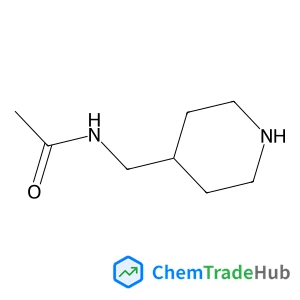

2-(4,4-Difluorobutyl)-1H-isoindole-1,3(2H)-dione
CAS Number:
1265341-14-7
Molecular Formula:
C12H11F2NO2
Recommended Suppliers






Disclaimer
This page provides academic journal information for reference and research purposes only. We are not affiliated with any journal publishers and do not handle publication submissions. For publication-related inquiries, please contact the respective journal publishers directly.
If you notice any inaccuracies in the information displayed, please contact us at support@chemtradehub.com. We will promptly review and address your concerns.