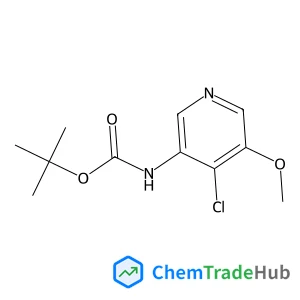
tert-Butyl 4-chloro-5-methoxypyridin-3-ylcarbamate
CAS Number:
1045858-17-0
Molecular Formula:
C11H15ClN2O3
Pengli Zhu, Leicong Zhang, Fengrui Zhou, Xianwen liang, Tingxi Li, Qing Wang, Rong Sun
Direct printing techniques have generated significant research interest in fabricating flexible and scalable micro-supercapacitors (MSCs). In this study, we report a facile and cost-effective way to synthesize water soluble reduced graphene oxide (WSG) with a high concentration by decoration with aminobenzenesulfonic acid (ABS) and reduction with ascorbic acid. The WSG possesses excellent electrical conductivity (360 S m−1), good water dispersion stability as well as a high zeta potential value (−62 mV at pH 11), and the concentration of the as-prepared WSG could reach 5 mg mL−1, nearly as great as the highest value from previous reports. Then, using this high-concentration WSG dispersion directly as an electrochemically active ink material, micro-supercapacitor electrodes could be facilely fabricated via a direct printing technique on common printing paper, and the all-solid-state flexible MSCs could be further assembled. The results show that these flexible MSCs exhibit high area and volume specific capacitances of 2.67 mF cm−2 and 6.75 F cm−3, maintaining 94.8% of their initial specific capacitance after 5000 cycles at a scan rate of 50 mV s−1. More importantly, the capacitance and potential can be expanded by connecting a WSG-MSC device in parallel and in series, and the assembled devices are further demonstrated to be capable of lighting a liquid crystal display with three WSG-MSCs in series. These findings not only provide a simple way to synthesize WSG with a high concentration, but also facilitate its applications in printable and flexible MSCs with high performance.

Organic Process Research & Development

Acta Materialia

Russian Journal of Bioorganic Chemistry

Journal of Saudi Chemical Society

Russian Journal of Applied Chemistry

Nature Medicine

Russian Journal of Coordination Chemistry

Russian Journal of General Chemistry

Journal of Peptide Science

Chemical Communications
K. M. Liew
DOI: 10.1039/C3CP53343C
DOI: 10.1039/C3CP53624F
Mehmet Nail Nasir, Emmanuel Benichou, Claire Loison, Isabelle Russier-Antoine, Françoise Besson, Pierre-François Brevet
DOI: 10.1039/C3CP53098A
Gal Wittenberg, William Sheffler, Dana Darchi, David Baker
DOI: 10.1039/C3CP53264J
Justyna Wójcik, Jerzy Peszke, Alicja Ratuszna, Piotr Kuś, Roman Wrzalik
DOI: 10.1039/C3CP53143K
Ji-eun Park, Yu Jin Jang, Yeo Jin Kim, Mi-sun Song, Seokhyun Yoon, Dong Ha Kim, Sung-Jin Kim
DOI: 10.1039/C3CP54311K
Linghao Su, Liangyu Gong, Yang Zhao
DOI: 10.1039/C3CP53747A
DOI: 10.1039/C3CP53532K
Tibor Nagy, Jiří Vaníček
DOI: 10.1039/C3CP53698J
Wenguang Fan, Simon Jewell, Yiyi She, Michael K. H. Leung
DOI: 10.1039/C3CP54098G
Waste containing 6-Chloro-5-(2'-hydroxy-3'-methoxy-4-biphenylyl)-3-(3-methoxyphe...
(3alpha,5alpha)-3-Hydroxypregnane-11,20-dione is primarily used in the pharmaceu...
The market for 4-Amino-6-chloro-2-pyridinecarboxylic acid (CAS: 546141-56-4) is ...
Alternatives to (2-Benzoylethyl)trimethylammonium chloride (CAS: 24472-88-6) in ...
N-[4-Nitro-3-(trifluoromethyl)phenyl]acetamide (CAS: 393-12-4) is generally safe...
Alternative reagents such as other phosphates or similar functional groups can b...
There are alternatives to N,N'-Bis(3-aminopropyl)-1,3-propanediamine (CAS: 4605-...
When handling Aluminium trihexadecanoate, it is important to use appropriate per...
(1,1-Dioxido-3-oxo-1,2-benzothiazol-2(3H)-yl)acetic acid is a chemical compound ...
Several alternatives to 5,5-dimethyloxolan-2-one (CAS: 3123-97-5) can be used in...
![2-Methyl-2-propanyl (2E)-5-chloro-2-[3-methoxy-4-(4-methyl-1H-imidazol-1-yl)benzylidene]pentanoate structure](https://static.chemtradehub.com/structs/122/1225232-42-7-ee03.webp "2-Methyl-2-propanyl (2E)-5-chloro-2-[3-methoxy-4-(4-methyl-1H-imidazol-1-yl)benzylidene]pentanoate structure")