












Structure stability and high-temperature distortion resistance of trilayer complexes formed from graphenes and boron nitride nanosheets
Literature Information
Publication Date
2013-10-29
DOI
10.1039/C3CP53343C
Impact Factor
3.676
Authors
K. M. Liew
View Original
Abstract
The molecular dynamics was employed to study the structure stability and high-temperature distortion resistance of a trilayer complex formed by a monolayer graphene sandwiched in bilayer boron nitride nanosheets (BN–G–BN) and graphenes (G–G–G). The investigation shows that the optimal interlayer distances are about 0.347 nm for BN–G–BN and 0.341 nm for G–G–G. Analysis and comparison of the binding energy, van der Waals interactions between layers and radial distribution function (RDF) revealed that the BN–G–BN achieves a more stable combined structure than G–G–G. The interlayer graphene in the trilayer complex nanosheets, especially the graphene in BN–G–BN, is more integrated than monolayer graphenes in a crystal structure. The structures at high temperature of 1500 K show that the BN–G–BN exhibits less distortion than G–G–G; especially, fixing the atomic positions on up–down layers can obviously further reduce structural deformation of interlayer graphene. The result further indicates that the high-temperature distortion resistance of interlayer graphene in the trilayer complex is related to both material type and conditions of constraints at the up–down layers.
Related Literature
Intermediate length scale organisation in tin borophosphate glasses: new insights from high field correlation NMR
G. Tricot, A. Saitoh, H. Takebe
2015-07-07
Paper
DOI: 10.1039/C5CP02095F
Manipulating the voltage drop in graphene nanojunctions using a gate potential
2015-12-10
Paper
DOI: 10.1039/C5CP04613K
N-Alkylthienopyrroledione versus benzothiadiazole pulling units in push–pull copolymers used for photovoltaic applications: density functional theory study
Jamin Ku, Yeongrok Gim, Yves Lansac, Yun Hee Jang
2015-11-25
Paper
DOI: 10.1039/C5CP06075C
Competitive lithium solvation of linear and cyclic carbonates from quantum chemistry
Oleg Borodin, Marco Olguin, P. Ganesh, Joshua L. Allen, Wesley A. Henderson
2015-11-17
Paper
DOI: 10.1039/C5CP05121E
Path-dependent variational effects and multidimensional tunneling in multi-path variational transition state theory: rate constants calculated for the reactions of HO2 with tert-butanol by including all 46 paths for abstraction at C and all six paths for abstraction at O
Junwei Lucas Bao, Pattrawan Sripa, Donald G. Truhlar
2015-11-23
Paper
DOI: 10.1039/C5CP05780A
Ab initio electronic structure study of a model water splitting dimer complex
Amendra Fernando, Christine M. Aikens
2015-11-17
Paper
DOI: 10.1039/C5CP04112K
Morphology-dependent interplay of reduction behaviors, oxygen vacancies and hydroxyl reactivity of CeO2 nanocrystals
Yuxian Gao, Rongtan Li, Shilong Chen, Liangfeng Luo, Tian Cao, Weixin Huang
2015-11-05
Paper
DOI: 10.1039/C5CP04570C
The effect of hydrostatic pressure on model membrane domain composition and lateral compressibility
H. M. G. Barriga, R. V. Law, J. M. Seddon, O. Ces, N. J. Brooks
2015-11-16
Paper
DOI: 10.1039/C5CP04239A
You might also like
Compound Q&A
How should waste containing 6-Chloro-5-(2'-hydroxy-3'-methoxy-4-biphenylyl)-3-(3-methoxyphenyl)-1H-pyrrolo[3,2-d]pyrimidine-2,4(3H,5H)-dione (CAS: 1346607-05-3) be handled?
Waste containing 6-Chloro-5-(2'-hydroxy-3'-methoxy-4-biphenylyl)-3-(3-methoxyphe...
1346607-05-36-Chloro-5-(2'-hydro...
Compound Q&A
What are the main uses of (3alpha,5alpha)-3-Hydroxypregnane-11,20-dione (CAS: 23930-19-0)?
(3alpha,5alpha)-3-Hydroxypregnane-11,20-dione is primarily used in the pharmaceu...
23930-19-0(3alpha,5alpha)-3-Hy...
Compound Q&A
What is the market or research trend for 4-Amino-6-chloro-2-pyridinecarboxylic acid (CAS: 546141-56-4)?
The market for 4-Amino-6-chloro-2-pyridinecarboxylic acid (CAS: 546141-56-4) is ...
546141-56-44-Amino-6-chloro-2-p...
Compound Q&A
Are there alternatives to (2-Benzoylethyl)trimethylammonium chloride (CAS: 24472-88-6) in synthesis?
Alternatives to (2-Benzoylethyl)trimethylammonium chloride (CAS: 24472-88-6) in ...
24472-88-6(2-Benzoylethyl)trim...
Compound Q&A
Is N-[4-Nitro-3-(trifluoromethyl)phenyl]acetamide (CAS: 393-12-4) safe?
N-[4-Nitro-3-(trifluoromethyl)phenyl]acetamide (CAS: 393-12-4) is generally safe...
393-12-4N-[4-Nitro-3-(triflu...
Compound Q&A
Are there alternatives to [(4R,5R,6S)-5-hydroxy-10-imino-3,7-dioxa-1,9-diazatricyclo[6.4.0.02,6]dodeca-8,11-dien-4-yl]methyl dihydrogen phosphate (CAS: 39679-56-6) in synthesis?
Alternative reagents such as other phosphates or similar functional groups can b...
39679-56-6[(4R,5R,6S)-5-hydrox...
Compound Q&A
Are there alternatives to N,N'-Bis(3-aminopropyl)-1,3-propanediamine (CAS: 4605-14-5) in synthesis?
There are alternatives to N,N'-Bis(3-aminopropyl)-1,3-propanediamine (CAS: 4605-...
4605-14-5N,N'-Bis(3-aminoprop...
Compound Q&A
What precautions should be taken when handling Aluminium trihexadecanoate (CAS: 555-35-1)?
When handling Aluminium trihexadecanoate, it is important to use appropriate per...
555-35-1Aluminium trihexadec...
Compound Q&A
What is (1,1-Dioxido-3-oxo-1,2-benzothiazol-2(3H)-yl)acetic acid (CAS: 52188-11-1)?
(1,1-Dioxido-3-oxo-1,2-benzothiazol-2(3H)-yl)acetic acid is a chemical compound ...
52188-11-1(1,1-Dioxido-3-oxo-1...
Compound Q&A
Are there alternatives to 5,5-dimethyloxolan-2-one (CAS: 3123-97-5) in synthesis?
Several alternatives to 5,5-dimethyloxolan-2-one (CAS: 3123-97-5) can be used in...
3123-97-55,5-dimethyloxolan-2...
Source Journal
Physical Chemistry Chemical Physics

CiteScore:
5.5
Self-citation Rate:
10.3%
Articles per Year:
3036
Physical Chemistry Chemical Physics (PCCP) is an international journal co-owned by 19 physical chemistry and physics societies from around the world. This journal publishes original, cutting-edge research in physical chemistry, chemical physics and biophysical chemistry. To be suitable for publication in PCCP, articles must include significant innovation and/or insight into physical chemistry; this is the most important criterion that reviewers and Editors will judge against when evaluating submissions. The journal has a broad scope and welcomes contributions spanning experiment, theory, computation and data science. Topical coverage includes spectroscopy, dynamics, kinetics, statistical mechanics, thermodynamics, electrochemistry, catalysis, surface science, quantum mechanics, quantum computing and machine learning. Interdisciplinary research areas such as polymers and soft matter, materials, nanoscience, energy, surfaces/interfaces, and biophysical chemistry are welcomed if they demonstrate significant innovation and/or insight into physical chemistry. Joined experimental/theoretical studies are particularly appreciated when complementary and based on up-to-date approaches.
Recommended Compounds
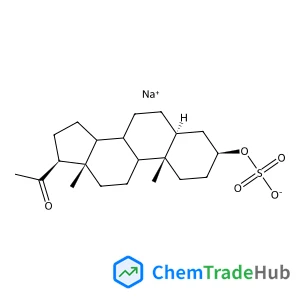
![4-{[4-(Trifluoromethoxy)benzyl]oxy}benzonitrile structure](https://static.chemtradehub.com/structs/103/1036629-63-6-2172.webp "4-{[4-(Trifluoromethoxy)benzyl]oxy}benzonitrile structure")
4-{[4-(Trifluoromethoxy)benzyl]oxy}benzonitrile
CAS Number:
1036629-63-6
Molecular Formula:
C15H10F3NO2
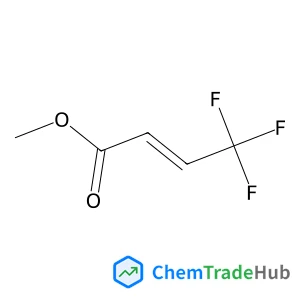
![Benzyl 2-{[(tert-butoxy)carbonyl]amino}acetate structure](https://static.chemtradehub.com/structs/542/54244-69-8-6399.webp "Benzyl 2-{[(tert-butoxy)carbonyl]amino}acetate structure")
Recommended Suppliers





Disclaimer
This page provides academic journal information for reference and research purposes only. We are not affiliated with any journal publishers and do not handle publication submissions. For publication-related inquiries, please contact the respective journal publishers directly.
If you notice any inaccuracies in the information displayed, please contact us at support@chemtradehub.com. We will promptly review and address your concerns.