![(2S)-2-{[(9H-Fluoren-9-ylmethoxy)carbonyl]amino}-4-(methylselanyl)butanoic acid structure](https://static.chemtradehub.com/structs/121/1217852-49-7-f252.webp "(2S)-2-{[(9H-Fluoren-9-ylmethoxy)carbonyl]amino}-4-(methylselanyl)butanoic acid structure")
(2S)-2-{[(9H-Fluoren-9-ylmethoxy)carbonyl]amino}-4-(methylselanyl)butanoic acid
CAS Number:
1217852-49-7
Molecular Formula:
C20H21NO4Se
L. P. D. Ratcliffe, K. J. Bentley, R. Wehr, N. J. Warren, B. R. Saunders, S. P. Armes
The recent development of polymerization-induced self-assembly (PISA) has facilitated the rational synthesis of a range of diblock copolymer worms, which hitherto could only be prepared via traditional post-polymerization processing in dilute solution. Herein we explore a new synthetic route to aqueous dispersions of cationic disulfide-functionalized worm gels. This is achieved via the PISA synthesis of poly[(glycerol monomethacrylate-stat-glycidyl methacrylate)]-block-poly(2-hydroxypropyl methacrylate) (P(GMA-stat-GlyMA)-PHPMA) block copolymer worms via reversible addition–fragmentation chain transfer (RAFT) aqueous dispersion polymerization of HPMA. A water-soluble reagent, cystamine, is then reacted with the pendent epoxy groups located within the P(GMA-stat-GlyMA) stabilizer chains to introduce disulfide functionality, while simultaneously conferring cationic character via formation of secondary amine groups. Moreover, systematic variation of the cystamine/epoxy molar ratio enables either chemically cross-linked worm gels or physical (linear) primary amine-functionalized disulfide-based worm gels to be obtained. These new worm gels were characterized using gel permeation chromatography, 1H NMR spectroscopy, transmission electron microscopy, dynamic light scattering, aqueous electrophoresis and rheology. In principle, such hydrogels may offer enhanced mucoadhesive properties.
Joseph Hufton, John Harding, Thomas Smith
DOI: 10.1039/D0CP04067C
Aritri Biswas, Bhabani S. Mallik
DOI: 10.1039/D0CP05451H
Frederik Bader, Jean Christophe Tremblay, Beate Paulus
DOI: 10.1039/D0CP05031H
Bastiaan J. Braams, Yafu Guan, Bina Fu, Dong H. Zhang
DOI: 10.1039/D0CP05047D
Seishi Shimizu, Nobuyuki Matubayasi
DOI: 10.1039/D0CP05122E
Li Han, Heming Li, Xi Zuo, Quan Gao, Dongmei Li, Bin Cui, Changfeng Fang
DOI: 10.1039/D0CP03827J
Inna Ermilova, Jan Swenson
DOI: 10.1039/D0CP05111J
Zahra Hooshmand, Mark R. Pederson
DOI: 10.1039/D0CP04455E
Andrei E. Mukhanov, Semen A. Murzov
DOI: 10.1039/D0CP03648J
Yong Liu, Yi Lian, Rui Li, Xueshen Liu, Haifeng Xu, Bing Yan
DOI: 10.1039/D0CP05712F
When considering alternatives to 1-(4-Chlorophenyl)-N-hydroxymethanimine (CAS: 3...
This compound should be stored in a cool, dry place away from direct sunlight. I...
3-(4-Bromophenyl)-5-(2-fluorophenyl)-1,2,4-oxadiazole is synthesized through a m...
5-Chloro-2-(4-chlorophenyl)-4-methyl-6-[3-(1-piperidinyl)propoxy]pyrimidine (CAS...
2-Chloro-4-(difluoromethoxy)pyridine is used in the pharmaceutical industry for ...
3-Chloro-6-methylpyridazine (CAS: 1121-79-5) is classified under the Globally Ha...
Several alternatives can be used in the synthesis of Methyl 4,5-dimethyl-2-nitro...
Alternatives to (2E,2'E)-3,3'-(1,4-Phenylene)bisacrylaldehyde include other acry...
3-Amino-5-chloropyridin-2-ol hydrochloride is an organic compound with the CAS n...
When handling 6,7-Difluoro-2,3-dihydro-4H-chromen-4-one, it is essential to wear...

Polymer Chemistry welcomes submissions in all areas of polymer science that have a strong focus on macromolecular chemistry. Manuscripts may cover a broad range of fields, yet no direct application focus is required.
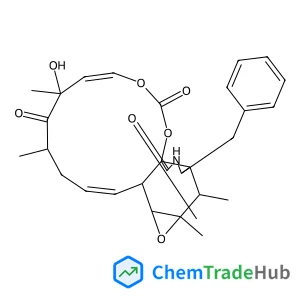
![[4-(Isobutyrylamino)phenyl]boronic acid structure](https://static.chemtradehub.com/structs/874/874219-50-8-6ab5.webp "[4-(Isobutyrylamino)phenyl]boronic acid structure")